
A pinched nerve can stop you in your tracks. Whether it’s a sharp, shooting pain down your leg, a burning sensation radiating from your neck into your arm, or a persistent numbness that won’t go away — the discomfort is hard to ignore and harder to push through. The good news is that chiropractic care is one of the most effective natural approaches for addressing the root cause of a pinched nerve rather than simply managing the pain. At Vita Nova Chiropractic in Plano, TX, Dr. Korrin Taylor helps patients find lasting relief from nerve compression by restoring proper spinal alignment and removing the interference that’s causing the problem in the first place.
What Is a Pinched Nerve and What Causes It?
A pinched nerve — medically known as nerve compression or radiculopathy — occurs when surrounding tissue applies too much pressure to a nerve. That tissue could be a misaligned vertebra, a herniated or bulging disc, inflamed surrounding muscles, or bone spurs from degenerative changes in the spine. When a nerve is compressed, the signals it carries are disrupted — producing the characteristic symptoms of pain, tingling, numbness, or weakness that can radiate far from the actual site of compression.
The spine is the most common location for nerve compression because of how closely the spinal nerves travel alongside the vertebrae. When spinal alignment is disrupted, even a small shift in a vertebra can place significant pressure on an adjacent nerve root. Common causes include:
- Spinal misalignments that narrow the space through which nerves exit the spine
- Disc herniation or a bulging disc pressing directly on a nerve root
- Degenerative disc disease reducing the cushion between vertebrae over time
- Spinal stenosis — a narrowing of the spinal canal that compresses nerves
- Muscle tension and spasm that tightens around and irritates surrounding nerves — often linked to muscle spasms
- Whiplash or acute injury that shifts vertebrae out of position
- Poor posture sustained over time — particularly forward head posture and rounded shoulders
- Repetitive strain from occupational habits or overuse
How a Pinched Nerve Affects the Body
Because each spinal nerve serves a specific region of the body, the symptoms of a pinched nerve depend heavily on where in the spine the compression is occurring. Understanding this helps explain why a problem in the neck can cause pain or numbness all the way down into the fingers, or why a lower back issue can produce symptoms that travel through the buttocks and down into the foot.
Cervical Pinched Nerve (Neck)
Compression in the cervical spine — the neck region — typically produces symptoms that radiate into the shoulders, arms, and hands. Patients often describe burning or electric pain, weakness in the grip, or a persistent tingling that runs down one arm. Neck pain is almost always present, and headaches are a common accompanying symptom as the surrounding muscles tighten in response to the nerve irritation.
Lumbar Pinched Nerve (Lower Back)
Compression in the lumbar spine is the most common form of nerve pinching, and it is the primary driver of sciatica — the shooting pain that travels from the lower back through the buttock and down the leg. Lower back pain, leg pain, foot numbness, and weakness in the lower extremities are all hallmarks of lumbar nerve compression. Left unaddressed, sciatica can become debilitating and significantly affect quality of life.
Thoracic Pinched Nerve (Mid-Back)
Less common but equally disruptive, thoracic nerve compression can cause radiating pain around the rib cage, chest tightness, or referred pain into the abdomen. Because these symptoms can mimic other conditions, thoracic nerve issues are often overlooked or misattributed.
How Chiropractic Care Addresses a Pinched Nerve
Chiropractic care is uniquely well-suited to treating pinched nerves because it directly addresses spinal alignment — the most common underlying cause of nerve compression. Rather than masking the pain with medication, chiropractic adjustments work to remove the structural problem that is creating pressure on the nerve in the first place.
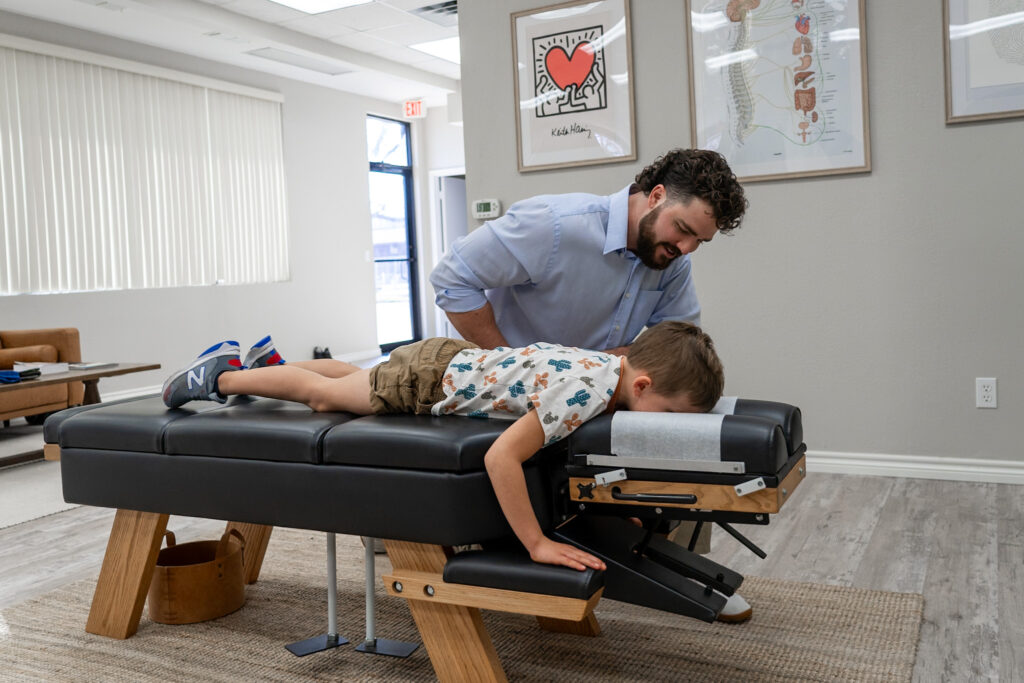
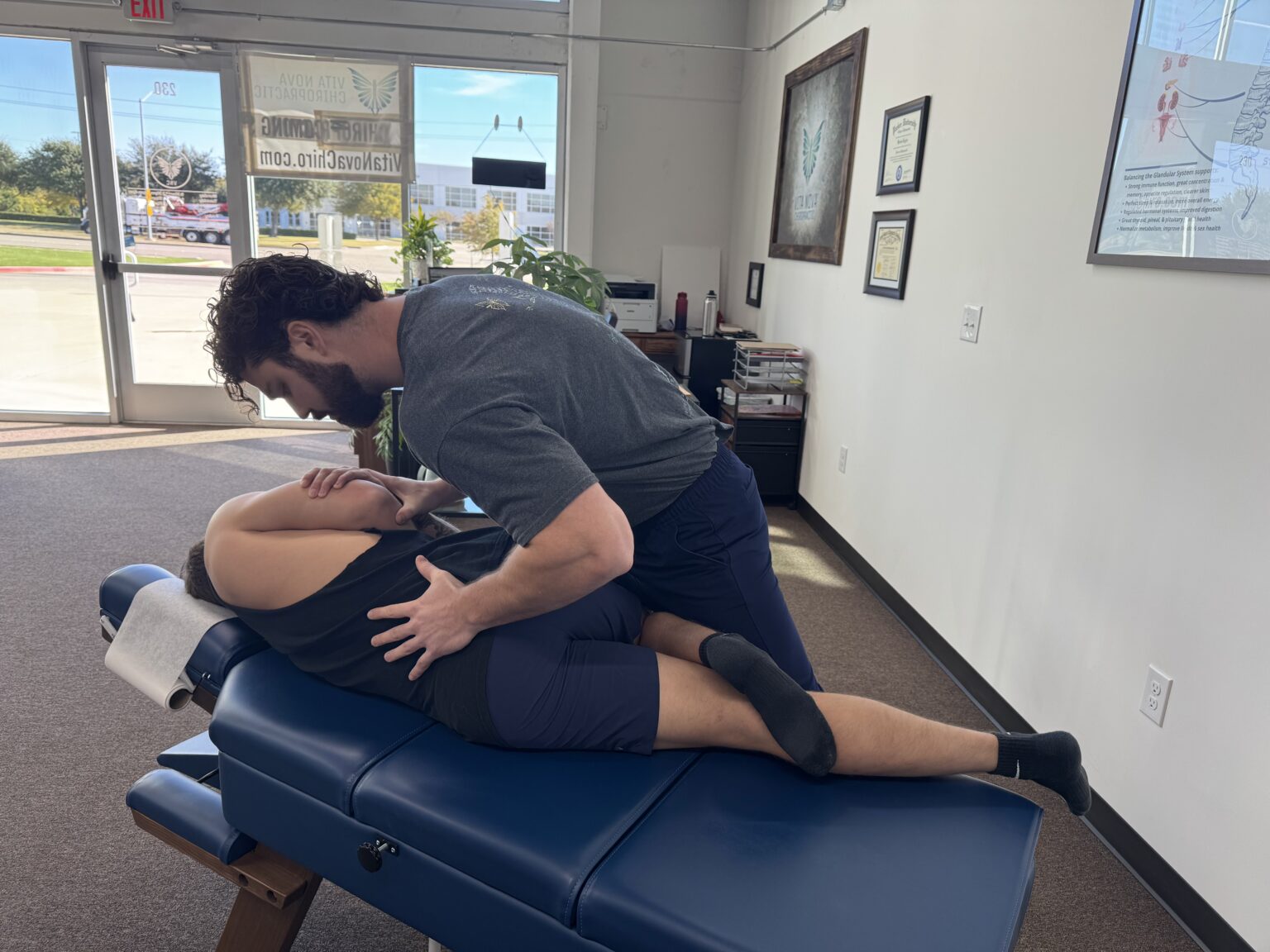
At Vita Nova, Dr. Korrin uses the Zone Technique to assess the nervous system as a whole and identify precisely where communication is being disrupted. From there, gentle, targeted adjustments are applied to restore proper vertebral alignment, relieve pressure on the affected nerve, and support the surrounding tissues in releasing their compensatory tension.
The process works on several levels:
- Spinal realignment reopens the space through which nerve roots exit the spine, directly reducing compression
- Disc pressure is redistributed — in cases involving a herniated or bulging disc, restoring alignment can reduce the degree of disc protrusion pressing on the nerve
- Muscle tension releases — as the spine is corrected, the muscles that were guarding and splinting around the compressed area begin to relax
- Nerve healing is supported — once pressure is removed, the nerve can begin to recover and normal sensation and function can return
- Inflammation is reduced — improved spinal mechanics reduce the chronic irritation that keeps the surrounding tissues inflamed
Many patients experience meaningful relief within their first few visits, though the timeline depends on how long the compression has been present and the degree of nerve involvement. Chronic or severe cases — particularly those involving significant disc pathology — may require a more extended course of care.
Pinched Nerve vs. Sciatica — What’s the Difference?
Sciatica is one of the most common presentations of a pinched nerve, but it’s worth understanding the distinction. Sciatica specifically refers to compression or irritation of the sciatic nerve — the longest nerve in the body, which runs from the lower back through the buttock and down each leg. The symptoms are distinctive: a sharp, burning, or electric pain that follows the path of the nerve, often accompanied by numbness, tingling, or weakness in the leg or foot.
While sciatica is caused by a pinched nerve, not all pinched nerves cause sciatica. The location of the compression determines the symptom pattern — which is why a thorough evaluation is essential before beginning care. Dr. Korrin’s assessment at your first visit will identify precisely where the compression is occurring and what’s driving it, so that care can be appropriately targeted. Learn more about chiropractic care for sciatica and our pinched nerve treatment approach.
What to Expect at Vita Nova for a Pinched Nerve
When you come to Vita Nova Chiropractic with a pinched nerve, Dr. Korrin will begin with a thorough consultation and evaluation — reviewing your health history, the onset and pattern of your symptoms, and any previous imaging or treatment. This gives her the full picture she needs to build a personalized care plan that targets the specific cause of your nerve compression.
Adjustments are always gentle and adapted to your current level of comfort and pain. In the early stages of care, particularly if inflammation is significant, Dr. Korrin may take a more conservative approach and gradually increase the specificity of adjustments as the area begins to settle. Progress is monitored carefully, and your care plan evolves as your condition improves.
We welcome patients from Plano, Murphy, and Richardson, TX. Learn more about what to expect during your first visit or explore our back pain chiropractic service.
People Also Ask
How long does it take for chiropractic care to relieve a pinched nerve?
The timeline varies depending on the cause and severity of the compression and how long it has been present. Many patients experience noticeable relief within the first few visits as pressure on the nerve begins to reduce. More chronic cases — particularly those involving disc herniation or degenerative changes — typically require a longer course of care to achieve lasting correction. Dr. Korrin will give you a realistic timeline at your first visit based on your specific situation and build a personalized care plan around your goals. The key is consistency — relief comes faster and lasts longer when care is followed through rather than stopped at the first sign of improvement.
Can a pinched nerve heal on its own without chiropractic care?
Some mild cases of nerve compression do resolve on their own, particularly if they are caused by temporary inflammation or a recent minor injury. However, if the underlying cause — a spinal misalignment, a disc problem, or postural dysfunction — is not addressed, the nerve is likely to become compressed again, and symptoms will return. Repeated compression can also lead to more significant nerve damage over time. Chiropractic care addresses the structural root of the problem, not just the symptom, which is why it offers more durable relief than rest alone. If you’re experiencing pinched nerve symptoms, it’s worth having the cause properly evaluated rather than waiting it out.
Is chiropractic care safe for a pinched nerve caused by a herniated disc?
Yes — chiropractic care is widely used and well-supported for nerve compression related to disc herniation and bulging discs. The key is proper evaluation and a technique adapted to the specific disc pathology involved. At Vita Nova, Dr. Korrin conducts a thorough assessment before beginning care and adjusts her approach based on the nature and severity of the disc involvement. The Zone Technique she uses is gentle and neurologically precise — making it well-suited even for patients with significant disc pathology. If you have existing imaging or have been told surgery may be necessary, it’s still worth scheduling a consultation to explore conservative care options first.