
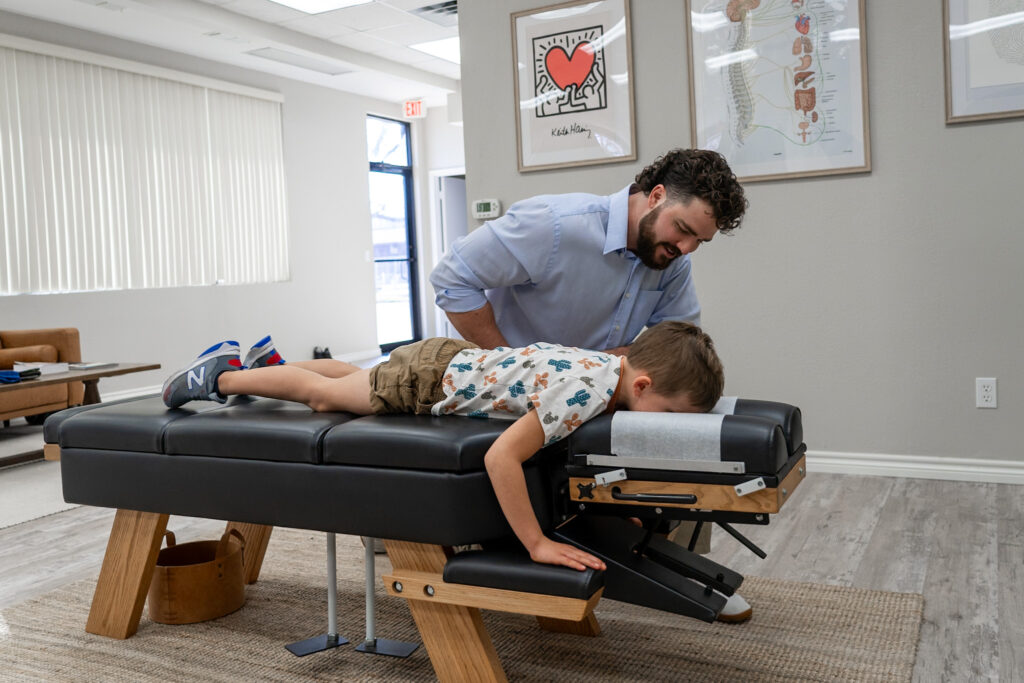

Your baby cries for three or more hours a day, more than three days a week, and nothing you do makes a consistent difference. You have ruled out hunger, diaper, temperature, and gas. Your pediatrician has confirmed there is no underlying medical problem and told you your baby has colic. What they did not tell you is what is actually driving it or what to do about it beyond waiting for it to pass. For many infants, the source is mechanical and neurological, and it responds to Zone Technique care when nothing else has.
What Is Actually Causing Colic?
Colic is defined clinically as unexplained crying in an otherwise healthy infant lasting more than three hours per day, more than three days per week, for more than three weeks. The definition describes the pattern but not the cause, and the cause is what determines whether care will help. Research points to several overlapping mechanisms. Gut dysbiosis and immature digestive function are the most studied. But the nervous system component is frequently overlooked.
The vagus nerve governs digestive motility, gut-brain signaling, and the regulation of the parasympathetic nervous system that controls rest, digestion, and calm. It runs from the brainstem through the upper cervical spine before branching into the chest and abdomen. The birthing process, particularly deliveries involving significant traction, vacuum, or forceps, places mechanical stress on the C1 and C2 levels directly adjacent to the brainstem and vagus nerve origin. When those levels are under interference, the vagus nerve cannot regulate gut function and stress response normally. The infant’s digestive system is poorly coordinated. Gas builds, motility is irregular, and the nervous system cannot self-soothe the way it should.
This is not a fringe theory. A randomized controlled trial published in the Journal of Manipulative and Physiological Therapeutics found that spinal manipulation produced significantly greater reduction in daily crying hours in colicky infants compared to dimethicone treatment, with parents reporting meaningful improvement within two weeks of care. It is consistent with what Dr. Korrin sees in practice: colicky infants who have not responded to dietary changes or medication frequently respond to Zone Technique care directed at the upper cervical interference pattern.
Which Infants Develop Colic
Colic affects an estimated 10 to 40 percent of infants worldwide and peaks around six weeks of age, typically resolving by three to four months. It affects breastfed and formula-fed infants equally. Infants born after a long or difficult labor, those delivered with vacuum or forceps assistance, and those born by emergency cesarean after a prolonged pushing phase are the presentations Dr. Korrin sees most often at Vita Nova. The mechanical stress of the delivery on the upper cervical spine is the common thread. Infants born after straightforward deliveries can also develop colic, but the birth history narrows the assessment and helps Dr. Korrin identify where the Zone Technique evaluation should focus from the first visit.
How Dr. Korrin Approaches Colic Using Zone Technique
For colic, Zone Technique focuses on two zones that are consistently involved in infant digestive and nervous system presentations. The nervous zone(3) governs the vagus nerve pathway and the upper cervical levels through which it runs. When Zone 3 is under interference at C1 or C2, the vagus nerve cannot regulate gut motility, stress response, or parasympathetic tone normally. This is the neurological component of colic that the Zone Technique assessment identifies and the adjustment addresses directly. The digestive zone(4) governs the gut itself including motility, gas regulation, and the gut-brain signaling axis. Zone 4 interference reflects the digestive dysfunction that produces the gas, cramping, and irregular bowel motility most colicky infants experience alongside the crying pattern.
Dr. Korrin assesses all six zones at every infant visit. The adjustment for a newborn or young infant uses fingertip pressure at the relevant upper cervical level. The contact is lighter than what you would use to test the firmness of a tomato. There is no manipulation, no cracking, no positioning that places any stress on the infant’s body. Most infants tolerate the assessment calmly. Some fall asleep during or immediately after the adjustment as the nervous system begins to shift from a sympathetic-dominant state toward parasympathetic regulation.
What to Expect at Your Baby’s First Visit
Your baby’s first visit begins with a full Zone Technique assessment. Dr. Korrin evaluates all six zones to identify where interference is present, with particular focus on the upper cervical and digestive zone levels most relevant to colic. The assessment takes 15 to 20 minutes. He will ask about your baby’s birth history, how long the crying pattern has been present, what time of day it is worst, whether there are feeding difficulties alongside the crying, and what has already been tried. That information shapes where the assessment focuses and what care looks like from the first adjustment.
Feed your baby before the visit if possible. Calm, recently-fed infants tolerate the assessment most easily. You will be present for the entire visit. The adjustment itself takes less than two minutes for an infant. Most families notice a change in the crying pattern within two to four visits, though some infants shift noticeably within 24 to 48 hours of the first adjustment.
Supporting Your Baby Between Visits
A few things that help the Zone Technique adjustment hold between visits for colicky infants:
- Skin-to-skin contact supports vagal tone and parasympathetic regulation. It is one of the most consistent calming tools for infants with a dysregulated nervous system and directly supports what the Zone Technique adjustment does neurologically.
- Gentle tummy time when the baby is calm and awake activates the digestive zone and supports gut motility. Keep sessions short, two to three minutes, and stop if the baby becomes distressed.
- Limit overstimulation in the hours before the peak crying window. Colicky infants often have a dysregulated sympathetic nervous system that escalates quickly in response to sensory load. A calmer environment in the late afternoon reduces the intensity of the evening crying peak.
- Note the pattern between visits. Time of day, feeding relationship, what calms the baby even temporarily. This information helps Dr. Korrin track how the nervous system is responding and adjust the assessment focus at the next visit.
Colic frequently presents alongside reflux. Both involve the digestive zone and the vagus nerve pathway, and many infants at Vita Nova present with both simultaneously. If your baby also has difficulty latching or feeding, the infant chiropractic care page covers how Zone Technique approaches feeding difficulties alongside colic. The frequent crying symptom page covers the broader infant distress pattern when the cause has not yet been identified as colic specifically.
Dr. Korrin sees colicky infants from across Plano, Murphy, and Richardson at Vita Nova. Many families come in after weeks of trying dietary changes, probiotics, and gas drops without consistent results and are looking for something that addresses the nervous system component directly. Dr. Korrin is accepting new pediatric patients. Schedule your baby’s first visit. The earlier in the colic window care begins, the more time there is for the nervous system to respond before the pattern resolves on its own around three to four months.