
What Is a Bulging Disc?
A bulging disc happens when the outer wall of a spinal disc stays intact but protrudes outward under sustained compression. The disc pushes past its normal boundary without that wall tearing. If you’re searching for a bulging disc chiropractor near you, you likely already have a confirmed diagnosis from imaging and want to understand what it actually means for your care.
A disc herniation is structurally different: the outer wall tears and the inner disc material escapes. Both conditions can compress nearby nerve roots and cause significant pain, but a bulging disc often responds well to conservative care because the disc structure itself remains intact. That distinction matters for how treatment is framed. The conservative care window is wider for a bulging disc, which is why patients with imaging that confirms bulging rather than herniation are typically strong candidates for Zone Technique before considering more invasive options.
A lumbar bulging disc at L4-L5 or L5-S1 pressing on the sciatic nerve root produces sciatica. The burning, electric sensation that runs through the glute and down the leg doesn’t originate there. It originates at the disc. Not every bulging disc causes sciatica, but the two conditions frequently coincide, and that connection shapes how care is structured.
Bulging discs are most common in adults between 35 and 55, though they’re appearing earlier in people with sedentary work patterns. The mechanism is sustained compression. Discs that absorb load without adequate recovery time gradually lose their ability to rehydrate and begin to protrude. Office workers who spend most of the day seated are the most common demographic, particularly those who’ve never built the core stability that helps distribute spinal load. Active adults who train through early back pain, treating it as ordinary soreness, are a second common presentation. By the time patients reach Dr. Korrin, they’ve often tried stretching, NSAIDs, or physical therapy. The question they’re looking to answer is why those approaches didn’t resolve the underlying pattern.
How Dr. Korrin Treats Bulging Disc Pain Using Zone Technique
Zone Technique evaluates the body through six zones. For a bulging disc, two are consistently involved.
Zone 3, the nervous zone, addresses nerve root compression at its source. A lumbar bulging disc at L4-L5 or L5-S1 puts direct mechanical pressure on the adjacent spinal nerve root. That pressure disrupts the signal between the brain and every structure that nerve serves. In cervical presentations, C5-C7 are the most commonly affected levels. Zone Technique evaluation identifies exactly which spinal levels are generating interference and restores nervous system communication at those specific points, not at the location where pain is felt.
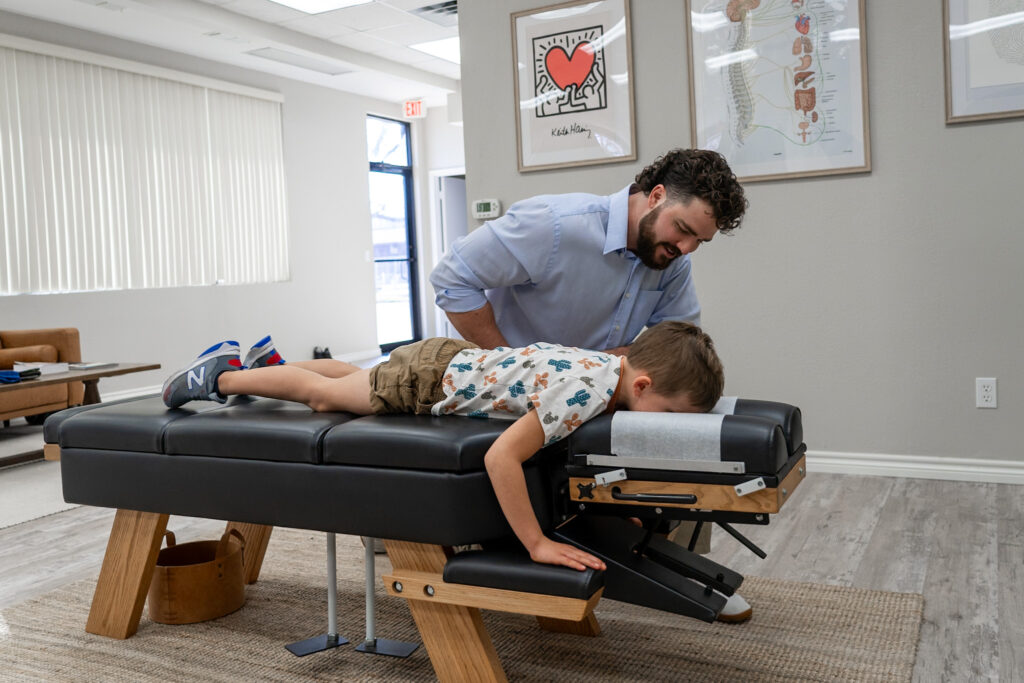
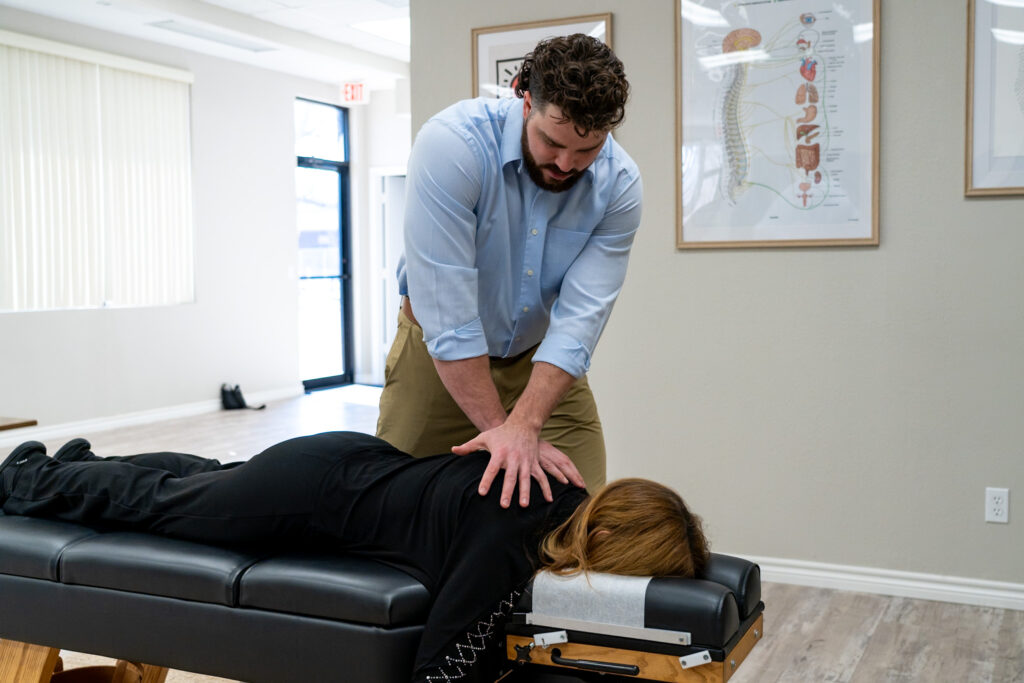
Zone 5, the muscular zone, addresses the protective response that forms around the disc. Paraspinal muscles tighten into chronic spasm when a disc is irritated. That tension compresses the disc further and sustains the pain cycle between visits. Patients who receive spinal adjustments without addressing the muscular holding pattern often notice improvement at the visit. They return to pain within a day or two because the structural load around the disc hasn’t changed. Zone Technique works Zone 3 and Zone 5 simultaneously, which changes what the disc is carrying between sessions.
Scientific Evidence Supporting Chiropractic & Bulging Disc
Research on Chiropractic & Bulging Disc
This systematic review examined spinal manipulation in patients with lumbar disc herniation. The authors found that available evidence suggested manipulation may have a role in conservative care, while also emphasizing the need for careful clinical judgment.
Current evidence suggests spinal manipulation may be a conservative option in some lumbar disc cases, but treatment should be individualized.
Lumbar Disc Herniation: Diagnosis and Management
This review explains that disc herniation happens when disc material pushes through the annulus and may irritate nearby nerve structures. It does not study chiropractic directly, but it provides helpful background on how bulging and herniated discs cause symptoms.
Research shows bulging disc symptoms are closely tied to mechanical and nerve-related irritation, supporting conservative approaches that aim to reduce stress on the spine.
What to Expect at Your First Visit
The first visit starts with a Zone Technique spinal evaluation. Dr. Korrin reviews any imaging you have, asks about your symptom history and pattern, and assesses which spinal levels are showing nervous system interference through gentle spinal palpation and postural evaluation. That assessment takes 15 to 20 minutes. After reviewing the findings, Dr. Korrin walks you through what the Zone Technique evaluation showed and what the care plan will target.
Care frequency for bulging disc typically runs once a week, sometimes twice a week during an active flare. It tapers as the nervous system stabilizes and the paraspinal muscle tension releases. If your symptoms include leg pain or radiating back pain, the evaluation covers that at the same visit. You will leave knowing which zones are involved and what the care plan addresses.
Dr. Korrin sees many Plano residents that suffer from bulging discs. It can affect everyone. Office workers often developed it from sitting all day long, and blue collar workers from heavy manual labor which leads to disc compression.
If your bulging disc is contributing to leg pain or sciatica symptoms, the sciatica FAQ page answers the questions patients most commonly ask about that connection.
Dr. Korrin is at Vita Nova Chiropractic in Plano, TX. If a bulging disc is affecting how you move through your day, schedule your first visit and get a clear picture of what’s driving it.