
Prenatal Stress and the Nervous System
Prenatal stress is the sustained activation of the maternal stress response during pregnancy. The HPA axis, the hypothalamic-pituitary-adrenal system that governs cortisol and adrenaline release, responds to psychological, physical, and environmental stressors. In a non-pregnant person, the stress response activates and recovers. During pregnancy, the physiological load of growing a baby, combined with sleep disruption, physical discomfort, hormonal changes, and the anticipatory anxiety of impending parenthood, keeps the stress response more chronically activated than it would otherwise be.
The research on prenatal stress and fetal development is substantial. A systematic review found that elevated maternal cortisol during pregnancy is associated with altered fetal brain development, preterm birth risk, and postnatal behavioral and emotional outcomes in the child. This does not mean every anxious pregnancy produces a negative outcome. It means the hormonal environment of pregnancy matters, and reducing sustained cortisol elevation is a clinically meaningful goal rather than a wellness preference.
Zone Technique addresses prenatal stress through the glandular zone, which governs the HPA axis and cortisol regulation, and through the nervous zone, which regulates the autonomic nervous system balance between the sympathetic stress response and the parasympathetic rest state. When those zones are under interference, the body cannot modulate the stress response as efficiently as it should. The sustained cortisol elevation that results is not just uncomfortable for the mother. It is a signal running through the whole pregnancy.
Who Experiences Significant Prenatal Stress
Prenatal stress affects expecting mothers across the full spectrum of pregnancy experience. High-demand professional roles, long commutes, relationship stress, a history of pregnancy loss or infertility, a complicated medical history in the current pregnancy, and financial stress are among the most common drivers. Physical discomfort from pelvic pain, sciatica, or poor sleep compounds the psychological stress load. Patients who come to Vita Nova specifically for prenatal stress often describe a general state of chronic tension: in the body, in the nervous system, in the mental background. that they cannot seem to settle regardless of the relaxation strategies they have tried.
How Dr. Korrin Approaches Prenatal Stress Using Zone Technique
For prenatal stress, Zone Technique focuses on the glandular zone(1) and the nervous zone(3) simultaneously. Zone 1 governs the hormonal signaling of the HPA axis, the cortisol regulation, adrenal function, and the hormonal environment of the pregnancy. When Zone 1 is under interference, the HPA axis cannot modulate the cortisol response efficiently. The stress activation threshold lowers, the recovery from stress activation takes longer, and the sustained cortisol elevation that follows has effects on both maternal wellbeing and fetal development.
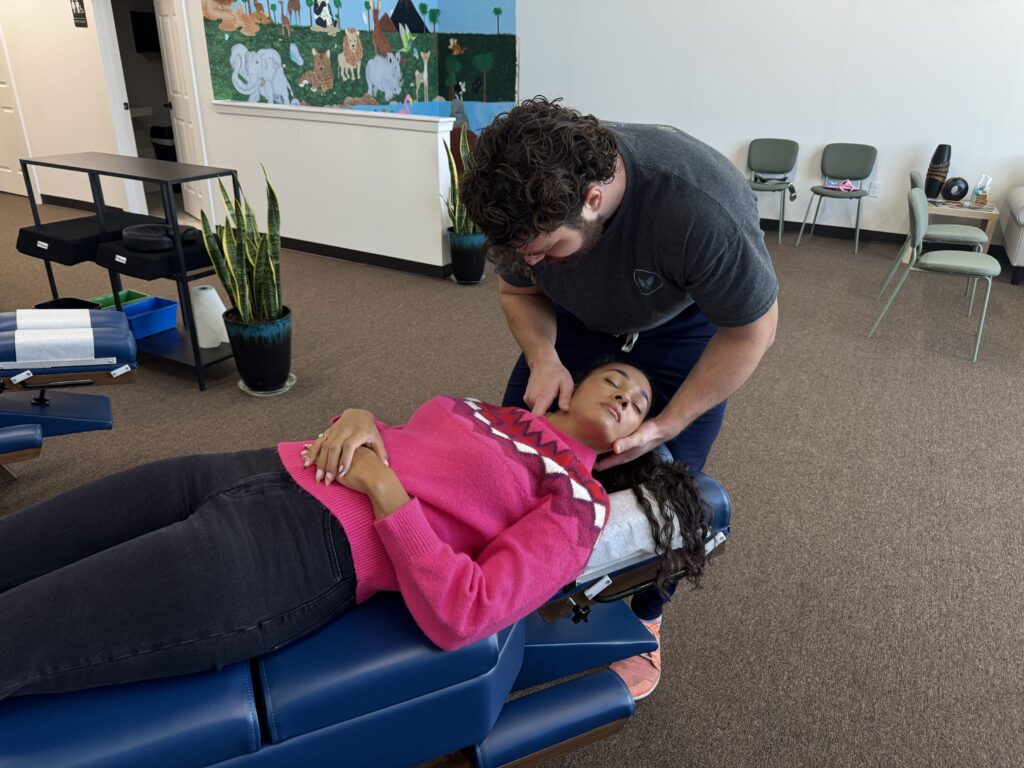
Zone 3 governs the autonomic nervous system balance between sympathetic activation and parasympathetic rest. When Zone 3 is under interference at the upper cervical levels, the shift from the stress response into the rest-and-digest parasympathetic state is impaired. The nervous system cannot downregulate after a stressor. It stays in a mildly activated baseline that the expecting mother experiences as persistent tension, difficulty relaxing, and sleep that does not feel restorative. The Webster Technique assessment runs alongside Zone Technique at every prenatal visit, addressing the structural pelvic and sacral alignment that, when corrected, reduces the physical pain signals that compound the stress load.
Patients who come in primarily for prenatal stress frequently notice changes in sleep quality before they notice changes in anxiety or tension. The nervous system shift from sympathetic dominance toward parasympathetic regulation shows up in sleep first. Then in the quality of the body’s rest between stressors. Then in the stress response threshold itself.
What to Expect at Your First Visit
Your first visit begins with a Zone Technique assessment of the full nervous system. Dr. Korrin evaluates all six zones and identifies where interference is present, with particular attention to the glandular and nervous zones most relevant to stress regulation. The assessment takes 15 to 20 minutes. He will ask about your stress experience during pregnancy: what is driving it, how it affects sleep, whether there is a physical pain component alongside the psychological stress load, and how far along you are. Positioning is fully adapted for your trimester throughout the visit.
Prenatal stress frequently presents alongside the physical discomforts of pregnancy that amplify the stress load. The pregnancy chiropractic care page covers the full picture of Zone Technique and Webster Technique prenatal care at Vita Nova. If pelvic pain or sciatica is part of your stress picture, those condition pages cover how Zone Technique addresses the physical component specifically. For expecting mothers whose prenatal stress has a sleep disruption component, the nervous zone assessment addresses the parasympathetic regulation pattern that governs sleep quality alongside the cortisol pattern.
Dr. Korrin sees prenatal patients from across Plano, Murphy, and Richardson at Vita Nova, and the prenatal stress presentation is one of the most consistent in the practice, often arriving in patients who came in initially for physical pain and noticed broader changes in their stress and sleep pattern as Zone Technique care progressed. He is accepting new prenatal patients. Schedule your first visit to find out whether the nervous system interference pattern contributing to your prenatal stress is something Zone Technique can address.