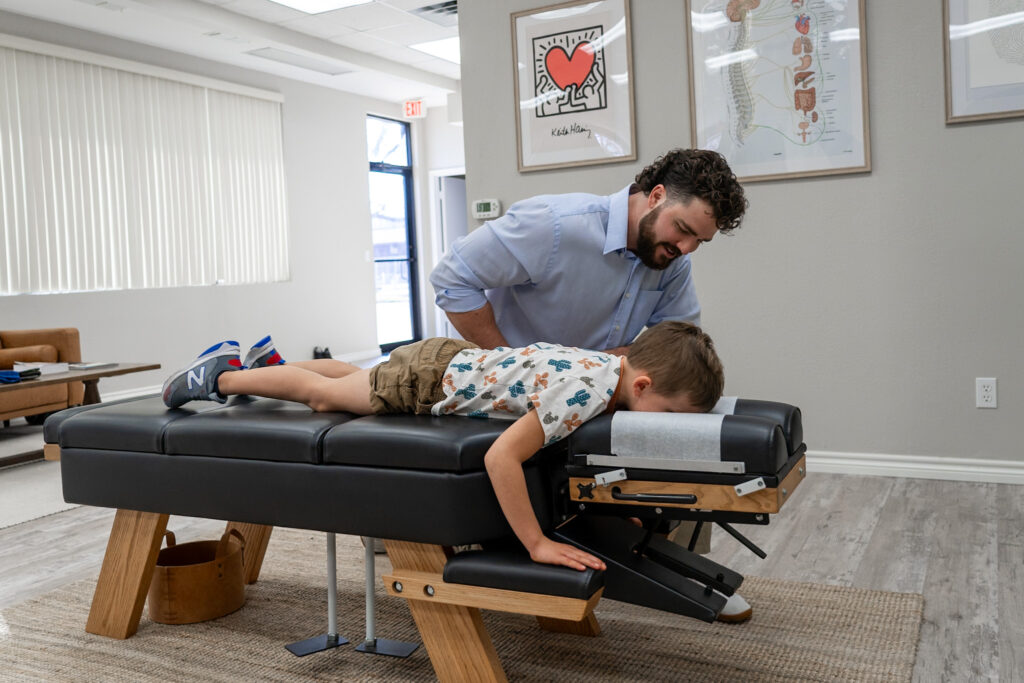

It comes on suddenly. A sharp, shooting pain on one or both sides of the lower abdomen, usually when you change position quickly: rolling over in bed, standing up fast, sneezing, or laughing. It resolves in seconds to minutes and then it is gone. Your OB confirmed round ligament pain and told you it is harmless and normal. Both of those things are true. It is also one of the most responsive presentations to Webster Technique care, and most pregnant patients who come in for it notice a meaningful reduction within a few visits.
What Is Round Ligament Pain?
The round ligaments are two cord-like structures that connect the front of the uterus to the groin through the inguinal canal. They hold the uterus in its forward position within the pelvis. As the uterus grows during pregnancy, the round ligaments are progressively stretched. When the uterus moves suddenly, with a quick position change, a sneeze, or a cough, the round ligament is pulled rapidly, and the stretch receptor in the ligament fires a sharp pain signal. It is a normal response to an abnormal mechanical demand. The ligament is doing its job under conditions it was not designed for.
The intensity of round ligament pain varies significantly between patients and between pregnancies. The variable is how much tension the round ligament is already carrying at baseline. When the pelvis sits asymmetrically, with one SI joint slightly restricted and the uterus tilting toward the more restricted side, the round ligament on that side carries more baseline tension. A smaller positional change is enough to trigger the sharp pain because the ligament is already stretched close to its threshold. This is the mechanical component that Webster Technique addresses directly.
Who Develops Round Ligament Pain
Round ligament pain is most common in the second trimester as the uterus grows rapidly and the round ligaments are first stretched significantly. It typically peaks between 14 and 27 weeks and often improves somewhat in the third trimester as the ligaments adapt. It is more common in second and subsequent pregnancies because the uterus is less supported by previously stretched abdominal musculature. Patients with pre-existing pelvic asymmetry or SI joint dysfunction are more likely to develop significant round ligament pain because the baseline tension in the ligaments is already elevated before the pregnancy-related stretching begins.
How Dr. Korrin Approaches Round Ligament Pain Using Webster Technique
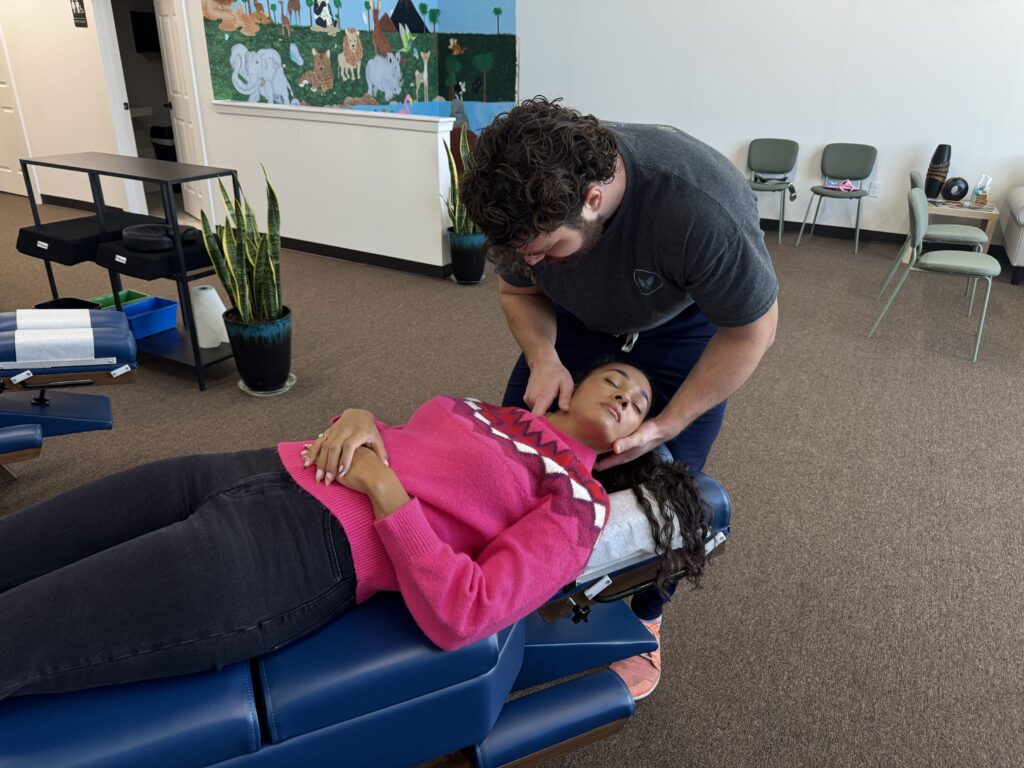
The Webster Technique assessment at every prenatal visit at Vita Nova includes specific evaluation and treatment of the round ligaments. Dr. Korrin assesses sacral alignment and SI joint symmetry first, then evaluates round ligament tension bilaterally. When one round ligament is carrying significantly more tension than the other, it identifies which side of the pelvis is sitting asymmetrically and where the Webster adjustment should focus. Correcting the sacral alignment and SI joint symmetry reduces the structural asymmetry driving the unequal round ligament tension. The round ligament itself is also directly addressed through gentle soft tissue work at the attachment points in the lower abdomen, not at the uterus, which is not touched during the Webster protocol.
Zone Technique addresses the nervous system component alongside Webster. The muscular zone(5) tracks the uterine support muscle tension pattern that compresses the round ligament at its uterine attachment. The glandular zone(1) governs the relaxin signaling that influences ligament compliance. When Zone 1 is under interference, the hormonal regulation of ligament tension is less precise and the round ligaments carry more sustained baseline tension regardless of the structural symmetry of the pelvis. Both are assessed and adjusted at every prenatal visit alongside the Webster protocol.
What to Expect at Your First Visit
Your first visit begins with a Zone Technique assessment and Webster Technique assessment. Dr. Korrin evaluates all six zones and the full Webster pelvic assessment, then focuses the treatment on the sacral alignment, SI joint symmetry, and round ligament tension most relevant to your presentation. The assessment takes 15 to 20 minutes. He will ask which side the pain is worse on, what triggers it most consistently, and how far along you are. Side-lying positioning with body pillow support is used throughout for second and third trimester patients. Nothing places pressure on the abdomen. Most patients notice the triggering threshold for the sharp pain increasing within two to three visits. The same movements that used to trigger it reliably begin to produce it less often or less intensely as the round ligament tension reduces.
Round ligament pain frequently presents alongside pelvic girdle pain because both involve pelvic asymmetry and the same structural pattern that the Webster Technique addresses. If sciatica during pregnancy is also present, the Zone Technique nervous zone assessment addresses that nerve pathway alongside the round ligament work at the same visit. For the full picture of prenatal chiropractic care at Vita Nova, the pregnancy chiropractic care page covers what every visit looks like and what Webster Technique certification means in practice.
Dr. Korrin sees round ligament pain patients from across Plano, Murphy, and Richardson at Vita Nova throughout the second and third trimester. He is accepting new prenatal patients. Schedule your first visit to find out whether the round ligament tension and pelvic asymmetry driving the pain is something Webster Technique and Zone Technique can address.