
What Could Be Causing Your Neck Pain?
The cervical spine houses seven vertebrae, the nerve roots supplying the arms and hands, and the structural pathway through which the brainstem communicates with the rest of the body. When any part of that system is under stress, the neck is usually where you feel it first. The most common mechanical sources are cervical disc involvement at C5-C6 or C6-C7, the two levels where most disc herniations in the neck occur. A herniated disc at either level can irritate the exiting nerve root and produce pain, numbness, or tingling that travels from the neck into the shoulder, arm, or hand. A pinched nerve from vertebral misalignment or sustained muscle compression produces a similar radiating pattern.
Muscle-driven neck pain tells a different story. The suboccipital muscles at the base of the skull, the levator scapulae running from the cervical spine to the shoulder blade, and the scalenes along the side of the neck are the most commonly overloaded structures in desk workers and people who drive long distances. Sustained forward head posture shifts the mechanical load of the head forward of the cervical spine. For every inch the head moves forward of its neutral position, the effective weight the cervical muscles are supporting increases significantly. Eight hours of that load builds the kind of neck tension that does not release with a few shoulder rolls and a hot shower.
The distinction between disc-driven and muscle-driven neck pain matters because the approach differs between them. Pain that radiates into the arm or produces numbness and tingling in the hand points toward disc or nerve root involvement. Pain that stays local to the neck and upper trapezius, is worst after long periods of sitting, and eases temporarily with movement is more likely to be postural and muscular in origin. Most patients presenting at Vita Nova have components of both.
Who Develops Neck Pain
Neck pain is one of the most common presentations Dr. Korrin sees at Vita Nova, and it arrives from a predictable set of patient profiles. The desk worker who sits in front of two monitors for eight hours and drives a 45-minute commute each way develops it through sustained cervical flexion and forward head loading. The pattern accumulates over months before the pain becomes impossible to ignore. Athletes at Plano ISD schools and in local adult rec leagues develop it through contact, repetitive rotation, and the kind of acute strains that do not resolve fully between seasons. People who have been in rear-end collisions often present with whiplash that was undertreated at the time of the accident and has since developed into a chronic cervical pattern. Older adults present with degenerative cervical changes that have been building quietly over decades and have finally crossed the threshold into daily symptoms.
How Dr. Korrin Approaches Neck Pain Using Zone Technique
Zone Technique assesses the nervous system across six body zones before any adjustment is made. For neck pain, two zones are consistently involved. The nervous zone(3) governs the cervical nerve roots and the pathways they supply into the shoulders, arms, and hands. When Zone 3 is under interference at a specific cervical level, the nerve signals traveling through that pathway are disrupted. The disruption produces the radiating pain, numbness, or tingling that travels from the neck into the upper extremity, and it also drives the chronic muscle tension pattern the body creates around the affected segment as a protective response.
The muscular zone(5) tracks that muscle tension pattern directly. In neck pain patients, Zone 5 interference typically shows up as suboccipital tension at the base of the skull, levator scapulae overactivation, and the forward head posture pattern that has been loading the cervical spine asymmetrically. This muscular guarding pattern is one of the primary reasons neck pain persists after the original structural trigger has resolved. The body continues to hold the protective tension even when the acute problem is no longer present. Zone Technique identifies the interference maintaining that pattern and adjusts at the specific cervical levels where it is originating.
Dr. Korrin assesses both zones at every visit. The adjustment is made at the cervical level where interference is found in the Zone Technique assessment, not at the location of the patient’s reported pain. For a patient with right-sided neck pain and arm tingling, that means adjusting at the cervical nerve root level driving the C6 or C7 distribution, not at the trapezius where the pain is loudest. That specificity is what separates Zone Technique from a general cervical manipulation.
When Neck Pain Warrants Prompt Evaluation
Most neck pain is mechanical in origin and responds to conservative care. A small number of presentations require urgent evaluation and imaging before chiropractic care is appropriate. Neck pain following a significant impact or trauma needs to rule out fracture before any manual treatment is applied. Neck pain accompanied by progressive arm weakness, not just pain but actual loss of strength in the hand or arm, needs imaging to assess the degree of nerve root compression. Neck pain with bilateral arm symptoms, both arms rather than one side, suggests involvement at a level that warrants medical assessment. Sudden severe neck pain that is the worst headache of your life and came on without clear cause is a medical emergency requiring immediate evaluation, not chiropractic care.
Outside of those presentations, neck pain with or without arm radiation is within chiropractic scope and responds well to Zone Technique care when the assessment identifies the right cervical levels. If Dr. Korrin finds something in the assessment that falls outside that scope, he will tell you directly and refer you to the appropriate provider.
What to Expect at Your First Visit
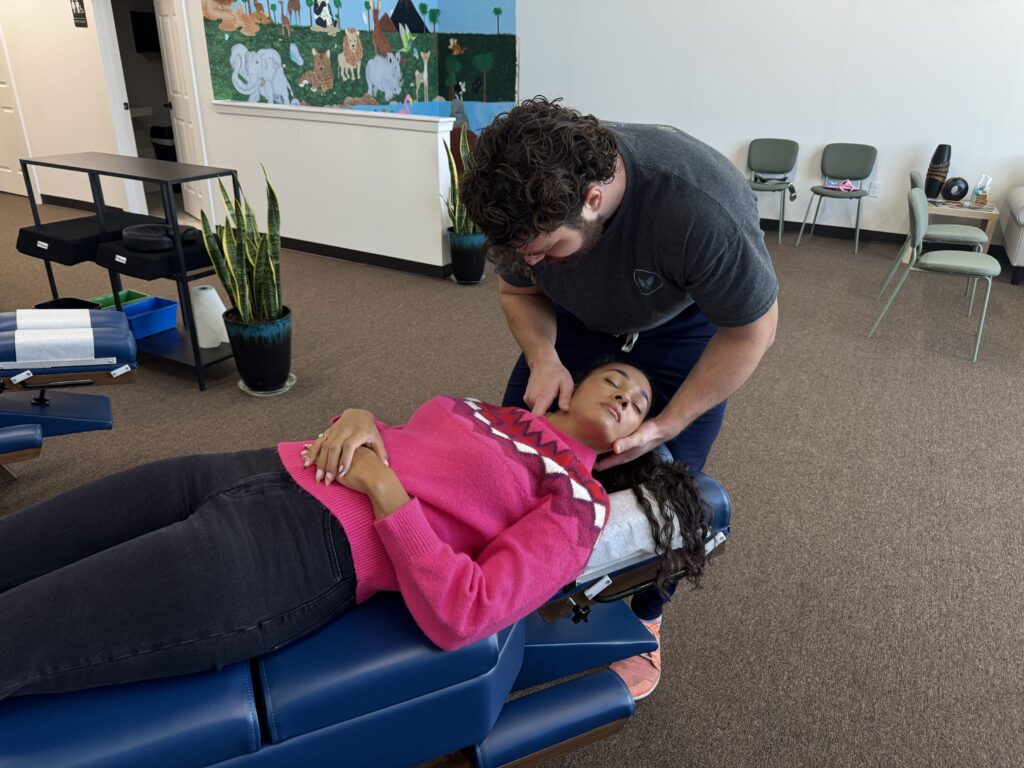
Your first visit begins with a Zone Technique assessment of the full nervous system. Dr. Korrin evaluates all six zones and identifies where interference is present, then focuses on the cervical levels most relevant to your neck pain pattern. The assessment takes 15 to 20 minutes. He will ask where the pain is located, whether it radiates, what makes it worse, how long it has been present, and whether you have had any prior neck injuries or imaging. The pattern of your symptoms helps narrow which cervical levels are most likely involved before the assessment confirms it.
If you have had an MRI or X-ray of the cervical spine from a previous provider, bring it. The structural picture from imaging maps directly onto the Zone Technique findings and allows Dr. Korrin to build a more precise adjustment from the first session rather than working toward it over multiple visits. You leave the first visit with a clear explanation of what the assessment found and a care frequency recommendation based on your specific cervical presentation.
Supporting Your Neck Between Visits
What you do between visits determines how well the Zone Technique adjustment holds in the cervical spine, which is the most mobile and postural-load-sensitive region of the spine. These habits make the most difference for neck pain specifically:
- Raise your monitor to eye level. The single most impactful postural change for desk-worker neck pain. Every degree of downward gaze adds cervical flexion load. A monitor at eye level eliminates the sustained forward head position that undoes cervical adjustments faster than anything else.
- Keep your phone at eye level when reading or scrolling. Looking down at a phone for 20 to 30 minutes produces the same cervical loading as sustained desk work. The cumulative effect across a day is significant.
- Sleep on your side or back with a supportive pillow. Stomach sleeping forces cervical rotation for the entire night. On your side, the pillow height should keep the cervical spine neutral, not tipped toward the mattress or pushed up toward the ceiling.
- Take a two-minute movement break every 45 to 60 minutes of sustained desk or driving time. Gentle chin tucks and shoulder blade retractions reset the cervical position without forcing range of motion into a painful area.
If your neck pain is radiating into the arm or producing hand symptoms, the pinched nerve chiropractic care page covers how Zone Technique addresses cervical nerve root compression specifically. For neck pain that developed after a car accident or impact, the whiplash chiropractic care page goes deeper into how that presentation is assessed and why it requires a different approach than postural neck pain. Upper back tightness that accompanies your neck pain is covered on the upper back pain symptom page.
Dr. Korrin is accepting new patients at Vita Nova in Plano, TX. Schedule your first visit to find out which cervical levels are under interference and what Zone Technique can do for your specific neck pain pattern.