
It is not where you would expect pain to be. You have lower back tightness, but what you really notice is the burning that runs into your hip. Or the ache in your neck that has somehow turned into numbness in your fingers. Or the sharp line of pain that tracks from your low back down through your glute and into your leg when you sit too long. Radiating pain is unsettling because the source and the sensation are not in the same place. That gap is exactly what Zone Technique is built to find.
What Could Be Causing Your Radiating Pain?
Radiating pain is the nervous system reporting interference somewhere along a nerve pathway. The sensation you feel in your leg, arm, or hip is not originating there — it is traveling from a point of compression or irritation somewhere along the spine. The most common driver is a nerve root being compressed or irritated where it exits the spinal column, which can happen from a disc herniation pressing against the nerve, a pinched nerve from vertebral misalignment or tight musculature, or the sciatic nerve being compressed by disc material or the piriformis muscle in what is typically diagnosed as sciatica. When the radiating pattern involves burning, tingling, or numbness that persists rather than comes and goes with movement, neuropathy may also be involved. The symptom alone does not tell you which of these is the source. The location of the radiation, how it behaves, and what makes it better or worse all point toward the origin.
How Dr. Korrin Approaches Radiating Pain Using Zone Technique
Radiating pain is one of the clearest presentations of Zone Technique working the way it is designed to. The nervous zone(3) governs the entire peripheral nerve network — the pathways from the spinal cord outward through the limbs. When Zone 3 is under interference at a specific spinal level, the nerve signals traveling through that pathway become disrupted. The disruption is what produces the radiating sensation: burning, shooting pain, numbness, or tingling in a location that is often nowhere near where the actual interference is happening.
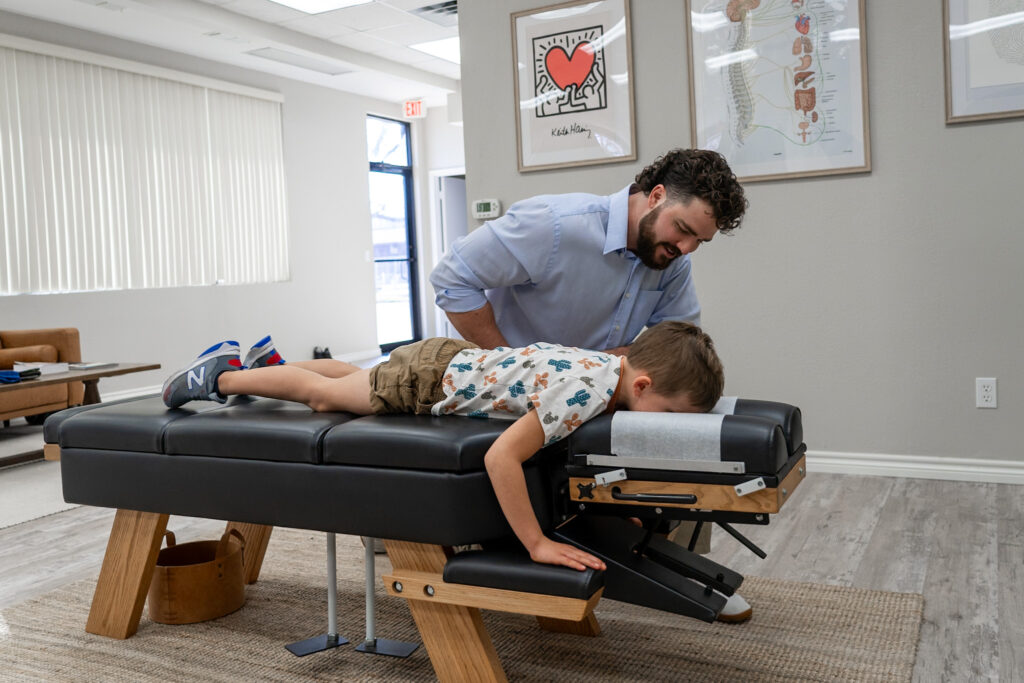
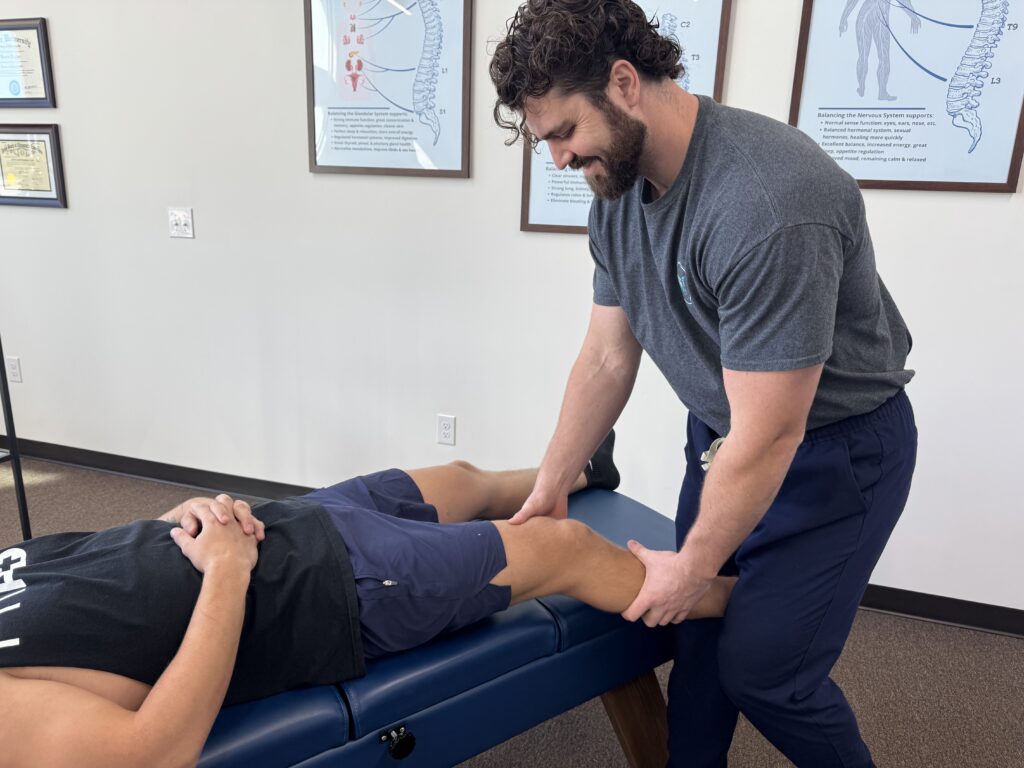
Dr. Korrin assesses the nervous zone at every spinal level to identify exactly where the interference is present. The adjustment is made at that specific level, not at the location where the patient feels pain. This distinction matters because treating the sensation without addressing the source rarely produces lasting change. Most patients who have had radiating pain for any length of time have tried something that provided temporary relief without getting to the origin. The Zone Technique assessment is structured to find the origin first.
What to Expect at Your First Visit
Your first visit begins with a full Zone Technique assessment of the nervous system. Dr. Korrin works through all six zones to identify where interference is present, then maps that interference to the nerve pathway producing your radiating symptoms. The assessment takes 15 to 20 minutes. He will ask you to describe the radiation — where it starts, where it travels, what triggers it, and whether it is constant or intermittent. That pattern helps narrow the spinal levels most likely involved before the assessment confirms it.
If you have had imaging done, bring it. An MRI showing disc involvement at a specific level maps directly onto what the Zone Technique assessment identifies and helps Dr. Korrin build a more precise adjustment. You leave the first visit knowing what the assessment found, which nerve pathway is under interference, and what care looks like from there.
If your radiating pain runs from the low back into the hip, glute, or leg, the sciatica chiropractic care page goes deeper into how Zone Technique addresses that specific nerve pathway. If the radiation is connected to disc involvement, the disc herniation page covers how the assessment and adjustment work for disc-related nerve compression. For radiating pain in the arms or hands with a burning or tingling quality that does not improve with position changes, the pinched nerve page is the right place to start.
Radiating pain is one of the most common reasons adults in Plano, TX seek chiropractic care after months of trying to manage it on their own. Dr. Korrin sees it consistently in desk workers along the Legacy Drive corridor whose disc and nerve issues have been building quietly through years of sustained sitting, and in patients from Murphy and Richardson who come in after a primary care visit that identified nerve involvement but did not offer a mechanical solution for it. The back pain chiropractor service page covers what a first visit looks like for nerve-related presentations specifically.
Dr. Korrin is accepting new patients at Vita Nova in Plano, TX. Schedule your first visit to find out where your radiating pain is actually coming from.