
Your child is not hitting the movement milestones on the expected timeline. They are behind on rolling, sitting, crawling, or walking. Your pediatrician has noted it. You may be in early intervention or working with an occupational or physical therapist. You are also asking whether there is something else that can support the process, something that addresses the nervous system directly rather than working around it. That is the question Zone Technique is positioned to help answer.
What Is the Nervous System’s Role in Motor Development?
Motor development is a neurological process. The brain sends movement signals through the spinal cord and peripheral nerves to the muscles. The quality and timing of those signals determine how well a child develops the coordination, strength, and sequencing that underlies rolling, crawling, sitting, and walking. When there is interference in the nervous system pathway between the brain and the muscles, the signals arriving at the muscles can be inconsistent, delayed, or disrupted. The muscles receive the message, but not clearly enough or not quickly enough for the movement to organize the way it should.
Interference in the upper cervical spine is particularly relevant to motor development because the brainstem, which sits at the junction of the brain and the spinal cord, coordinates motor output across the body. The upper cervical levels, specifically C1 and C2, directly surround the brainstem. Mechanical stress or joint restriction at those levels from a difficult delivery, positional asymmetry in early infancy, or a fall during the early months of development can create nervous system interference that affects the quality of motor signaling downstream.
It is important to be direct about what chiropractic care does and does not do in this context. Zone Technique does not treat neurological diagnoses. It does not reverse genetic conditions, cerebral palsy, or structural brain differences. What it does is remove mechanical interference from the nervous system pathway so that whatever capacity the nervous system has is expressed as clearly as possible. For children whose motor delays involve a nervous system component that is mechanical or functional in origin, that distinction can matter. For children with a clear structural neurological diagnosis, Zone Technique can still be part of the support picture alongside the primary therapeutic team.
How Dr. Korrin Approaches Motor Delays Using Zone Technique
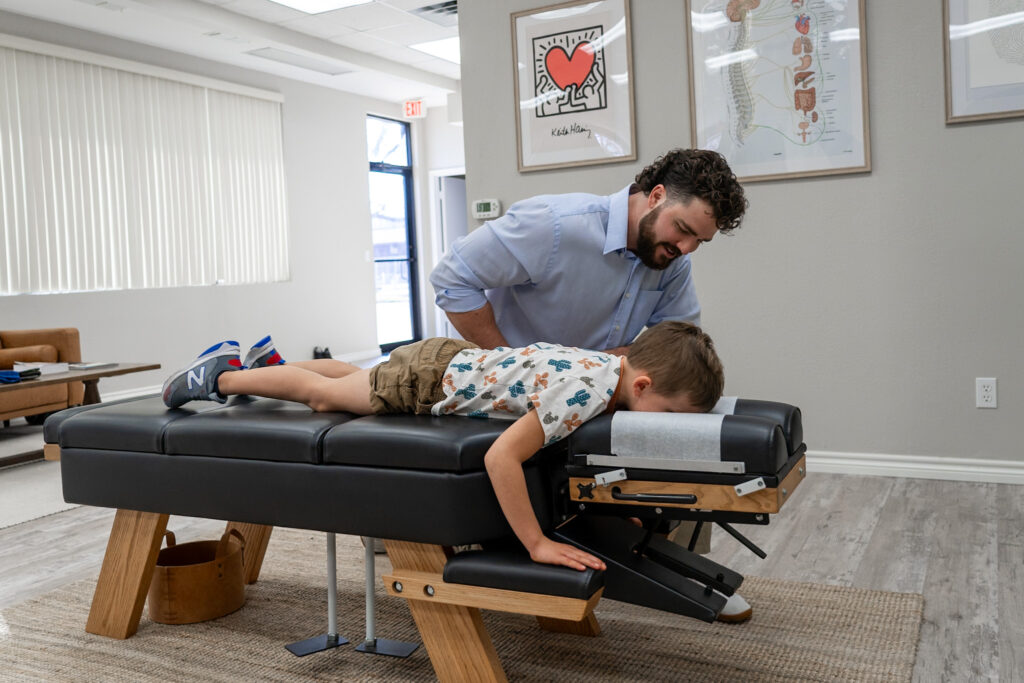
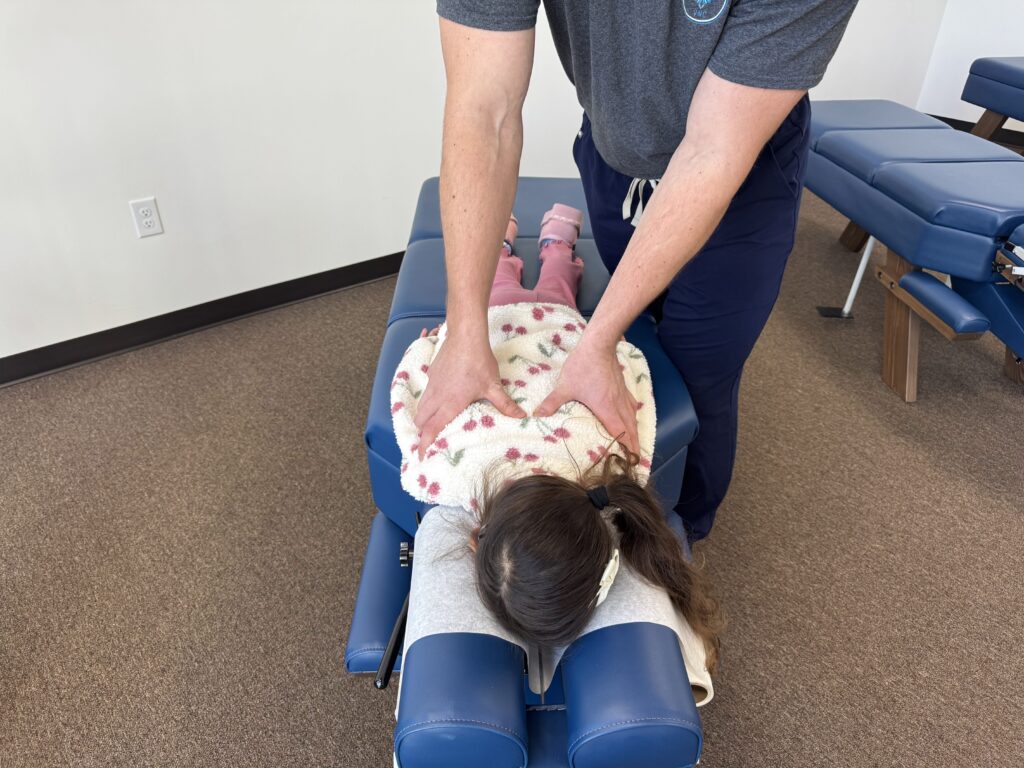
For motor delays, Zone Technique focuses primarily on the nervous zone(3). Zone 3 governs the motor and sensory nerve pathways from the brainstem and spinal cord outward to the muscles. When Zone 3 is under interference at the upper cervical levels, the motor signals traveling from the brain to the muscles involved in gross motor movement are disrupted. Dr. Korrin assesses Zone 3 across all cervical and thoracic levels to identify where that interference is present. The adjustment is adapted for the child’s age and developmental stage. For infants, the pressure used is extremely gentle, comparable to the pressure you would use to test the ripeness of a tomato. For toddlers, the technique is similarly adapted. Nothing about the adjustment is forceful or uncomfortable.
The muscular zone(5) is also assessed alongside Zone 3 for motor delay presentations. Zone 5 tracks the muscle tone and coordination pattern that the nervous system is producing. Children with motor delays frequently present with either low tone, where the muscles do not activate with sufficient strength or timing, or asymmetrical tone, where one side of the body is more active than the other. Zone 5 interference reflects the tone pattern the nervous system is generating and the adjustment works at the level where that pattern is originating.
Dr. Korrin works alongside early intervention teams, occupational therapists, and physical therapists rather than as a replacement for them. Zone Technique addresses the nervous system interference component. The therapeutic team addresses the motor skill development component. Both are useful and neither replaces the other.
What to Expect at Your Child’s First Visit
Your child’s first visit begins with a Zone Technique assessment of the full nervous system. Dr. Korrin evaluates all six zones to identify where interference is present, with particular attention to the upper cervical levels most relevant to motor development. The assessment takes 15 to 20 minutes. He will ask about the delivery history, early developmental milestones, current motor presentation, and what therapeutic support is already in place. Birth history is particularly important for infant motor delay presentations because the delivery process is a common source of upper cervical mechanical stress that is not always identified or addressed in the newborn period.
Most families bring their child’s developmental evaluation from early intervention or their pediatric neurologist. That information helps Dr. Korrin understand the full picture before the Zone Technique assessment begins. You will leave the first visit with a clear explanation of what the assessment found and a care frequency recommendation specific to your child’s presentation.
Motor delays often present alongside other nervous system patterns that Zone Technique addresses. Children with motor delays frequently also have difficulty with sleep, feeding, or sensory regulation because these are all neurologically organized functions. If your child’s motor delays are part of a broader developmental picture that includes childhood neurological disorders, the condition page covers how Zone Technique approaches that broader presentation. For families navigating an ADHD diagnosis alongside motor development concerns, the ADHD chiropractic care page covers the nervous system component of that overlap.
Dr. Korrin sees pediatric patients from across Plano, Murphy, and Richardson at Vita Nova. Families with children in early intervention programs in Plano ISD and the surrounding Collin County districts are a consistent part of the practice. Dr. Korrin is accepting new pediatric patients. Schedule your child’s first visit to find out whether nervous system interference is a component of what your child is experiencing.