
It is not the kind of headache that stops you. It is the kind that sits behind your eyes or at the base of your skull from mid-morning onward and makes everything slightly harder than it should be. You take ibuprofen, it takes the edge off, and by the next afternoon it is back. This pattern, daily or near-daily headache that is dull, pressure-like, and predictable, is one of the most common presentations Dr. Korrin sees at Vita Nova. It is also one of the most consistently cervical in origin.
What Kind of Headache Is This?
Not all headaches are the same, and the distinction between headache types matters because the mechanism and the care approach differ significantly between them. Tension-type headaches are the most common form and produce a dull, pressure-like pain that is typically bilateral, meaning it wraps around both sides of the head or across the forehead. They are caused by sustained muscle contraction in the suboccipital muscles, upper trapezius, and cervical musculature, and they are closely linked to posture, stress, and screen time. Most desk workers who describe daily headaches are describing tension-type headaches.
Cervicogenic headaches originate in the cervical spine directly. A structure in the upper cervical spine, typically the C1, C2, or C3 joint, refers pain upward through the greater occipital nerve into the back of the head, the temple, or behind the eye. The headache is secondary to the cervical problem. The patient feels it in the head, but the source is in the neck. These are consistently one-sided and often come with neck stiffness or restricted range of motion on the same side as the headache.
Post-whiplash headaches develop in the days following a cervical acceleration-deceleration injury and often persist for weeks or months when the underlying whiplash pattern is not fully addressed. They share characteristics with cervicogenic headaches because both involve disruption to the upper cervical structures. If your headaches started or noticeably worsened after a car accident, this is the most likely mechanism.
If your headaches are accompanied by nausea, visual disturbances, light or sound sensitivity, or aura, they are more likely migraines rather than tension-type or cervicogenic headaches. The migraine condition page covers how Zone Technique approaches that presentation specifically.
Who Gets These Headaches
Tension-type and cervicogenic headaches are overwhelmingly a desk worker and driver problem. The sustained forward head posture of eight hours of screen time, combined with a long commute in a car seat that rarely supports the cervical spine well, loads the suboccipital and cervical musculature in a way that compounds across weeks and months. By the time the headaches become daily, the underlying cervical pattern has been building long enough that it has become self-sustaining. Students, software developers, executives, and anyone with a long daily driving commute are consistently the demographic presenting with this headache pattern at Vita Nova.
How Dr. Korrin Approaches Headaches Using Zone Technique
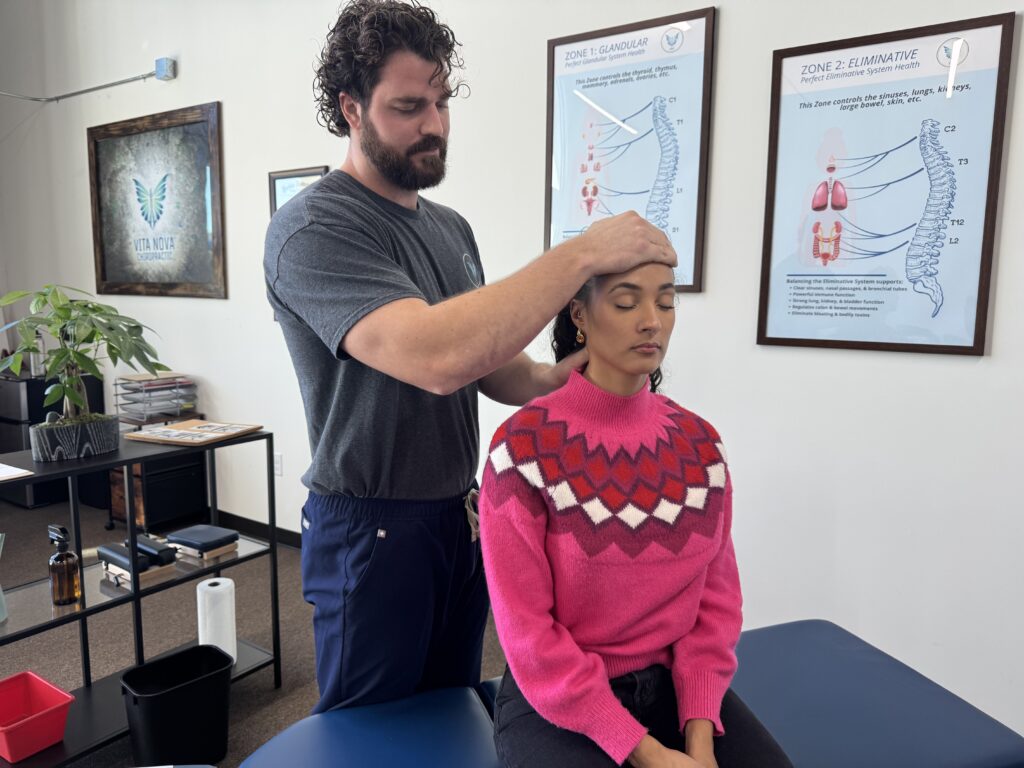
For tension-type and cervicogenic headaches, two zones are central to the Zone Technique assessment. The nervous zone(3) governs the upper cervical nerve pathways, including the greater occipital nerve that refers pain from the C2 level into the back of the skull and temple. When Zone 3 is under interference at C1, C2, or C3, the referred pain pattern it produces is what most cervicogenic headache patients describe as their primary complaint. Addressing that interference directly changes the referral pattern rather than just managing the headache at the site of pain.
The muscular zone(5) tracks the suboccipital tension and upper cervical muscle guarding pattern that drives tension-type headaches and contributes to cervicogenic ones. This is the zone that reflects the sustained forward head posture load, the chronic desk worker muscle pattern, and the protective contraction that follows whiplash. Zone 5 interference keeps the muscle pattern active even when the patient is not at their desk. The Zone Technique adjustment at the levels driving Zone 5 interference releases that contraction and breaks the cycle that produces the daily headache.
Dr. Korrin assesses both zones at every visit. For headache patients, the assessment consistently finds Zone 3 interference at upper cervical levels alongside Zone 5 muscular tension in the suboccipital region. The adjustment is made at the specific cervical levels where interference is found, not at a standardized protocol applied to every headache presentation. That specificity is what allows Zone Technique to address the source of cervicogenic and tension-type headaches rather than providing temporary symptomatic relief.
What to Expect at Your First Visit
Your first visit begins with a Zone Technique assessment of the full nervous system. Dr. Korrin evaluates all six zones and identifies where interference is present, then focuses on the upper cervical levels most relevant to your headache pattern. The assessment takes 15 to 20 minutes. He will ask where the headache is located, whether it is one-sided or bilateral, what time of day it tends to appear, what makes it better or worse, and whether it is associated with neck stiffness or any visual symptoms. Those details distinguish the headache type and point toward which cervical levels are most likely driving it.
Most tension-type and cervicogenic headache patients start with two visits per week for the first two to three weeks. The headache frequency is usually the first thing that changes. Most patients notice the headaches becoming less frequent before they become less intense. Daily headaches often drop to three or four per week within the first two weeks of care as the upper cervical interference pattern begins to resolve.
Supporting the Adjustment Between Visits
Headaches driven by posture and cervical loading are particularly sensitive to what happens between visits. The adjustment addresses the nervous system interference. What you do at your desk and in the car determines how quickly the pattern re-establishes itself before the next visit. Monitor height is the single most impactful change for desk workers. Every degree of downward gaze re-engages the suboccipital tension Zone Technique is working to release. Keeping the screen at eye level and the chin tucked slightly rather than forward does more to hold the upper cervical adjustment than any stretch or exercise. For drivers, adjusting the seat so the headrest makes contact with the back of the skull in the neutral position removes the forward head load during the commute.
Headaches that are one-sided, come with neck stiffness, and worsen with certain head positions are likely cervicogenic and respond well to the upper cervical Zone Technique approach. If they are accompanied by nausea or visual changes, the migraine chiropractic care page covers a different mechanism and a different assessment approach. Headaches that started after a car accident are most likely post-whiplash in origin. The whiplash chiropractic care page covers how Zone Technique addresses that pattern. For the neck stiffness and cervical tension that frequently accompanies chronic headaches, the neck pain chiropractic care page goes deeper into the cervical mechanism. Visit the headache and migraine chiropractic care page for more on what care looks like across the full range.
Dr. Korrin is accepting new patients at Vita Nova in Plano, TX. Schedule your first visit to find out whether your headaches are cervical in origin and what Zone Technique can do for the specific pattern you are dealing with.