
The injury happened at work. You reported it, maybe filed a claim, and were directed to a physician or urgent care. The acute phase was treated and cleared. But weeks or months later something is still not right. The back or neck that should have recovered is still limiting what you can do, still there in the background during your workday, still affecting how you sleep. Work injuries that do not resolve in the expected timeline almost always have a nervous system interference component that the initial treatment did not address.
What Could Be Driving Persistent Work Injury Pain?
Work injuries to the spine fall into two broad categories. Acute mechanical injuries, including lifting strains, sudden awkward movements, slips and falls, produce immediate pain from structural disruption and the body’s protective response to it. Cumulative ergonomic injuries, including repetitive motion, sustained awkward posture, and vibration exposure, produce slower-developing structural changes and nervous system interference patterns that build over months or years before producing symptoms significant enough to report.
In both cases, the nervous system’s response to the injury is often what sustains the pain past the acute healing phase. The protective guarding pattern the body creates around an injured spinal segment, including the chronic muscle contraction, the altered movement patterns, and the nervous system interference at the affected levels, can persist long after the original tissue damage has healed. The body is maintaining a protective response that is no longer needed, and without addressing the nervous system interference that is driving that response, the pain and limitation continue.
How Dr. Korrin Approaches Work Injuries Using Zone Technique
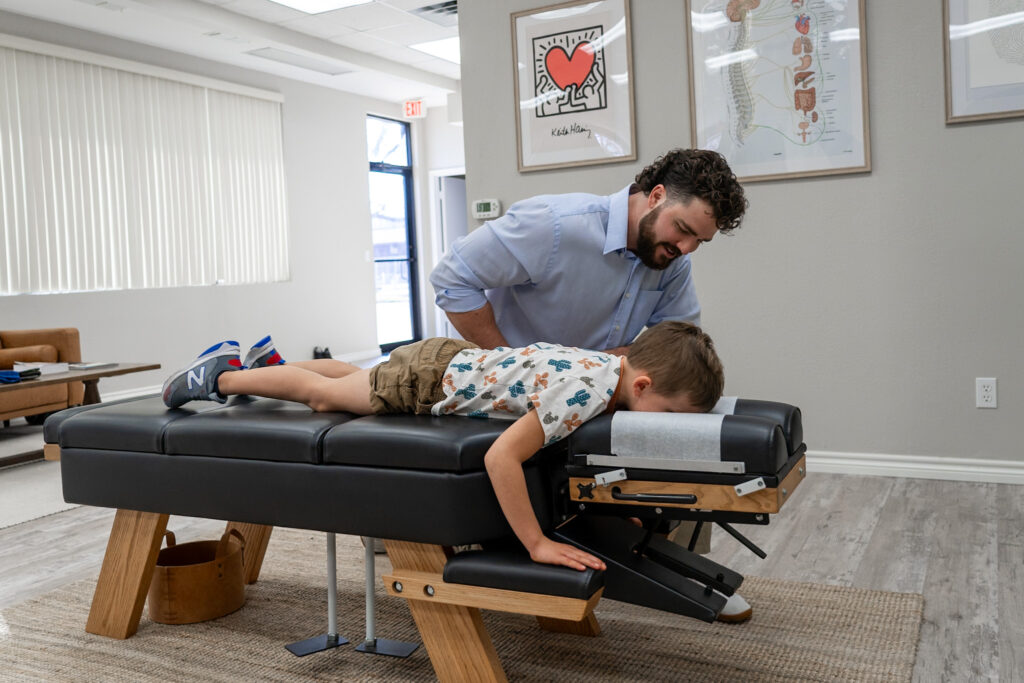
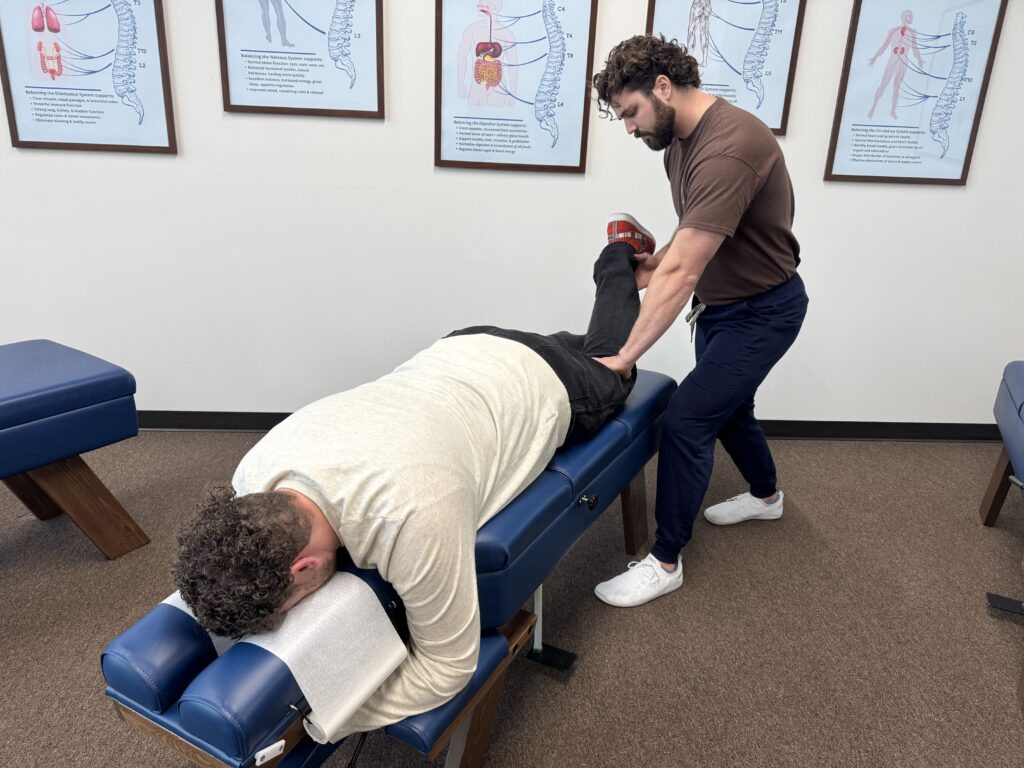
For work injury presentations, Zone Technique identifies the specific spinal levels where nervous system interference is present and adjusts there. The nervous zone(3) governs the nerve root pathways affected by the injury level. When Zone 3 is under interference at the injured cervical or lumbar levels, the nerve signals coordinating the surrounding musculature are disrupted and the protective guarding pattern sustains itself. The muscular zone(5) tracks the compensatory muscle tension pattern directly and is adjusted alongside Zone 3 to address the guarding pattern that is maintaining the pain and movement limitation. For back injuries the back pain chiropractic care page covers the mechanism in detail. For neck and cervical injuries from workplace impacts or whiplash the whiplash chiropractic care page is the most relevant starting point.
Your first visit begins with a Zone Technique assessment of the full nervous system. Dr. Korrin evaluates all six zones and identifies where interference is present at the levels most relevant to your injury. The assessment takes 15 to 20 minutes. If you have imaging from the initial injury evaluation, bring it. Knowing the structural picture from the acute phase helps Dr. Korrin understand how the Zone Technique assessment maps to what the injury produced structurally. He will ask about the mechanism of the injury, what treatment was received initially, and what remains limiting now. Work injury presentations from the office parks and corporate campuses along the Legacy Drive corridor and the tradespeople from construction sites across Plano and Murphy are both consistent parts of the practice. The mechanism differs but the nervous system interference pattern maintaining the pain after the acute phase is the same. Dr. Korrin is accepting new patients at Vita Nova in Plano, TX. Schedule your first visit to find out whether nervous system interference is what is keeping your work injury from resolving.