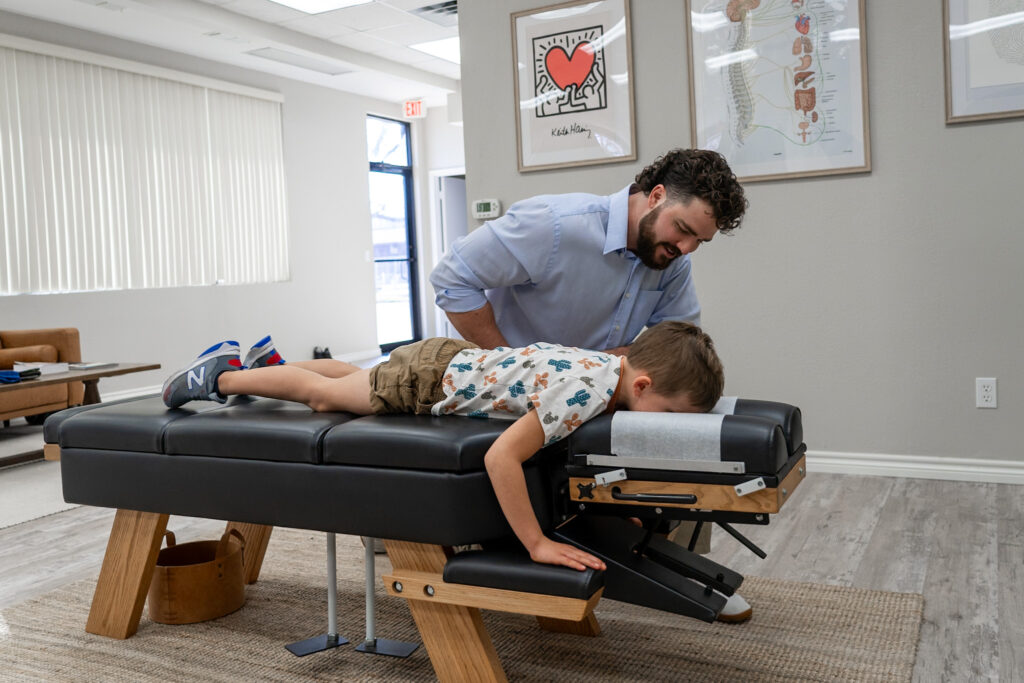


Your child breathes noisily, labors through exercise that other children handle easily, or has a pattern of respiratory symptoms that seem out of proportion to the illness. Breathing difficulty in children that is not fully explained by asthma or structural airway issues often has a nervous system component that Zone Technique can assess. This is not a page about replacing asthma treatment or emergency respiratory care. It is about the nervous system regulation component of breathing that sits underneath the medical picture and affects how the respiratory system responds to triggers.
What Could Be Contributing to Breathing Difficulty?
Breathing is regulated by the respiratory center in the brainstem and by the vagus nerve, which governs the parasympathetic regulation of bronchial smooth muscle tone. When the upper cervical spine is under mechanical stress at C1 and C2, brainstem respiratory regulation is compromised and vagal tone to the airways is disrupted. Bronchial smooth muscle tone increases, airway diameter narrows, and the respiratory system becomes more reactive to triggers. This is the nervous system component of breathing difficulty that Zone Technique addresses, distinct from the structural and inflammatory components that medical management targets.
A systematic review on the use of chiropractic manipulation in pediatric health conditions found that respiratory conditions including bronchitis and asthma are among the pediatric presentations where chiropractic care has been reported in the literature, reflecting the established connection between upper cervical nervous system regulation and respiratory function. Zone Technique is not a treatment for asthma or structural airway conditions. It addresses the nervous system regulation component that determines bronchial reactivity and respiratory parasympathetic tone.
How Dr. Korrin Approaches Breathing Difficulty Using Zone Technique
For breathing difficulty presentations, Zone Technique assesses two zones primarily. The nervous zone(3) governs the brainstem respiratory center and the vagus nerve pathway that regulates bronchial smooth muscle tone. When Zone 3 is under interference at the upper cervical levels, the parasympathetic regulation of the airways is compromised and bronchial reactivity increases. The glandular zone(1) governs the immune and inflammatory signaling that underlies airway hypersensitivity in children with allergic or reactive airway components to their breathing difficulty. Dr. Korrin assesses all six zones at every visit and adjusts at the specific levels where interference is found, always working alongside rather than in place of the medical team managing the respiratory diagnosis.
Your child’s first visit begins with a Zone Technique assessment of the full nervous system. Dr. Korrin will ask about the breathing pattern, what triggers it, what medical evaluation has been done, and what treatment is currently in place. Bring any pulmonary function testing or specialist notes. If your child has a confirmed asthma diagnosis and is on controller medication, continue that medication during Zone Technique care. Zone Technique is a complement to that management, not an alternative. For breathing difficulty connected to nasal congestion or allergies, those pages cover the immune regulation component in detail. Dr. Korrin is accepting new pediatric patients at Vita Nova in Plano, TX. Schedule your child’s first visit to find out whether nervous system interference is contributing to the breathing pattern.