

You are sleeping but not resting. Eight hours and you wake up tired. The afternoon slump hits hard and early. Coffee helps for an hour. Your bloodwork came back normal. Your thyroid is fine. Your iron is fine. You have been told it might be stress or that you just need better sleep hygiene. But the fatigue has been there long enough that you have stopped expecting it to resolve on its own and started looking for something that actually identifies where it is coming from.
What Could Be Driving Chronic Fatigue?
Persistent fatigue without a clearly identified metabolic or structural cause almost always involves the nervous system’s ability to regulate the sleep-wake cycle, the adrenal output that governs energy availability, and the cellular energy production that depends on clean nervous system signaling throughout the body. The glandular zone(1) governs adrenal function, thyroid signaling, and the hormonal patterns that control energy availability across the day. When Zone 1 is under interference, the adrenal and hormonal regulation that should produce consistent energy becomes dysregulated. Some patients present with a flat energy profile throughout the day. Others present with the morning fatigue and afternoon crash pattern. Both reflect Zone 1 interference in the hormonal energy regulation system.
The nervous zone(3) governs the upper cervical pathways that regulate the autonomic nervous system balance between sympathetic activation and parasympathetic rest. When Zone 3 is under interference at C1 and C2, the parasympathetic nervous system cannot restore cellular energy efficiently during sleep. The restorative function of sleep, the phase in which the nervous system consolidates memory, clears metabolic waste, and restores cellular energy, depends on deep parasympathetic engagement that a compromised Zone 3 cannot maintain.
How Dr. Korrin Approaches Fatigue Using Zone Technique
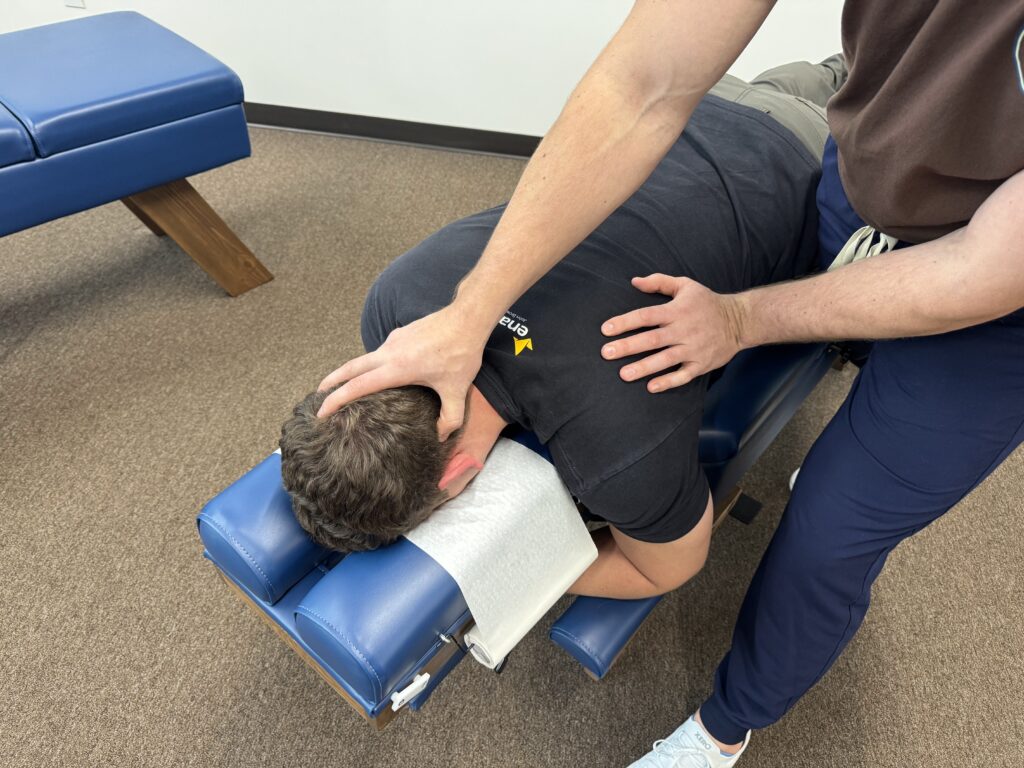
Zone Technique assesses all six zones and identifies where interference is contributing to the fatigue pattern. For most fatigue presentations Dr. Korrin sees at Vita Nova, Zone 1 and Zone 3 are the primary findings, often with Zone 5 muscular interference alongside them reflecting the chronic tension that develops in a body that cannot fully rest. The adjustment at the specific levels where interference is found works to restore clearer hormonal regulation and more effective parasympathetic engagement during sleep. The change patients notice most reliably is in sleep quality rather than sleep quantity. The same number of hours begins to feel more restorative as the nervous system recovers the capacity to use them properly.
Your first visit begins with a Zone Technique assessment of the full nervous system. Dr. Korrin evaluates all six zones and identifies where interference is present. The assessment takes 15 to 20 minutes. He will ask about the fatigue pattern, when it started, what your energy looks like across the day, what bloodwork and medical evaluation has been done, and what your sleep quality feels like subjectively. Bring any recent lab results. If thyroid and adrenal function have already been evaluated and returned normal, that information helps Dr. Korrin focus the Zone Technique assessment on the nervous system regulation component rather than ruling out metabolic causes that have already been cleared. Patients from across Plano, Murphy, and Richardson find Vita Nova after the standard medical pathway for fatigue has not produced a clear answer or an effective solution. Dr. Korrin is accepting new patients. Schedule your first visit to find out whether nervous system interference is the missing piece.