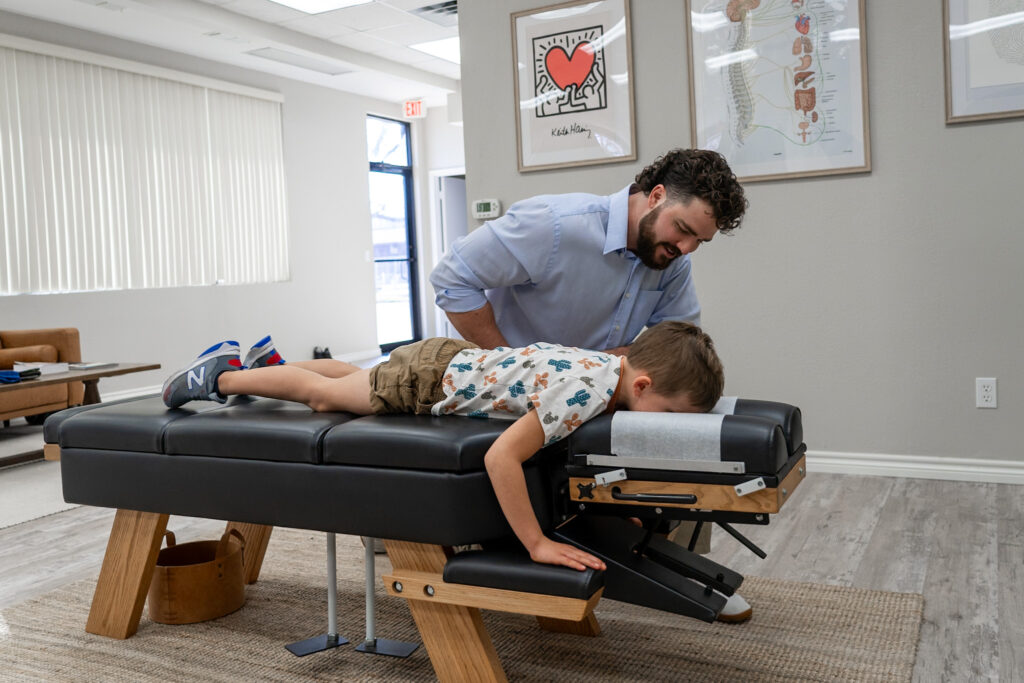
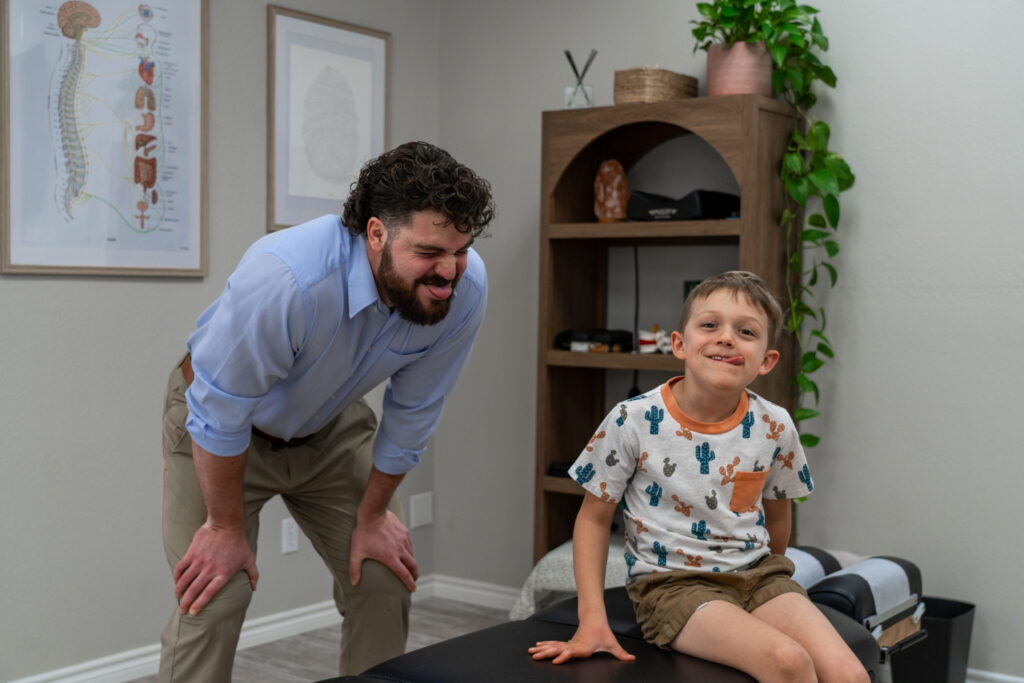

Your child is not defiant. They are dysregulated. There is a difference, and it matters for how you approach care. Defiance is a choice. Dysregulation is a nervous system state the child cannot control from the outside. When a child melts down over something that seems minor, cannot transition between activities, responds to frustration with a physical intensity that seems out of proportion, or shuts down completely in overwhelming environments, the nervous system is the source. Zone Technique evaluates where that nervous system interference is and addresses it directly.
Behavioral Challenges and the Nervous System
Behavioral challenges in children are almost always downstream of nervous system dysregulation. The prefrontal cortex, which governs impulse control, decision-making, and emotional regulation, is the last region of the brain to fully develop. In children it is easily overwhelmed by a dysregulated limbic system and an overactive stress response. When the nervous system is in chronic sympathetic activation, the prefrontal cortex goes offline. The child cannot access the regulated state that would allow them to make a different choice. They are not choosing the behavior. They are experiencing it.
The upper cervical spine plays a direct role in this pattern. C1 and C2, directly adjacent to the brainstem, are the mechanical gatekeepers for the autonomic nervous system regulation that underlies behavioral control. When those levels are under interference, the brainstem cannot modulate the stress response efficiently. The child’s nervous system stays in or returns quickly to a heightened state. The behavioral challenges that result from that state are predictable and consistent regardless of the parenting approach applied to them.
Zone Technique does not treat behavioral diagnoses. It does not replace behavioral therapy, parenting support, or school-based intervention. What it addresses is the mechanical nervous system interference that keeps the child’s stress response chronically activated and makes behavioral regulation harder than it should be. For many children, removing that interference does not solve the behavioral challenge entirely but meaningfully changes the baseline from which the child is operating.
Which Children Present With This Pattern
The families Dr. Korrin sees most often for behavioral challenge presentations are those whose child has been through behavioral therapy or parenting programmes with partial results, and who are looking for something that addresses the physiological component alongside the behavioral work. Children with a diagnosed condition such as ADHD, autism spectrum disorder, or sensory processing disorder whose behavioral dysregulation has a clear nervous system component. Children without a formal diagnosis whose behavioral pattern is consistent with nervous system dysregulation rather than learned behavior. Children with a history of birth trauma, early stress exposure, or significant adverse childhood experiences whose stress response system is chronically sensitized.
How Dr. Korrin Approaches Behavioral Challenges Using Zone Technique
For behavioral challenge presentations, Zone Technique focuses on the zones governing stress response regulation and autonomic function. The nervous zone(3) governs the brainstem and upper cervical pathways that regulate the parasympathetic-sympathetic balance underlying emotional and behavioral regulation. When Zone 3 is under interference at C1 and C2, the brainstem cannot shift the child out of sympathetic activation efficiently. The stress response stays elevated, the capacity for behavioral regulation decreases, and the dysregulated behaviors that bring families to the practice become more frequent and more intense.
The glandular zone(1) governs cortisol regulation and the HPA axis stress response system. Children with chronic behavioral dysregulation frequently have abnormal cortisol patterns, either chronically elevated or a dysregulated diurnal rhythm that produces behavioral challenges at predictable times of day. Zone 1 interference addresses the hormonal component of that pattern. Dr. Korrin assesses all six zones at every visit and adjusts at the specific levels where interference is found, adapting the approach entirely to the child’s sensory profile and tolerance.
What to Expect at Your Child’s First Visit
Your child’s first visit begins with a Zone Technique assessment of the full nervous system. Dr. Korrin evaluates all six zones and identifies where interference is present, with particular attention to the upper cervical and stress regulation levels. The assessment takes 15 to 20 minutes. He will ask about the behavioral pattern, what triggers it, what time of day it is worst, what the child’s birth history looks like, whether there is a formal diagnosis in place, and what therapeutic support is currently involved. Bring any behavioral or psychological evaluations you have. The fuller the picture, the more precisely the Zone Technique assessment can be directed toward the components most relevant to your child’s specific presentation.
Behavioral challenges frequently overlap with ADHD, emotional control difficulties, and impulsivity as distinct but related presentations at Vita Nova. The childhood neurological disorders page covers how Zone Technique approaches complex multi-diagnosis pediatric presentations. The pediatric chiropractic care page covers the full scope of what Dr. Korrin does for children across all ages at Vita Nova.
Dr. Korrin sees children with behavioral challenges from across Plano, Murphy, and Richardson at Vita Nova, often alongside families already working with therapists and behavioral specialists. He is accepting new pediatric patients. Schedule your child’s first visit to find out whether nervous system interference is contributing to your child’s behavioral pattern.