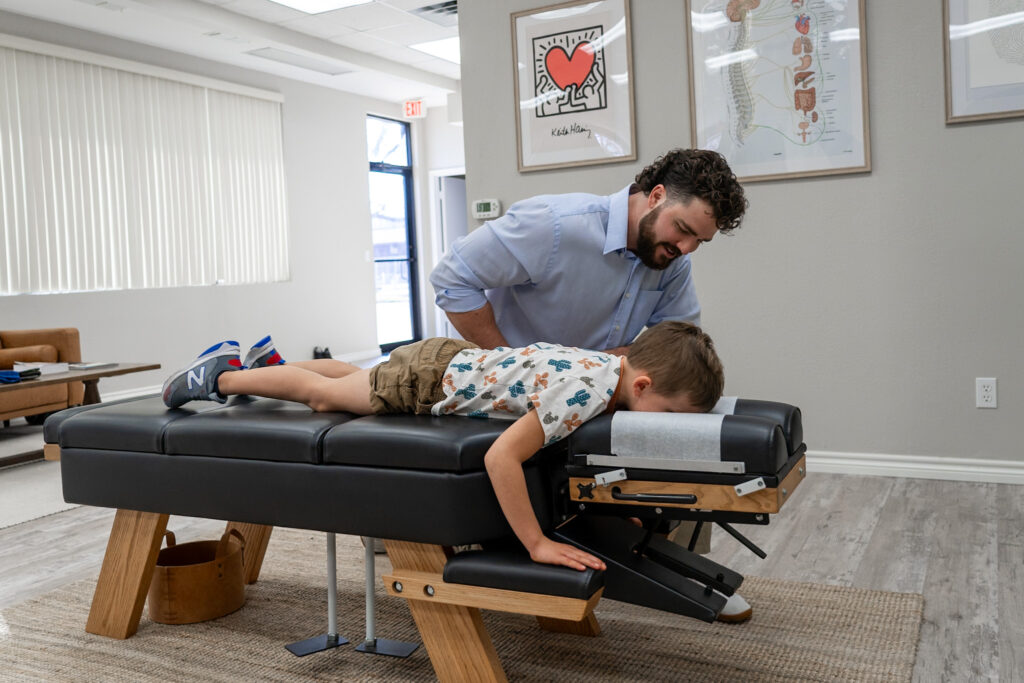

Newborns and young infants cannot tell you what is wrong. They communicate through crying, tension in the body, difficulty settling, resistance to feeding, and positional preferences that suggest something is uncomfortable. Zone Technique is built to assess the nervous system in patients who cannot report symptoms directly, finding the interference pattern through the assessment rather than through the history. For infants, this is exactly the right tool.
Why Infants Benefit From Zone Technique Care
The birthing process, regardless of delivery type, places mechanical stress on the upper cervical spine. The C1 and C2 levels, directly adjacent to the brainstem, are the most vulnerable to that stress because they are the most mobile segments in the cervical spine and the ones through which the head-to-body force of delivery is transmitted. When those levels carry interference, the brainstem cannot regulate the infant’s autonomic nervous system normally. The vagus nerve, which governs digestion, stress response regulation, and parasympathetic tone, runs through those same upper cervical levels. Disrupted vagal function in the newborn period produces the cluster of presentations that bring most infant patients to Vita Nova: colic, reflux, feeding difficulty, poor sleep, and general difficulty settling.
A clinical study of 120 colicky infants found vestibular dysregulation scores significantly higher in colicky infants compared to non-colicky controls, with scores improving substantially after gentle vibratory treatment, supporting the brainstem and vestibular system involvement in infant nervous system dysregulation that Zone Technique directly addresses. The adjustment pressure used for a newborn is lighter than what you would use to test the ripeness of fruit. It is nothing like adult chiropractic care.
Infant Presentations at Vita Nova
The most common infant presentations at Vita Nova are colic, reflux, torticollis, feeding difficulty, poor sleep, and general infant discomfort without a clearly identified cause. Frequent crying that has not responded to standard approaches and that does not fit the strict clinical definition of colic is also a consistent presentation. In most cases the common thread is upper cervical nervous system interference from the delivery that has not been identified or addressed in the newborn period.
Birth history is the most important piece of information at a first infant visit. Deliveries involving prolonged labor, vacuum extraction, forceps, or emergency cesarean after a long pushing phase are associated with higher rates of upper cervical mechanical stress. Infants born after these deliveries are more frequently seen with the colic, reflux, and torticollis cluster that Zone Technique is most effective for addressing.
What to Expect at Your Baby’s First Visit
Your baby’s first visit begins with a Zone Technique assessment of the full nervous system. Dr. Korrin evaluates all six zones and identifies where interference is present, then focuses on the upper cervical and digestive zone levels most relevant to your infant’s presentation. The assessment takes 15 to 20 minutes. Feed your baby before the visit if possible. You are present for the entire assessment and adjustment. The adjustment for a newborn takes less than two minutes. Most infants are calm during the assessment. Many settle noticeably after the first adjustment as the nervous system begins to shift from sympathetic dominance toward parasympathetic regulation.
Dr. Korrin sees infants from the first days of life. There is no age too young for a Zone Technique assessment. The earlier upper cervical interference is identified and addressed, the shorter the window of time the infant’s nervous system has been operating under that interference and the faster the response to care. Families from Plano, Murphy, and Richardson find Vita Nova most often through referral from other families who brought their own infants in during the newborn period.
Dr. Korrin is accepting new infant patients at Vita Nova in Plano, TX. Schedule your baby’s first visit as early as you feel ready after delivery. The newborn period is the most responsive window for upper cervical Zone Technique care.