Tension Headache vs Migraine: Know the Difference

Some days it’s a dull band of pressure across your forehead, worse by three o’clock, gone after sleep. Other days there’s no predicting it: the pain locks onto one side and everything bright or loud becomes unbearable. The tension headache vs. migraine question tends to come up in the second scenario, usually while you’re lying in a dark room. They’re different conditions, and they don’t respond to the same care.

Vita Nova Chiropractic,  

May 16, 2026
cropped-IMG_20250214_235412.png

Schedule now

cropped-IMG_20250214_235412.png

Looking for natural chiropractic care in Plano, TX? At Vita Nova, we specialize in restoring your body’s balance through personalized, holistic treatment. Schedule your visit today and start your path to healing.

What’s the Difference Between a Tension Headache and a Migraine?

The clearest way to separate them: tension headaches are muscular in origin and typically bilateral, pressing like a band around both sides of the head. Migraines are neurological, usually unilateral, and come with accompanying symptoms like nausea and light sensitivity that tension headaches rarely produce. A tension headache develops when the muscles of the neck, scalp, and jaw stay contracted over time. The pain is dull and non-pulsating. It doesn’t usually get worse with movement, and it doesn’t cause nausea. A migraine involves different mechanics. The pain is one-sided and throbbing, worsens with routine activity, and often brings nausea and sensitivity to light and sound with it. Some people experience an aura beforehand: visual disturbances, tingling, or briefly altered speech.
Tension Headache Migraine
Location Both sides of head Usually one side
Quality Pressing, tightening Throbbing, pulsating
Nausea Rare Common
Light/sound sensitivity Rare Common
Aura No Sometimes
Primary cause Muscular Neurological
Duration 30 min to several hours 4 to 72 hours
The International Headache Society’s third edition classification, published in Cephalalgia in 2018, formally defines the two conditions on exactly these characteristics and remains the diagnostic standard used by neurologists worldwide.

How Zone Technique Approaches Each Type

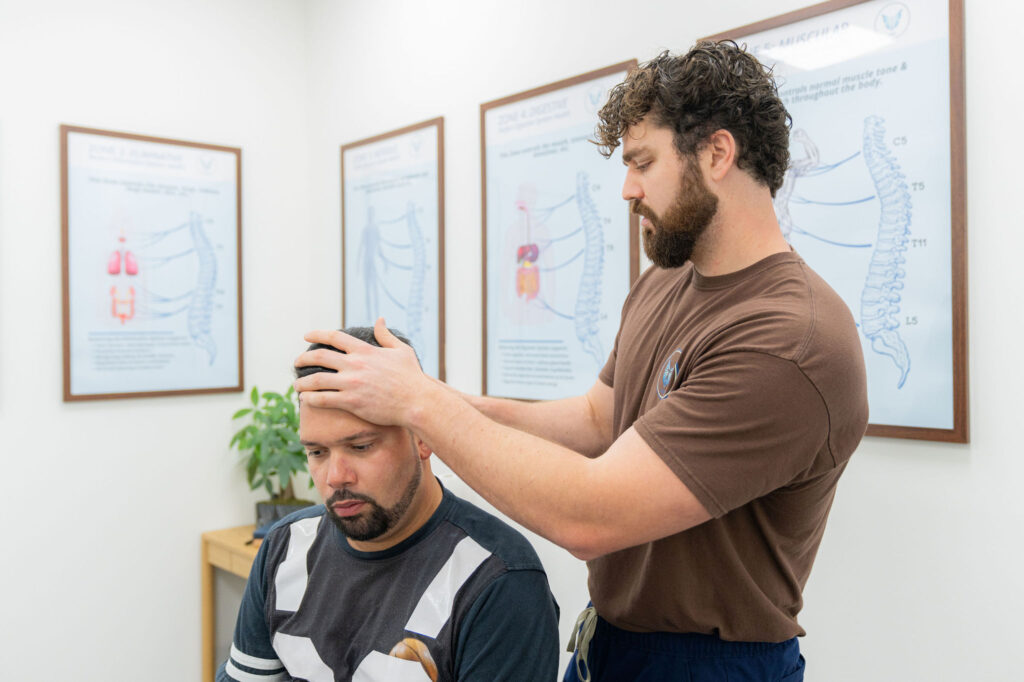
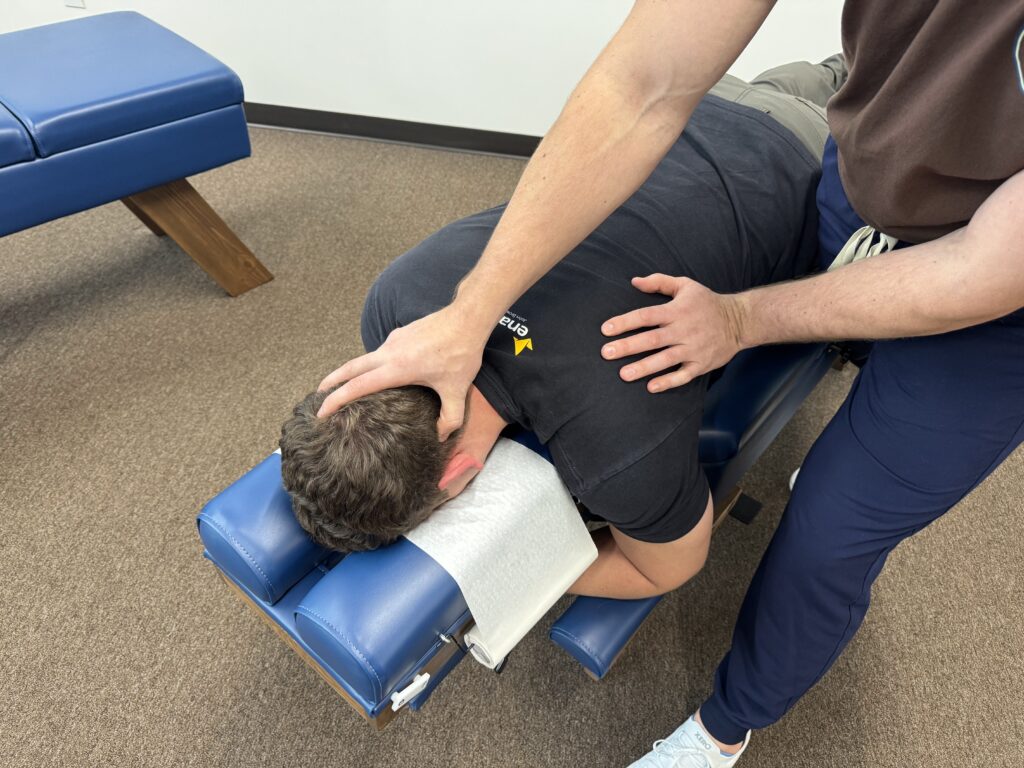
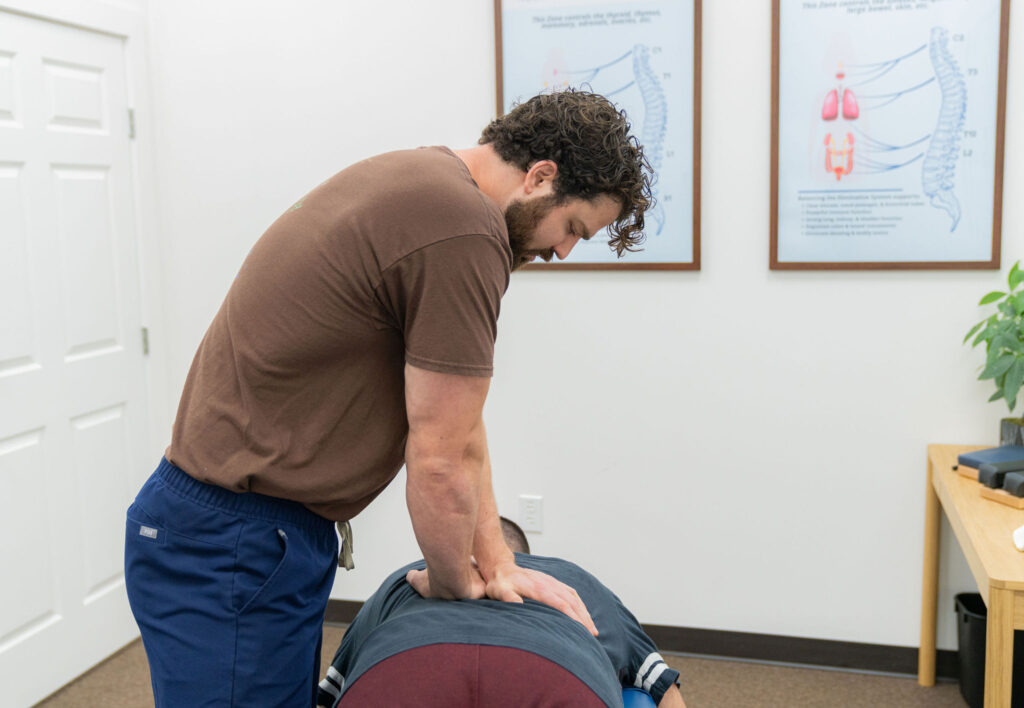
At Vita Nova Chiropractic, Dr. Korrin uses Zone Technique. For headaches, the distinction between tension and migraine isn’t just diagnostic. It determines which zones need attention. Tension headaches involve two zones. Zone 5 (muscular) addresses the chronically contracted muscles of the neck, upper back, and scalp that generate the bilateral pressing quality. When these muscles stay tight, they compress the cervical spine and sustain the headache cycle. Zone 3 (nervous) addresses the cervicogenic component: the nerve interference that builds when the cervical spine is under sustained mechanical load from that muscle tension. Migraines involve three zones. Zone 1 (glandular) addresses the hormonal and neurochemical dimension. Estrogen and serotonin fluctuations are documented migraine triggers, and Zone 1 work addresses the glandular system’s role in those cycles. Zone 3 (nervous) addresses the cervicogenic and neurological component shared by both headache types, including the disrupted nerve signaling in the upper cervical spine that feeds into the migraine’s pain amplification cycle. Zone 6 (circulatory) targets the vascular dimension: the vasodilation and changes in cerebral blood flow that characterize the active migraine phase. The broader zone involvement reflects how much more systemically complex migraines are. Care for a migraine pattern typically takes longer to work through than a tension headache pattern.

What to Expect at Your First Visit

Your first visit starts with a detailed headache history. Dr. Korrin asks which side, how often, what tends to trigger it, whether light or sound bothers you, and whether you’ve noticed a hormonal or stress pattern. Those details help him identify whether he’s looking at a tension presentation, a migraine presentation, or both. From there, he runs a Zone Technique assessment to identify which zones are disrupted and where the nervous system interference is concentrated. For headache patients, the upper cervical spine and the zones specific to your presentation get particular attention. Most patients with chronic headaches who come to see us in Plano can begin care at the first visit. He’ll be direct with you about what a realistic care timeline looks like for your pattern.

Where to Go Next

For more on how we approach each condition, our migraine chiropractic care page and our headaches page cover the full picture for each. The headache and migraine service page covers how Dr. Korrin works with both. When you’re ready to talk through your headache history and figure out what’s driving it, Dr. Korrin sees patients at our Plano, TX office. Schedule a visit here.

We’re Here in Plano

Dr. Korrin grew up in Plano, TX and sees headache patients at Vita Nova Chiropractic every week: people who’ve been managing migraines for years, and people who’ve written off their tension headaches as just stress and never pressed further. There’s more to know about both.

Patient Testimonials

Trusted feedback from those who’ve experienced our care firsthand.

Social Media

Check Us Out On Instagram

Visit Our Office

Contact us for expert chiropractic care in Plano, and Richardson TX.

Business Hours

Monday 9:30am – 12:30pm, 3:00pm – 6:00 pm

Tuesday 9:30am – 12:30pm, 3:00pm – 6:00 pm

Wednesday 9:30am – 12:30pm, 3:00pm – 6:00 pm

Thursday 9:30am – 12:30pm, 3:00pm – 6:00 pm

Friday: Closed

Saturday: Closed

Sunday: Closed

Phone