Your MRI results come back and there it is: “disc herniation at L4-L5” or “posterior disc bulge at L5-S1.” The report is precise but it doesn’t answer what you actually want to know. How serious is this? Does the difference between the two actually matter for your treatment? And what are you supposed to do with this information now?
What’s the Difference Between a Herniated Disc and a Bulging Disc?
The short answer: they’re both disc problems, but they’re not the same, and the distinction does matter for how you approach care.
Your spinal discs have two parts: a tough outer wall called the annulus fibrosus, and a soft, gel-like center called the nucleus pulposus. Think of it like a jelly donut.
With a bulging disc, the outer wall stays intact. The disc compresses and pushes outward in a broad, even way. Nothing has torn.
With a herniated disc, the outer wall has cracked or torn and the inner gel material has pushed through that break. It’s a more significant structural event, which explains why herniations can produce sharper, more localized symptoms.
Here’s what actually differentiates them in practice:
- Bulging disc: outer wall intact, diffuse outward pressure on surrounding tissue, often has a wider window for conservative care
- Herniated disc: outer wall torn, inner material can contact nearby nerve roots directly, may produce more acute or localized symptoms
- Both conditions can cause back pain, stiffness, and radiating symptoms like sciatica down the leg
- Neither condition automatically requires surgery, especially when addressed early
The intact outer wall in a bulging disc means the disc still has structural integrity. With the right care approach, it can often stabilize or stop progressing. A herniation is a more involved picture, but it’s not a surgical inevitability. The American College of Physicians made this clear in a 2017 guideline published in the
Annals of Internal Medicine: non-pharmacological treatments, including spinal manipulation, should be the first line of care for most low back pain. That guidance holds for both conditions.
How Zone Technique Addresses Disc Conditions
At Vita Nova Chiropractic, Dr. Korrin uses
Zone Technique, a neurologically focused approach that works through six zones of the body. Two zones are especially relevant to disc care.
Zone 3 is the nervous system zone. A bulging disc puts diffuse pressure on surrounding neural tissue, creating a broader pattern of nerve signal disruption. Zone 3 assessment identifies where that disruption is occurring along the affected dermatome, then targets the corresponding spinal segments to address the interference. A herniated disc brings inner disc material into direct contact with a specific nerve root. The resulting inflammation is more acute and localized, so early Zone 3 work is more targeted and more conservative, focused on calming that nerve irritation before working broadly through the affected segments. Patients dealing with
sciatica alongside a disc problem can have notably different care timelines depending on which of these is driving it.
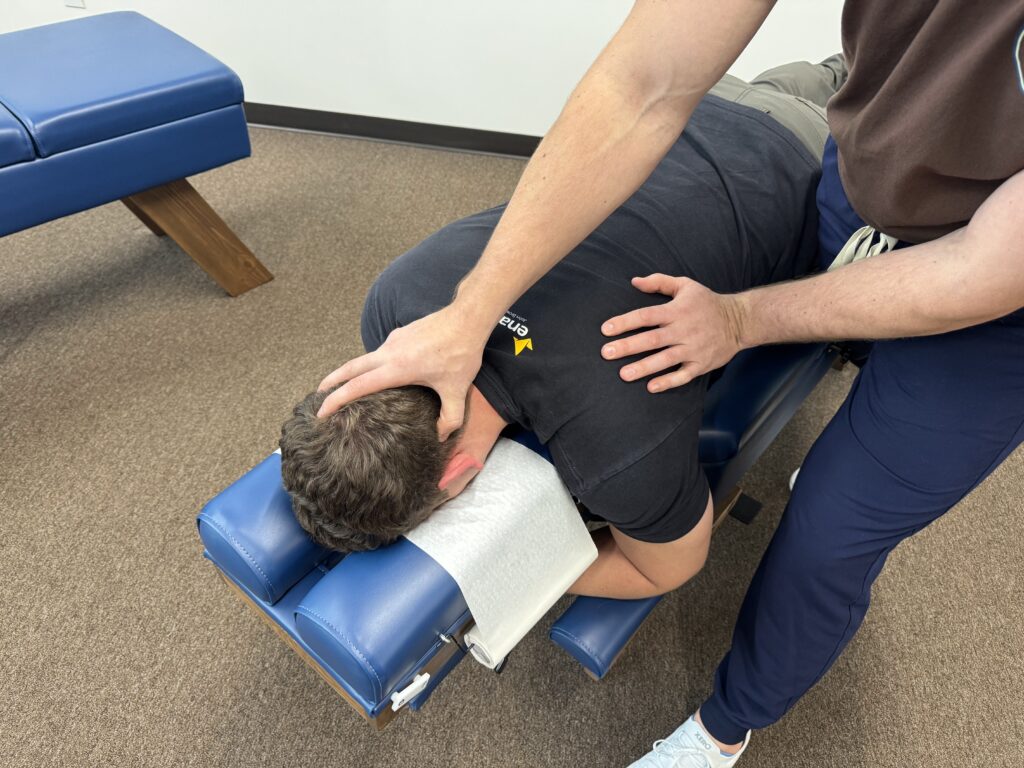
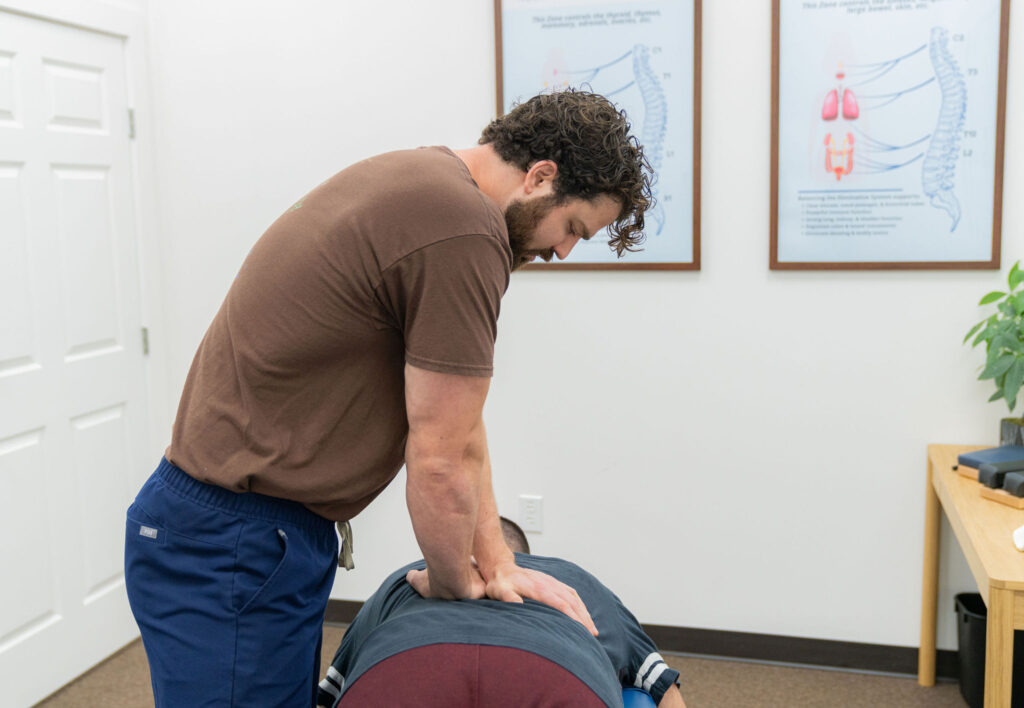
Zone 5 is the muscular zone. With a bulging disc, the intact outer wall means the paraspinal muscles guarding the area can be released with more confidence. Zone 5 work reduces that protective tension, taking compressive load off the disc. With a herniated disc, Zone 5 work is more graduated: the torn annulus means the disc has less structural support, so the muscular release proceeds in stages to avoid creating sudden mechanical shifts on an already-compromised segment.
Zone Technique doesn’t treat the disc in isolation. A disc under stress affects how the whole nervous system is functioning, and the Zone Technique assessment is built around that reality.
What to Expect at Your First Visit
Your first visit starts with a conversation. Dr. Korrin wants to understand your imaging results in the context of what you’re actually feeling: where the pain is, what makes it better or worse, whether you’re getting any numbness or tingling down the leg.
From there, he does a hands-on Zone Technique assessment to identify which zones are disrupted and where the nervous system interference is concentrated. He’ll be direct with you about what kind of care timeline to expect. A bulging disc and a herniated disc don’t follow the same path, and he’ll tell you what to watch for along the way.
Most patients with disc conditions who come to see us in Plano can begin care right away. You don’t need to wait until things get worse.
Where to Go Next
For a deeper look at each condition, our
disc herniation chiropractic care page and our
bulging disc chiropractic care page cover the full picture. If you’re also dealing with leg pain or sciatica, the
sciatica page is worth reading too.
When you’re ready to talk through your MRI results with Dr. Korrin at our Plano, TX office,
schedule a visit here.
We’re Right Here in Plano
Dr. Korrin grew up in
Plano, TX and built Vita Nova Chiropractic for people who want real answers about their spine before surgery becomes part of the conversation. He sees desk workers, people in physical trades, adults who’ve been putting off dealing with their back because they didn’t know what to make of their symptoms. If that sounds like you, come talk to him.