
The anxiety is not new. You have tools for managing it: therapy, breathing exercises, possibly medication. What you cannot seem to change is the physiological baseline that the anxiety lives in. The nervous system that activates too easily, recovers too slowly, and interprets ordinary situations through a threat filter that will not fully disengage. Zone Technique does not treat anxiety as a psychiatric condition. It addresses the mechanical nervous system interference that keeps the physiological substrate of anxiety chronically active, which is a different problem and a different solution.
Anxiety and the Nervous System
Anxiety disorders are among the most prevalent mental health conditions in adults, affecting an estimated 31% of Americans at some point in their lives. The physiological substrate of anxiety is the autonomic nervous system in a state of sustained sympathetic activation, the same fight-or-flight response that is adaptive in acute threat situations but becomes pathological when it cannot deactivate between threats.
Research published in Frontiers in Psychiatry has established that vagal tone is inversely related to anxiety severity, with lower vagal tone consistently associated with higher anxiety levels and reduced capacity for emotion regulation. The vagus nerve, which is the primary driver of parasympathetic nervous system function and a core modulator of the anxiety response, runs from the brainstem through the upper cervical spine. When C1 and C2 are under mechanical interference, vagal tone is reduced. The parasympathetic system cannot effectively counterbalance the sympathetic activation that anxiety drives. The result is an anxiety presentation that is harder to regulate not only because of the psychological and cognitive patterns involved but because the nervous system physiology underlying those patterns is mechanically compromised.
Chiropractic care does not treat anxiety disorders as primary psychiatric conditions. It does not replace therapy, medication, or other evidence-based anxiety management approaches. What Zone Technique addresses is the mechanical component of the vagal tone deficit that compounds the anxiety presentation and makes every other intervention harder to access.
Who Presents With Anxiety at Vita Nova
The anxiety presentations Dr. Korrin sees most often are patients who are already engaged in therapy or other management and are looking for something that addresses the physiological baseline alongside the psychological work. Patients whose anxiety has a strong somatic component, including tight chest, shallow breathing, persistent muscle tension, and gut dysregulation, alongside the cognitive symptoms. Patients who have tried medication and found it partially effective but still experiencing the physical substrate of anxiety that medication does not fully resolve. Patients whose anxiety worsens significantly with stress or illness in a pattern that suggests the nervous system’s resilience and recovery capacity is compromised.
How Dr. Korrin Approaches Anxiety Using Zone Technique
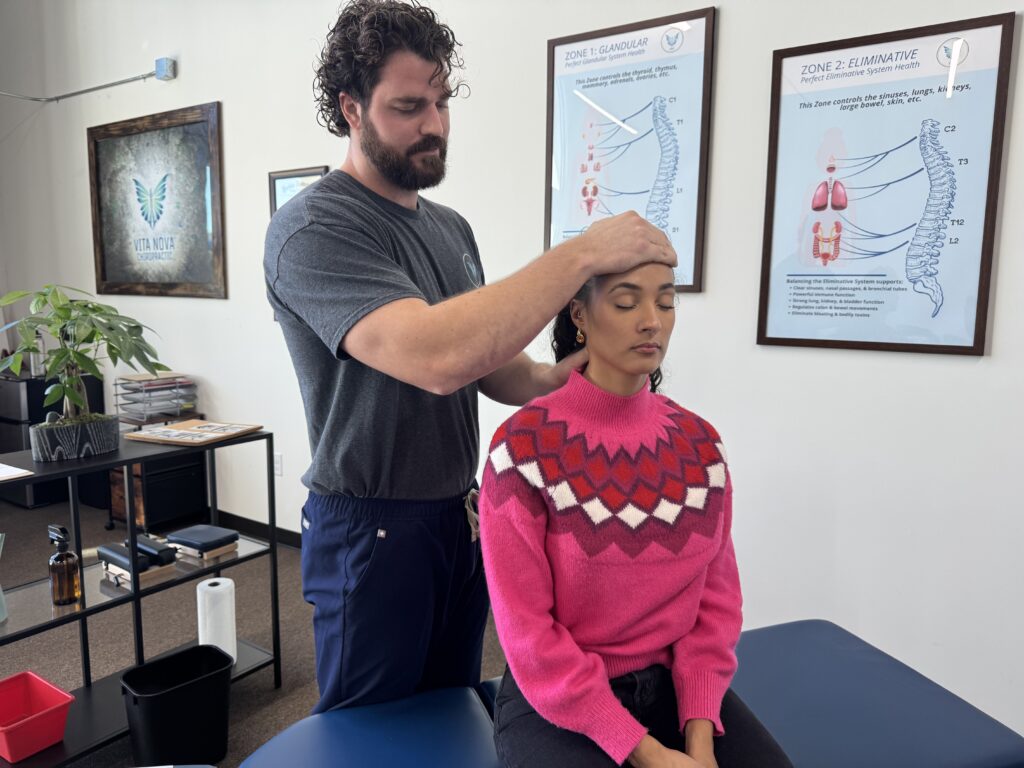
For anxiety, Zone Technique targets the nervous zone(3) and the glandular zone(1) simultaneously. Zone 3 governs the vagus nerve and the upper cervical pathways that regulate the parasympathetic nervous system. When Zone 3 is under interference at C1 and C2, vagal tone is reduced and the nervous system cannot shift efficiently from sympathetic activation into the parasympathetic rest state that anxiety recovery requires. Zone 1 governs the HPA axis and cortisol regulation that determines how quickly and completely the stress response deactivates after a trigger. When Zone 1 is under interference, the HPA axis recovery is slow and incomplete. The cortisol stays elevated, the sympathetic tone remains high, and the anxiety baseline stays activated between triggers. Dr. Korrin adjusts at the specific levels where interference is found at every visit, tracking changes in the Zone 3 and Zone 1 patterns over the course of care.
What to Expect at Your First Visit
Your first visit begins with a Zone Technique assessment of the full nervous system. The assessment takes 15 to 20 minutes. Dr. Korrin will ask about the anxiety presentation, what triggers it, how it affects sleep and daily function, what management is currently in place, and whether there is a significant somatic or physical component alongside the cognitive symptoms. Zone Technique is not positioned as an alternative to therapy or medication management for anxiety. It is positioned as the nervous system physiology piece that those approaches cannot fully address on their own.
Anxiety frequently presents alongside difficulty sleeping because both involve the same autonomic dysregulation pattern. The sympathetic activation that anxiety drives also prevents the parasympathetic engagement that sleep requires. For patients whose anxiety is part of a broader pattern of nervous system dysregulation, nervous system dysfunction covers how Zone Technique approaches the systemic picture. The vagus nerve dysfunction page covers the vagal tone component of the anxiety physiology specifically, and fibromyalgia patients who also carry significant anxiety benefit from Zone Technique addressing both presentations in the same assessment.
Dr. Korrin is accepting new patients at Vita Nova in Plano, TX. Schedule your first visit to find out whether the nervous system interference component of your anxiety is something Zone Technique can address alongside your existing care.