
Your child has an autism spectrum disorder diagnosis. You have a team. Maybe ABA, speech therapy, occupational therapy, and a developmental pediatrician. You are doing the work. You are also asking whether there is something that addresses the nervous system at a more foundational level, something that gives the rest of the therapeutic work a clearer signal environment to operate in. That is the question families bring to Vita Nova. It deserves a direct answer.
What Zone Technique Does and Does Not Do for Autism
Autism spectrum disorder is a complex neurodevelopmental condition. It involves differences in brain connectivity, sensory processing, social communication, and behavioral regulation that are deeply neurological in origin. Chiropractic care does not treat autism. It does not alter the underlying neurodevelopmental architecture, reverse the diagnosis, or produce outcomes that behavioral and developmental therapies are designed to produce. Any provider who tells you otherwise is not being straight with you, and Dr. Korrin will not tell you otherwise.
What Zone Technique does is assess the mechanical nervous system interference that affects how clearly the brain and body communicate, and whether that interference is contributing to the sensory regulation, stress response, and autonomic dysregulation that many autistic children experience alongside their diagnosis. The upper cervical spine directly surrounds the brainstem, which coordinates sensory integration, autonomic function, and arousal regulation. When the upper cervical levels are under mechanical stress, the brainstem’s ability to regulate these functions is compromised. That compromised regulation is not the autism. It is a mechanical layer sitting on top of the autism that can be addressed independently of the diagnosis.
A systematic review of the chiropractic literature on autism found that preliminary studies indicate chiropractic adjustment may affect sensorimotor integration, and that given the limited effectiveness of pharmaceutical options for core ASD symptoms, a trial of chiropractic care is considered prudent and warranted for families choosing to explore it. The same review is clear that the literature is limited and definitive studies are needed, which is why Dr. Korrin does not make outcome promises for autism presentations.
Who Comes to Vita Nova With Autism
The families Dr. Korrin sees most often are those who have been managing an autism diagnosis for a period of time and are looking for approaches that work at the nervous system level alongside the therapeutic team already in place. Children with significant sensory hypersensitivity, particularly tactile and auditory sensitivity, whose daily functioning is meaningfully affected by their sensory profile. Children with significant sleep dysregulation that has not responded to behavioral sleep interventions. Children with a history of birth trauma or early head injuries whose upper cervical spine has not been assessed. Children with gastrointestinal issues alongside their autism diagnosis, which is a common and often undertreated comorbidity that the digestive zone assessment addresses directly.
How Dr. Korrin Approaches Autism Using Zone Technique
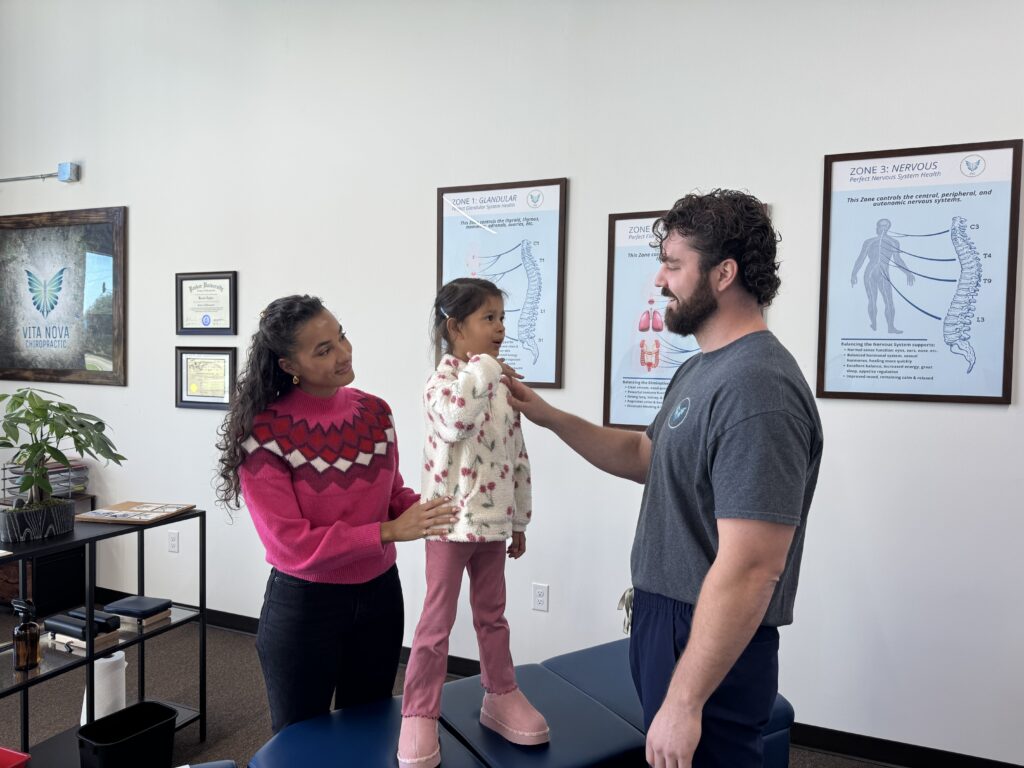
For autistic children, Zone Technique assesses the full nervous system across all six zones and identifies where mechanical interference is present. The nervous zone(3) governs the brainstem and upper cervical nerve pathways that coordinate sensory integration, autonomic regulation, and arousal state. Upper cervical interference at C1 and C2 directly adjacent to the brainstem is the most consistent finding in autistic children presenting at Vita Nova. When Zone 3 is under interference at those levels, the brainstem’s ability to filter and regulate sensory input is compromised. Sensory hypersensitivity, difficulty transitioning between arousal states, and the autonomic dysregulation that produces meltdowns all become harder to manage.
The glandular zone(1) governs immune function, hormonal signaling, and the cortisol and stress response axis. Autistic children frequently have dysregulated cortisol patterns and an immune system that is under chronic activation. Zone 1 interference assessment addresses the hormonal and immune component of that pattern. The digestive zone(4) is relevant for the significant proportion of autistic children who experience gastrointestinal dysfunction alongside their diagnosis. Gut-brain signaling, motility, and gut permeability all involve zone 4 nervous system pathways that the assessment evaluates.
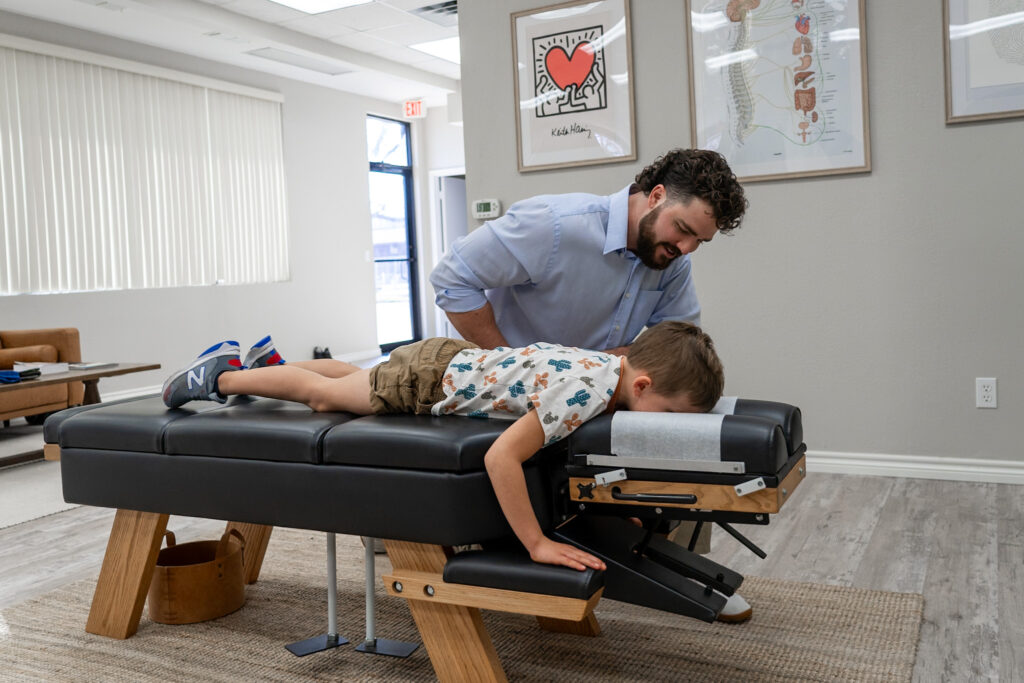
The adjustment for an autistic child is adapted completely for their sensory profile. Dr. Korrin does not begin with a full adjustment on the first visit for children with significant tactile sensitivity. He builds tolerance gradually, starts with the assessment only, explains each step, and adjusts his approach based on the child’s response. Families are present for the entire visit. There is no point at which the child is asked to do something they cannot tolerate. The pace of care is always the child’s pace.
What to Expect at Your Child’s First Visit
Your child’s first visit begins with a Zone Technique assessment of the full nervous system. Dr. Korrin evaluates all six zones and identifies where interference is present, with particular attention to the upper cervical levels and the zones most relevant to your child’s specific presentation. The assessment takes 15 to 20 minutes, though first visits for children with significant sensory sensitivities often take longer as Dr. Korrin takes additional time to build comfort with the process.
Let Dr. Korrin know before the visit what your child’s sensory profile looks like, what they find comfortable and uncomfortable in terms of touch and physical contact, and what strategies work in other settings to help them feel safe in a new environment. Bring your child’s diagnostic evaluation, any OT sensory assessments, and notes from your current therapeutic team. The more Dr. Korrin understands about the whole picture before the assessment begins, the more effectively he can adapt his approach to your child’s specific needs.
Autism frequently presents alongside other conditions Zone Technique addresses. Children on the autism spectrum with significant sensory processing differences may also benefit from evaluation for sensory processing disorder specifically. Children with autism and ADHD as a co-occurring diagnosis have a combined nervous system presentation that the Zone Technique assessment evaluates as a whole rather than as separate diagnoses. Children with autism and significant GI involvement may benefit particularly from digestive zone assessment alongside the nervous system work. The childhood neurological disorders page covers how Zone Technique approaches complex multi-diagnosis pediatric presentations more broadly. The pediatric chiropractic care page covers the full scope of pediatric care at Vita Nova.
Families navigating autism diagnoses in Plano, Murphy, and Richardson are a meaningful part of the practice at Vita Nova. Dr. Korrin works alongside ABA providers, speech therapists, occupational therapists, and developmental pediatricians who are already part of the child’s care team. He is one piece of the picture, not the whole picture. Dr. Korrin is accepting new pediatric patients. Schedule your child’s first visit to find out what the Zone Technique assessment finds and whether it adds anything useful to what you are already doing.