
Sciatica Chiropractor in Plano, TX
You chalk it up to a long week at the desk, a dull ache in the low back that comes and goes. Then one morning you swing your legs over the edge of the bed and the pain shoots from your hip all the way down into your calf like someone ran a live wire through your leg. Sitting makes it worse. Standing up from your chair becomes something you mentally prepare for. The commute on the Dallas North Tollway, something you have done without thinking for years suddenly has you shifting positions every few minutes to keep the pain from building.
That pattern is sciatic nerve pain. Waiting it out is rarely how it resolves.
What Is Sciatica and How Does Chiropractic Care Help?
Sciatica is not a standalone condition. It is what happens when the sciatic nerve gets compressed or irritated somewhere along its path from the lower spine through the hip, down the leg, and into the foot. The nerve roots that form the sciatic nerve exit the vertebral column at levels L4, L5, and S1. When those roots are compressed by a disc herniation, a bulging disc, bone spurs from spinal stenosis, or chronic tightness in the piriformis muscle the nerve misfires and you feel it as burning, shooting, or electric pain that follows the path of the nerve rather than staying in one place.
Common symptoms that point toward sciatic nerve involvement:
- Burning or electric pain that travels from the low back or hip into the leg
- Numbness or tingling in the thigh, calf, or foot
- Pain that worsens when sitting or standing up from a seated position
- One-sided symptoms — sciatica almost always affects one leg, not both
- Pain that improves when walking but returns with prolonged standing or sitting
- Weakness in the leg or foot in more advanced cases
That traveling quality is what separates sciatica from ordinary back pain. The compression is happening at the spine, but the symptoms show up in your hip, your thigh, your calf, or the sole of your foot — wherever the sciatic nerve runs. Research published in StatPearls through the National Library of Medicine confirms that lumbar radiculopathy at L4-S1 is among the most common causes of radiating leg pain, and that addressing the source of nerve root compression not just the downstream symptoms is central to effective conservative care. Sciatica chiropractic care works on exactly that principle.
Sciatica shows up most in adults who spend most of the day seated desk workers, daily commuters, and people whose jobs keep them in one position for long stretches. It is also common in physically active adults over 40, as spinal discs lose hydration and resilience over time, making nerve root compression more likely under load or impact. Prolonged sitting and repetitive flexion both press on the L4-S1 level where the sciatic nerve originates which is why a condition that starts as occasional back stiffness can gradually become something that affects how you walk, sleep, and work.
A distinct pattern of sciatic pain also occurs during pregnancy, as pelvic weight shifts and postural changes compress the nerve differently that condition has its own dedicated page: sciatica during pregnancy chiropractic care.
How Dr. Korrin Treats Sciatica Using Zone Technique
Zone Technique is a specific chiropractic system that evaluates the nervous system through six zones glandular, eliminative, nervous, digestive, muscular, and circulatory and identifies where interference is disrupting normal function. For sciatica patients, two zones are almost always the primary focus.
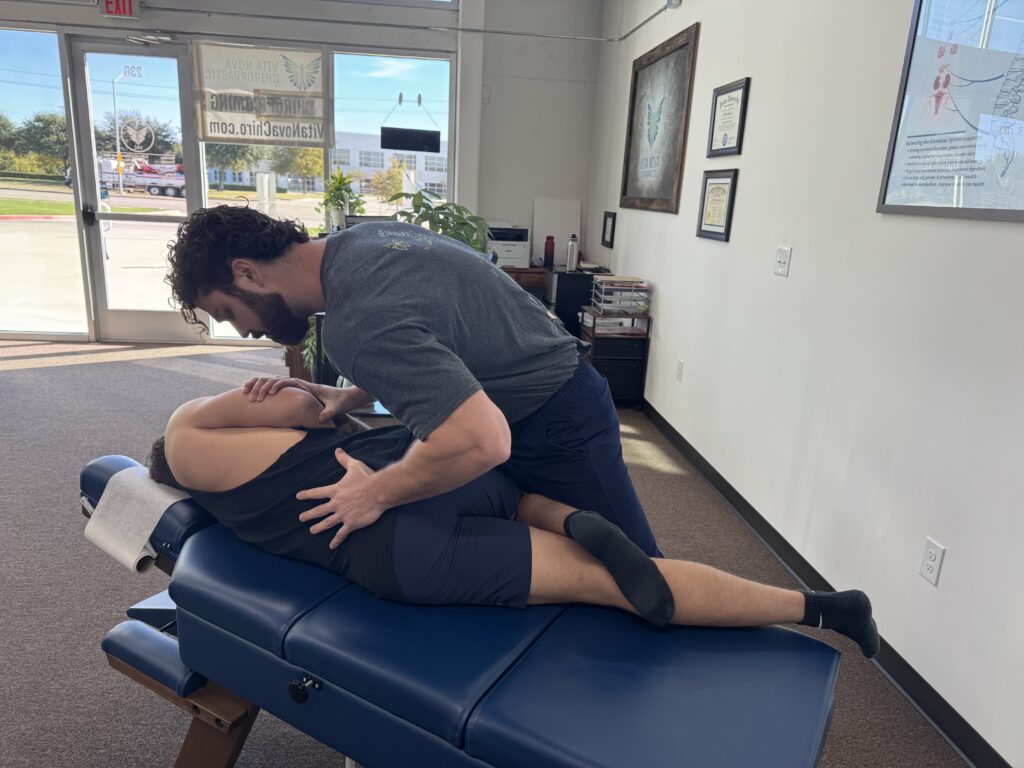
The nervous zone addresses the sciatic nerve directly. Zone Technique assessment maps nervous system function at each spinal level, with close attention to L4-S1, the nerve roots that form the sciatic nerve. When those levels show interference, Dr. Korrin’s adjustments restore normal segmental movement and reduce the mechanical pressure on those nerve roots. The adjustment works at the source (L4-S1) not at the leg where the pain shows up.
The muscular zone addresses a secondary cause of sciatic nerve compression that spinal-only approaches frequently miss: piriformis muscle tightness. The piriformis sits directly over the sciatic nerve in the hip. In people who sit for long periods, it tends to shorten and tighten over time, eventually compressing the nerve from outside the spine regardless of spinal alignment, a pattern sometimes called piriformis syndrome. Zone Technique’s muscular zone evaluation catches this and addresses it as part of the same care plan.
Most sciatica patients present with both zones active. Dr. Korrin assesses both at every visit throughout the care plan, not just at intake.
What to Expect at Your First Visit
Your first appointment at Vita Nova starts with a full Zone Technique assessment not just the area where you feel pain. Dr. Korrin evaluates all six zones to identify the complete pattern of nervous system interference, because in sciatica the symptom location and the root cause location are often not the same. For most patients this initial assessment takes 15 to 20 minutes and includes a health history, postural evaluation, and a thorough Zone Technique spinal evaluation.
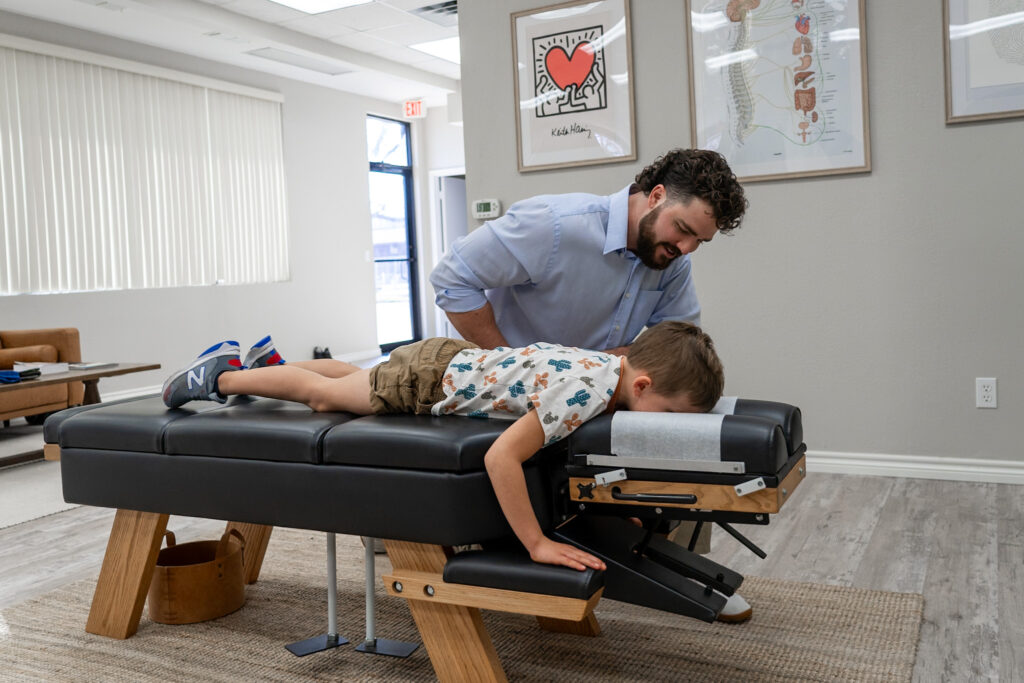
The adjustment is precise, targeted to the exact spinal levels where Zone Technique found interference, not a general manipulation of the whole spine. By the end of the first visit, you will have a clear picture of what is likely driving your sciatica, which zones are involved, and a recommended care frequency.
Most patients with acute sciatica start at two to three visits per week, tapering as symptoms reduce and the nervous system stabilizes. If your sciatica has been present for several months, recovery follows the same path on a longer timeline — nerve tissue under sustained compression heals more slowly than tissue that was recently irritated. At Vita Nova, a back pain chiropractor visit always starts with a full assessment, not a predetermined treatment.
Dr. Korrin sees sciatica patients across a wide range of presentations at Vita Nova in Plano, TX. Desk workers whose sciatic nerve compression built gradually from years of sustained lumbar loading, active adults whose sciatica first flared during a workout and never fully resolved, as well as commuters who spend more hours seated each day than they realize. All three presentations share the same underlying pattern: sustained compression at L4-S1 that wasn’t addressed until symptoms became hard to ignore.
What Patients Experience
After a few Zone Technique visits, the most consistent thing patients describe is not that the pain disappeared it is that it became predictable first, then smaller. One patient came in after four months of sciatica that had made his daily Tollway commute something he dreaded. He had started leaving earlier to give himself time to stretch in the parking garage before walking in. Within three weeks of Zone Technique care, the shooting sensation down his left leg had moved from a near-constant 7 out of 10 to something that showed up occasionally at a 3.
What changed first was his sleep. He had been waking two or three times a night from the nerve pain and had worked out a system of pillows just to find a position that would not flare it. The sleep improvement came before the daytime pain resolved.
Zone Technique reached something the previous treatments had not. Not because those approaches were wrong, but because they addressed the pain location rather than the nervous system pattern producing it.
When Should You See a Chiropractor for Sciatica?
The clearest signal is pain that travels. Not back pain that stays in one location, but pain, tingling, numbness, or weakness that moves from the back or hip into the leg. If that radiating sensation reaches your calf or foot, the nerve root compression is significant and warrants evaluation sooner rather than later.
Seek care if the pain has been present for more than two weeks without clear improvement, if it disrupts your sleep consistently, or if you have started moving differently to protect the painful side favoring one leg when you walk, avoiding stairs, sitting in positions that are not sustainable. A pinched nerve or neuropathy left unaddressed for months can produce nerve tissue changes that take far longer to resolve than the original compression.
Mild sciatic discomfort that appeared after an unusually long travel day and is clearly improving may not need immediate intervention. Pain that has reorganized your daily routine does.
Supporting Your Recovery Between Visits
Between Zone Technique visits, the single most useful habit for sciatica patients is breaking up how long they sit in a stretch. If you work at a desk, standing or walking for five minutes every hour interrupts the compressive load on the L4-S1 nerve roots involved in sciatica. A firm lumbar support or a rolled towel placed at the small of the back helps maintain the natural lumbar curve and reduces disc pressure throughout the workday.
For stretching, the piriformis stretch is the most directly useful: lie on your back, cross one ankle over the opposite knee, and gently pull the uncrossed thigh toward your chest. Hold 30 seconds per side. If morning stiffness is your main symptom, do this before getting out of bed.
During an acute flare, ice applied to the low back or hip for 15 minutes is more appropriate than heat. Heat feels relieving in the moment but can increase local inflammation during an active flare. Between flares, movement is almost always better than rest.
Still have questions about sciatica and chiropractic care? The Sciatica FAQ page is where Dr. Korrin answers the ones patients ask most.
Dr. Korrin is accepting new patients at Vita Nova Chiropractic in Plano, TX. Schedule your first visit and find out what is actually driving your sciatic pain.