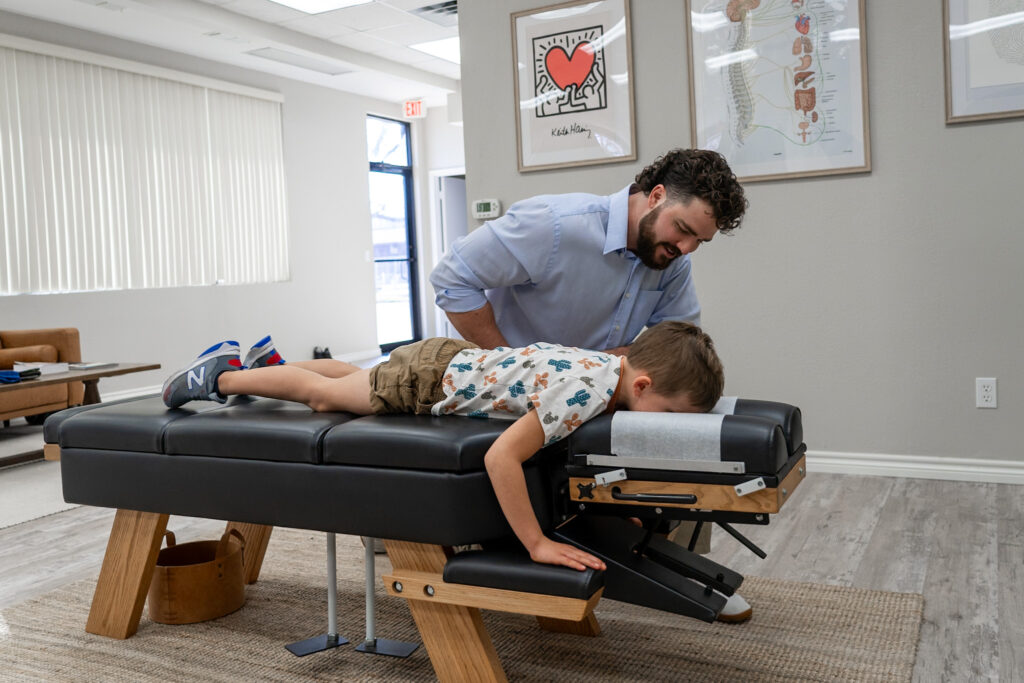


Your child is not hitting milestones on the expected timeline. It may be speech, motor skills, social development, or a combination. You have an evaluation in place or are waiting for one. You are in early intervention or looking into it. You are also asking whether there is something that works at the nervous system level to support whatever else is being done. That question is worth taking seriously, and it is one Dr. Korrin addresses directly at the first visit.
Developmental Delays and the Nervous System
Developmental delay describes a pattern in which a child’s skill acquisition in one or more developmental domains falls significantly behind the expected timeline for their age. The domains most commonly involved are speech and language, gross and fine motor skills, cognitive development, social and emotional development, and adaptive behavior. Each of these domains is a neurologically organized function. The nervous system coordinates the timing, sequencing, and integration of the developmental process across all domains simultaneously.
When the nervous system is under mechanical interference, particularly at the upper cervical levels surrounding the brainstem, the quality of the neural signals coordinating development is compromised. The brainstem plays a central role in organizing sensory integration, motor output, arousal regulation, and the primitive reflex integration that underlies normal developmental progression. Upper cervical interference at C1 and C2 directly affects all of these functions. A case series of 157 children with developmental delay syndromes published in the Journal of Manipulative and Physiological Therapeutics found that a multimodal chiropractic treatment protocol reduced symptoms and enhanced cognitive performance as measured by standardized psychometric testing before and after care. Children whose developmental delays involve multiple domains simultaneously often have a significant upper cervical interference component that has not been identified or addressed as part of their evaluation.
Zone Technique does not treat developmental diagnoses. It does not replace speech therapy, occupational therapy, physical therapy, or early intervention services. What it does is remove the mechanical nervous system interference that may be limiting how clearly the brain can coordinate the developmental process, and gives the rest of the therapeutic work a clearer signal environment to operate in.
Which Children Develop Delays
Developmental delays can occur across the full spectrum of children. Risk factors that are consistently associated with nervous system interference include premature birth, significant birth trauma, prolonged NICU stays, early head injuries, and chronic early illness. Children with a genetic diagnosis such as Down syndrome or a chromosomal condition also have developmental delays, but those delays frequently have an additional mechanical nervous system interference component that Zone Technique can address independently of the genetic cause. Children in early intervention programmes who are making progress but slower than expected sometimes have an upper cervical interference pattern that, when addressed, accelerates the therapeutic progress the intervention team is already producing.
How Dr. Korrin Approaches Developmental Delays Using Zone Technique
For developmental delay presentations, Zone Technique assesses the full nervous system and identifies where interference is present across all six zones. The nervous zone(3) is the primary focus for most developmental delay presentations. Zone 3 governs the brainstem, upper cervical nerve pathways, and the motor and sensory signaling that coordinates developmental progression. When Zone 3 is under interference at the upper cervical levels, the neural coordination underlying skill acquisition is compromised across all developmental domains it serves.
The muscular zone(5) is particularly relevant for motor delay presentations, tracking the tone and coordination patterns that the nervous system is producing in the musculature. The glandular zone(1) governs hormonal signaling that affects growth, immune function, and the stress response regulation that underlies social and emotional developmental domains. Dr. Korrin assesses all six zones at every visit and works alongside the early intervention team rather than as a replacement for it. He adjusts his approach entirely to the child’s developmental stage and sensory profile at every session.
What to Expect at Your Child’s First Visit
Your child’s first visit begins with a Zone Technique assessment of the full nervous system. The assessment takes 15 to 20 minutes. Dr. Korrin will ask about your child’s birth history, developmental timeline, which domains are most affected, what early intervention services are currently in place, and any evaluations or diagnoses that have been made. Bring any developmental evaluation reports, early intervention plans, or specialist notes you have. Dr. Korrin works most effectively when he understands the full clinical picture before the Zone Technique assessment begins. He will explain what he finds in the assessment clearly before making any adjustment and discusses care frequency based on your child’s specific presentation before you leave the first visit.
Developmental delays frequently overlap with motor delays as a specific presentation within the broader developmental picture. For children with neurological diagnoses alongside developmental delays, the childhood neurological disorders page covers how Zone Technique approaches complex multi-diagnosis presentations. Children with speech and language delays that have a sensory processing component may also benefit from evaluation for sensory processing disorder alongside the developmental delay assessment. The pediatric chiropractic care page covers the full scope of what Dr. Korrin does for children at Vita Nova.
Families navigating developmental delay diagnoses in Plano, Murphy, and Richardson are a consistent part of the practice at Vita Nova. Dr. Korrin is accepting new pediatric patients. Schedule your child’s first visit to find out whether nervous system interference is a component of your child’s developmental picture.