
Six months ago it was just back pain. Bad back pain, yes, but at least it stayed in one place.
Then it moved. The ache dropped into the hip and started running down the leg. Getting out of the car became something to brace for. The MRI confirmed it: a herniated disc pressing on a nerve root. Now someone’s talking about surgery, and you’re wondering if there’s something you haven’t tried yet.
There is. Most disc herniation treatment focuses on the disc itself. What’s often missing is what the nervous system does in response to it.
What Is a Herniated Disc?
A spinal disc sits between each pair of vertebrae, absorbing compressive load and allowing movement. It has a tough outer wall and a soft, gel-like interior. When that outer wall tears — from accumulated stress, a sudden impact, or years of loading in poor mechanical position — the inner material can push through and press directly on nearby spinal nerve roots.
The most common locations are L4-L5 and L5-S1 in the lumbar spine, where the discs carry the most daily load from sitting, standing, and bending. When those nerve roots get compressed, the signals traveling through them are disrupted. Pain, numbness, tingling, or weakness can appear anywhere along the path of the affected nerve, often far from where the actual disc problem is. When that compression reaches the sciatic nerve roots, it becomes sciatica chiropractic care territory: pain that radiates from the low back through the hip and into the leg.
Most lumbar disc herniations show up between ages 35 and 55. The more useful frame is occupational. Desk workers who spend eight or more hours seated under spinal load, then commute another hour in each direction, are compressing their lumbar discs in ways that add up over years before the disc finally gives. It also presents regularly in physically active adults in their forties whose disc tissue has lost hydration and resilience over time, and in people whose work involves repetitive lifting, bending, or twisting.
How Dr. Korrin Treats Disc Herniation Using Zone Technique
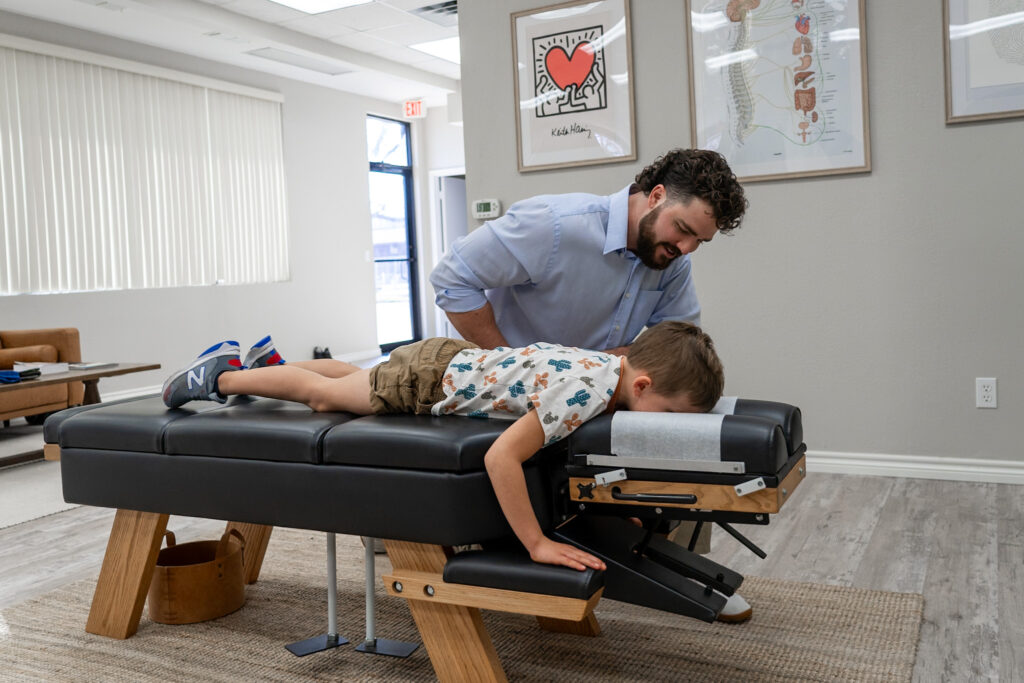
Zone Technique is a chiropractic system built on the understanding that the nervous system governs the body’s capacity to regulate and heal. It evaluates function across six zones — glandular, eliminative, nervous, digestive, muscular, and circulatory — identifying where interference is disrupting normal function. For disc herniation, two zones are central to every care plan.
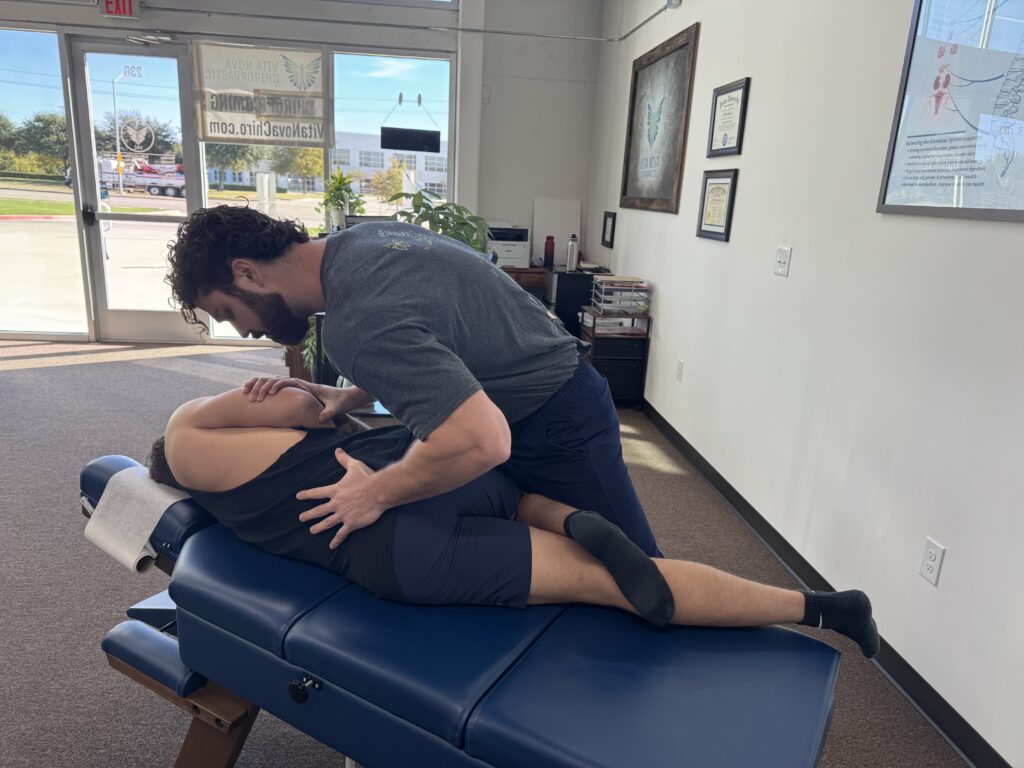
Zone 3, the nervous zone, is the primary focus. Zone Technique maps spinal segmental function at each vertebral level, with precise attention to L4-L5 and L5-S1, where the nerve roots most commonly compressed by lumbar disc herniation exit the spine. When those levels show interference, Dr. Korrin’s adjustments reduce mechanical pressure on the affected nerve root at the exact level where the compression is occurring. The pain may be in your hip or your leg. The work happens where the nerve exits the spine.
Zone 5, the muscular zone, addresses what the nervous system does in response to the injury. When a disc herniates, the body activates protective muscle guarding around the injured segment. The paraspinal muscles and surrounding soft tissue contract to stabilize the area. That’s appropriate acutely. Over weeks and months, though, that protective tension becomes its own problem: chronic compression on the disc and nerve root that persists independently of the herniation itself, long after the acute injury has stabilized. Zone Technique evaluates this compensation pattern at every visit, not just at intake.
Some patients arrive having researched spinal decompression. Decompression and Zone Technique address disc herniation differently. Decompression works mechanically, creating traction across the disc space. Zone Technique works with the nervous system’s own regulatory function. Dr. Korrin’s back pain chiropractic care assessment at your first visit will identify which approach your specific presentation calls for.
What to Expect at Your First Visit
Your first appointment starts with a full Zone Technique assessment. Not a scan of the area where it hurts, but an evaluation of the entire nervous system across all six zones. For most patients this takes 30 to 45 minutes and includes a detailed health history, postural evaluation, and a complete Zone Technique spinal assessment identifying which levels are showing interference.
By the end of the visit you’ll know which zones are active, which spinal levels are involved, and what a realistic care frequency looks like for your presentation. Most lumbar disc herniation patients start at two to three visits per week, tapering as symptoms reduce and the nervous system stabilizes. If the herniation has produced radiating pain down the leg, Zone Technique addresses that presentation the same way. Nerve tissue under sustained compression does take longer to recover than recently irritated tissue, and the care plan timeline reflects that honestly.
Most of Dr. Korrin’s disc herniation patients in Plano, TX work somewhere along the Legacy West corridor or the stretch of the 121 east toward Murphy. Eight to ten hours at a screen, then an hour each way in the car. That’s the sustained spinal load that drives most lumbar disc herniations, and it doesn’t announce itself early. It accumulates over years until the disc gives. Patients from Murphy and Richardson come in with the same story.
Have more questions about disc herniation and chiropractic care? The Disc Herniation FAQ is where Dr. Korrin answers the ones patients ask most.
Dr. Korrin is accepting new patients at Vita Nova Chiropractic in Plano, TX. Schedule an appointment and find out what Zone Technique chiropractic can do for your disc herniation.