

Your child does not go regularly. When they do it is uncomfortable and they resist it. You have tried dietary changes, increased water, prune juice, and a stool softener from the pediatrician. Things improve temporarily and return to the same pattern. Chronic constipation in children is rarely just a dietary issue. The digestive motility that moves stool through the colon is governed by the nervous system, and when that system is under interference, the dietary interventions can only do so much.
Pediatric Constipation and the Nervous System
Constipation in children is defined as infrequent bowel movements, typically fewer than three per week, often accompanied by hard or painful stools, straining, and sometimes withholding behavior that develops as the child learns to associate defecation with discomfort. Chronic functional constipation, the most common type in children, is not caused by a structural or metabolic problem. It is a motility pattern in which the colon is not moving stool through efficiently.
Colonic motility is regulated by the enteric nervous system, often called the second brain, and by the vagus nerve, which governs the parasympathetic regulation of gut function. The vagus nerve runs from the brainstem through the upper cervical spine before branching into the chest and abdomen. When the upper cervical levels are under mechanical interference, vagal tone to the digestive system is reduced. Parasympathetic drive, which is what moves the gut forward, decreases. The colon slows. Stool accumulates, hardens, and becomes harder to pass. A narrative review in BMC Gastroenterology found case reports and clinical evidence supporting chiropractic care for constipation through its effects on the nervous system regulation of gastrointestinal function, while noting that larger controlled trials are needed. The dietary interventions that add bulk or water to the stool address the symptoms but not the motility pattern. Zone Technique addresses the motility pattern at its nervous system source.
Which Children Present With This Pattern
Chronic functional constipation is one of the most common gastrointestinal problems in children, affecting an estimated 3% to 5% of all pediatric visits. It is most common in toddlers around toilet training age, when withholding behavior can establish a self-perpetuating pattern, and in school-age children who resist using the bathroom during school hours. Children with autism spectrum disorder have significantly higher rates of chronic constipation than neurotypical children, with estimates ranging from 30% to 50%. Children with a history of birth trauma or upper cervical mechanical stress are more frequently seen with this pattern at Vita Nova because of the vagal tone component.
How Dr. Korrin Approaches Pediatric Constipation Using Zone Technique
For pediatric constipation, Zone Technique focuses on the digestive zone(4) as the primary assessment. Zone 4 governs gut motility, the gut-brain signaling axis, and the parasympathetic regulation of the entire digestive tract including the colon. When Zone 4 is under interference at the levels governing vagal output to the bowel, colonic motility is reduced and the constipation pattern develops and persists. The Zone Technique adjustment at the specific levels where Zone 4 interference is found works to restore clearer nervous system regulation of gut motility.
The nervous zone(3) is assessed alongside Zone 4 for the upper cervical component of vagal tone regulation. The vagus nerve exits the brainstem at the upper cervical levels and its tone governs the parasympathetic drive to the entire digestive system. Zone 3 interference at C1 and C2 reduces vagal output to the gut and compounds the Zone 4 motility pattern. Dr. Korrin assesses all six zones at every visit and adjusts at the specific levels where interference is found for each child’s presentation.
What to Expect at Your Child’s First Visit
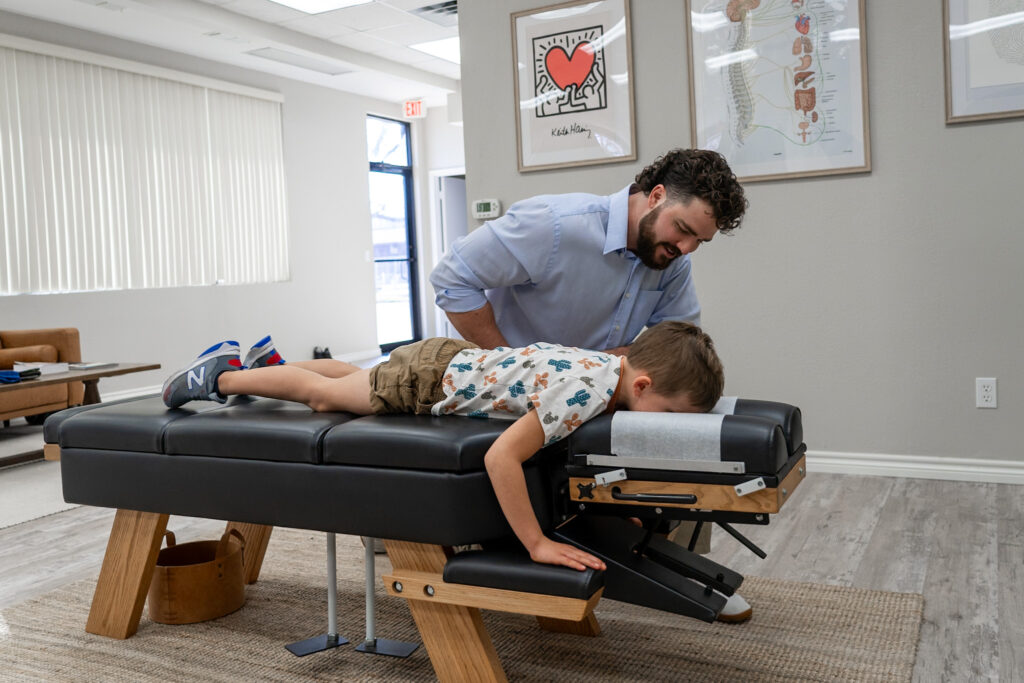
Your child’s first visit begins with a Zone Technique assessment of the full nervous system. The assessment takes 15 to 20 minutes. Dr. Korrin will ask about the constipation pattern, how long it has been present, what dietary and medical interventions have been tried, how frequently your child has bowel movements, whether there is any pain or withholding behavior associated, and the birth history. For toddlers and young children, the assessment is adapted for their developmental stage and comfort level throughout.
Pediatric constipation frequently presents alongside reflux and colic in infants because all three involve the digestive zone and vagal regulation pathway. For older children with constipation as part of a broader gut pattern, the digestive zone assessment addresses the full picture in one evaluation. Children with autism whose constipation is part of a wider GI presentation may benefit particularly from the combined Zone 3 and Zone 4 assessment given the high prevalence of vagal dysregulation in that population. The pediatric chiropractic care page covers the full scope of pediatric care at Vita Nova.
Dr. Korrin is accepting new pediatric patients at Vita Nova in Plano, TX. Schedule your child’s first visit to find out whether the digestive nervous system interference driving the constipation pattern is something Zone Technique can address.