
Breathing that feels restricted, effortful, or inconsistent in ways that do not fully match your pulmonary diagnosis. Chest tightness that is there even on days when the air quality is good and the allergen load is low. A respiratory pattern that improves with movement and worsens with sustained sitting or stress. These presentations suggest a nervous system regulation component to the respiratory picture that the pulmonary management is not fully addressing.
Respiratory Issues and the Nervous System
Breathing is regulated by the respiratory center in the brainstem and by the vagus nerve, which governs bronchial smooth muscle tone and airway reactivity. When the upper cervical spine is under mechanical interference at C1 and C2, brainstem respiratory regulation is compromised and vagal tone to the airways is reduced. Parasympathetic drive to the bronchi decreases, sympathetic tone increases, and bronchial smooth muscle contracts. Airway diameter narrows and reactivity to triggers increases. This is the nervous system component of respiratory difficulty that Zone Technique addresses, distinct from the inflammatory and structural components that pulmonary medicine targets. Zone Technique is a complement to existing respiratory management, not a replacement for it. Patients with asthma, COPD, or confirmed structural airway conditions should continue their prescribed treatment alongside any chiropractic care.
How Dr. Korrin Approaches Respiratory Issues Using Zone Technique
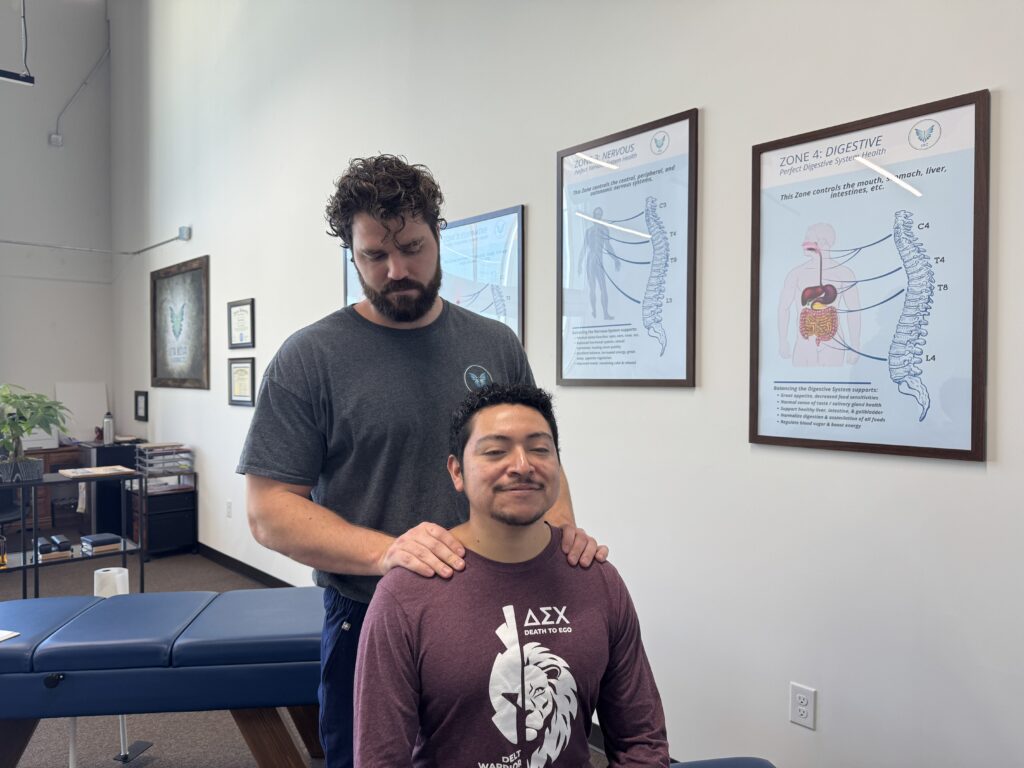
For respiratory presentations, Zone Technique assesses the nervous zone(3) at the upper cervical and thoracic levels governing brainstem respiratory regulation and vagal bronchial tone. The glandular zone(1) is assessed alongside Zone 3 for patients with an allergic or immune reactivity component to their respiratory presentation, since the immune calibration that determines airway sensitivity involves Zone 1 hormonal and immune signaling pathways. Dr. Korrin adjusts at the specific levels where interference is found and works alongside the existing medical team rather than in place of it.
Your first visit begins with a Zone Technique assessment of the full nervous system. Dr. Korrin will ask about your respiratory diagnosis, current treatment, what triggers your symptoms, and how your breathing varies with posture, stress, and activity. Bring any pulmonary function testing or specialist notes. For respiratory issues that have an allergic component, the immune regulation mechanism driving airway reactivity is addressed through Zone 1 specifically. For breathing difficulty in children, the pediatric breathing difficulty page covers how Zone Technique approaches that presentation specifically. Dr. Korrin is accepting new patients at Vita Nova in Plano, TX. Schedule your first visit to find out whether nervous system interference is contributing to your respiratory pattern.