
The injury happened weeks or months ago. It was diagnosed, treated appropriately, and should have resolved by now. The acute phase cleared but something is still limiting the joint or the muscle. Movement that should be pain-free is not. The strength has not come back fully. Sprains and strains that do not resolve on the expected timeline almost always have a nervous system interference component that the standard recovery protocol did not address.
Sprains, Strains, and the Nervous System
A sprain is a ligament injury from joint loading beyond normal range. A strain is a muscle or tendon injury from overload or sudden eccentric force. Both produce immediate tissue damage, inflammation, and pain. Both heal through a predictable biological sequence: inflammation, proliferation, and remodeling. Most resolve fully within six to twelve weeks with appropriate care.
The ones that do not resolve typically have a nervous system component driving persistent symptoms. When tissue is injured, the nervous system responds with a protective guarding pattern in the surrounding musculature that reduces movement and protects the injured structure during healing. In a healthy recovery, this guarding pattern resolves as the tissue heals. In a delayed recovery, the guarding pattern persists as a nervous system interference pattern at the spinal levels governing the injured area, even after the tissue itself has healed. The patient experiences this as persistent stiffness, weakness, or pain that does not match the structural findings on imaging.
How Dr. Korrin Approaches Sprains and Strains Using Zone Technique
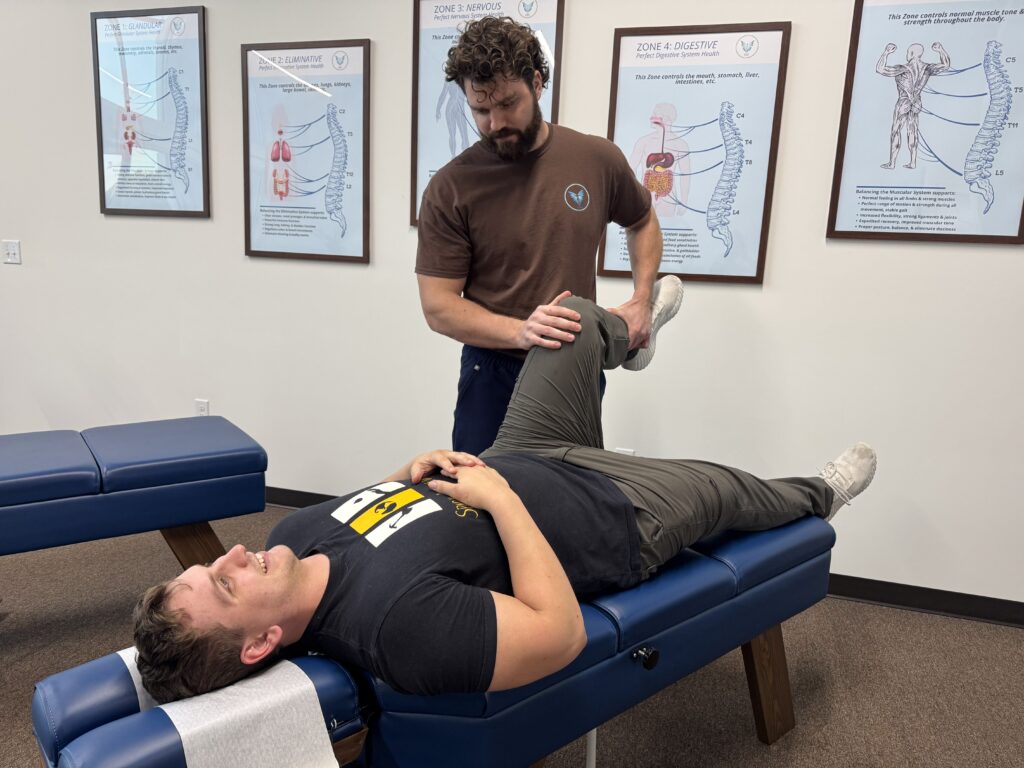
For persistent sprain and strain presentations, Zone Technique identifies the specific spinal levels where nervous system interference is maintaining the protective guarding pattern. The muscular zone(5) tracks the guarding and compensatory tension pattern that has developed around the injured structure. When Zone 5 is under interference at the relevant levels, the muscles surrounding the injury site remain in a protective contraction that limits range of motion and perpetuates pain. The nervous zone(3) governs the nerve root supply to the affected region and is assessed for nerve sensitization that developed during the acute injury phase and has not fully resolved. Dr. Korrin adjusts at the specific levels where interference is found and tracks changes in the guarding pattern and range of motion at each visit.
Your first visit begins with a Zone Technique assessment of the full nervous system. Dr. Korrin will ask about the mechanism of injury, when it occurred, what treatment was received acutely, and what specifically is still limiting you now. If you have imaging from the acute evaluation, bring it. The structural picture from the injury helps Dr. Korrin understand what healed and what the Zone Technique assessment should focus on. For sprains and strains that occurred at work, the occupational injury picture and the nervous system interference that sustains it beyond the acute phase is covered in detail. Athletes in Plano ISD sports programs and adult recreational athletes in the Murphy and Richardson communities are a consistent part of the sprain and strain presentation at Vita Nova. Dr. Korrin is accepting new patients. Schedule your first visit to find out whether nervous system interference is what is keeping your injury from fully resolving.