
You noticed it in the first weeks. Your baby’s head tilts consistently to one side and rotates away from the other. They prefer to look in one direction and resist turning the other way. When you try to gently reposition the head, there is tension. The pediatrician confirmed torticollis and may have referred you to physical therapy. Physical therapy is appropriate and often helps. It is also working on the muscle from the outside. Zone Technique works on the nervous system driving the muscle tension from the inside. Both have a role, and for many infants the combination produces faster resolution than either alone.
What Is Infant Torticollis?
Torticollis, from the Latin for “twisted neck,” is a condition in which the sternocleidomastoid muscle on one side of the neck is shortened or in sustained contraction, causing the head to tilt toward that side and rotate away from it. In infants, congenital muscular torticollis is the most common presentation. It is typically identified in the first weeks of life and is most often attributed to positioning in utero or mechanical stress during delivery that affects the sternocleidomastoid.
A systematic review in the Journal of Orthopaedic and Sports Physical Therapy found that early intervention for congenital muscular torticollis produces significantly better outcomes than delayed treatment, with resolution rates above 90% when care begins in the first month of life. This is the most important piece of information on this page. If your baby’s head tilt is recent and your infant is young, come in soon. The nervous system is most responsive and the muscle pattern is least established in the early weeks.
The upper cervical component is what connects torticollis to Zone Technique. The C1 and C2 vertebrae are directly adjacent to the brainstem and the upper cervical nerve roots that govern the sternocleidomastoid. When those levels are under mechanical stress from the delivery, the nerve signals reaching the sternocleidomastoid become asymmetrical. One side receives more activation than the other. The muscle on the more activated side contracts, shortens, and produces the characteristic head tilt. Physical therapy stretches the muscle. Zone Technique addresses the nerve signal asymmetry driving the contraction.
Which Infants Develop Torticollis
Congenital muscular torticollis is present in approximately one to two percent of newborns and is the third most common musculoskeletal condition diagnosed in infancy after hip dysplasia and club foot. Risk factors include first pregnancies, large birth weight, breech positioning, multiple gestation, and deliveries involving prolonged labor, vacuum extraction, or forceps. Each of these is associated with increased mechanical load on the upper cervical spine during delivery. Infants born after uncomplicated deliveries can also develop torticollis, particularly from sustained asymmetrical positioning in utero or prolonged positional preference after birth.
How Dr. Korrin Approaches Torticollis Using Zone Technique
For torticollis, Zone Technique focuses on the upper cervical levels where the nerve asymmetry driving the sternocleidomastoid contraction originates. The nervous zone(3) governs the upper cervical nerve roots and the motor pathways supplying the neck musculature. When Zone 3 is under interference at C1 or C2, the motor signals reaching the sternocleidomastoid on the affected side are dysregulated. The muscle receives a sustained activation signal it cannot release on its own. The Zone Technique adjustment at the specific cervical level where interference is found restores more symmetrical motor signaling to both sides of the neck. The muscle tension reduces as the nervous system receives a clearer signal to release it.
The muscular zone(5) tracks the muscle tension pattern directly and is assessed alongside Zone 3 at every visit. For infants with established torticollis where the sternocleidomastoid has been in sustained contraction for weeks, Zone 5 interference reflects the guarding pattern that has developed around the primary restriction. Dr. Korrin adjusts at both zones and works alongside the physical therapist if one is already involved in care. The two approaches address different aspects of the same problem and work better together than either does alone.
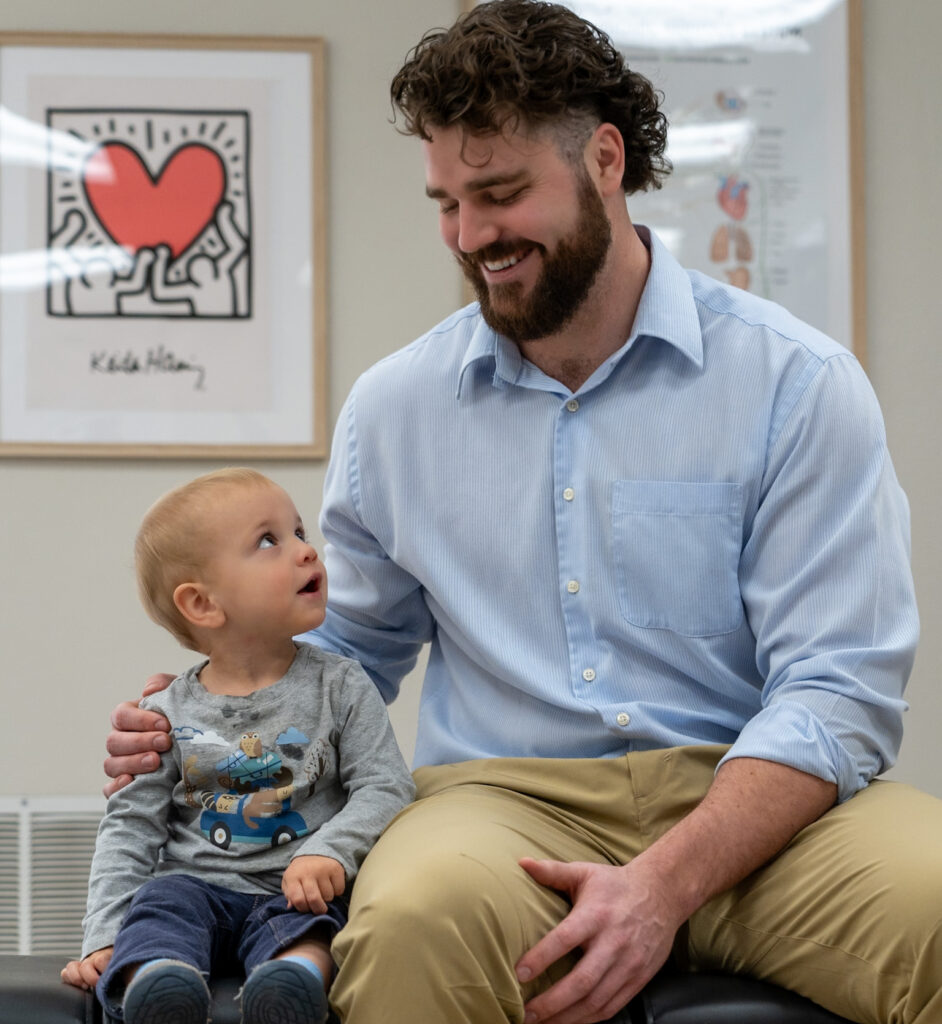
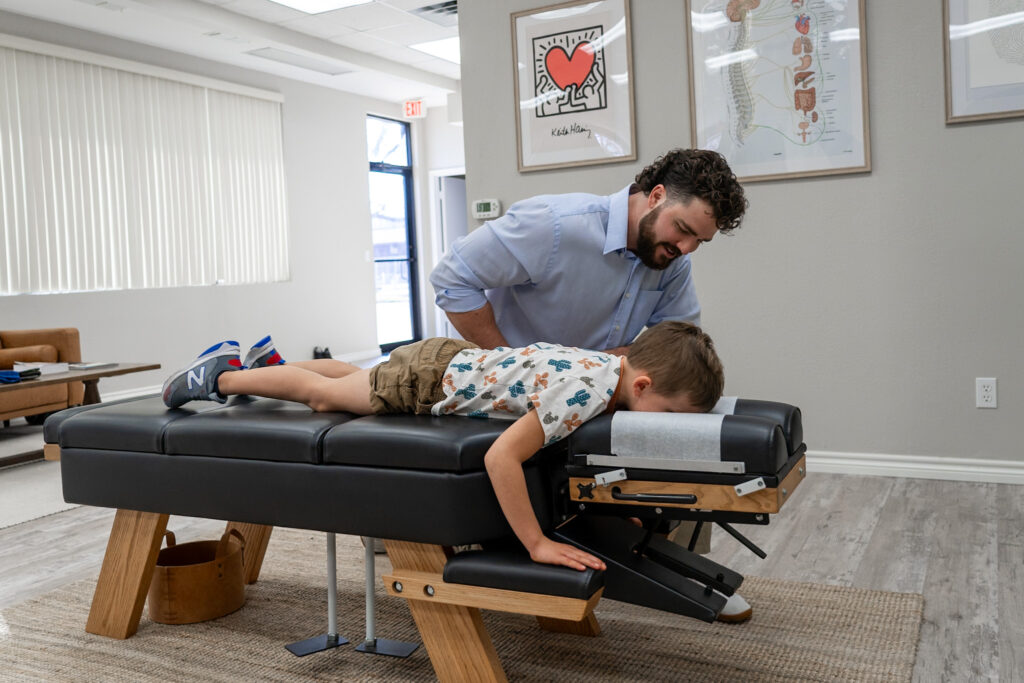
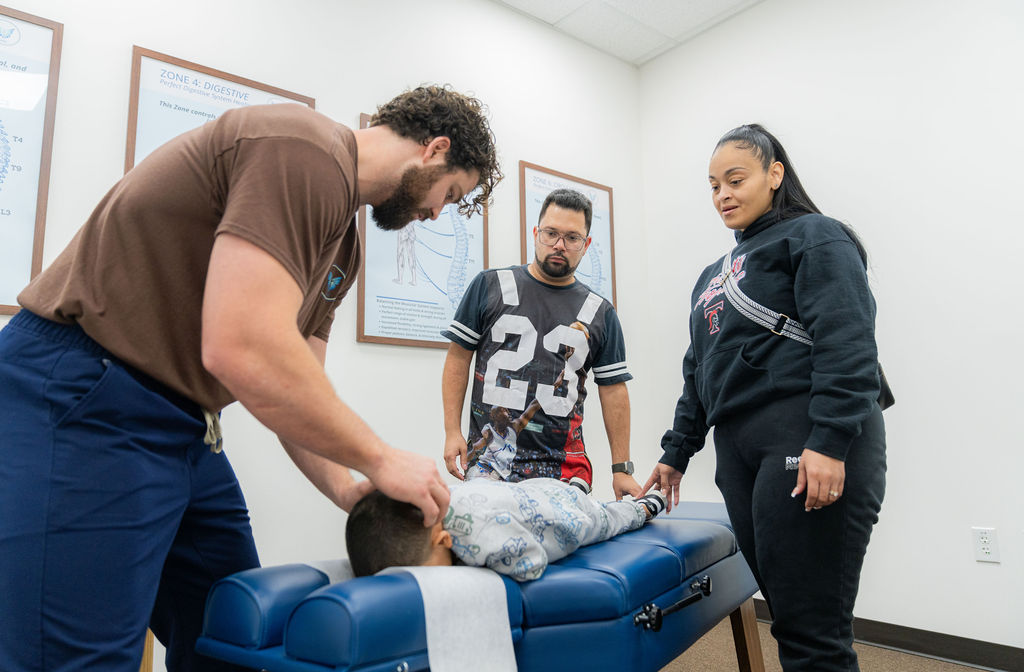
The adjustment for an infant with torticollis uses gentle fingertip pressure at the relevant upper cervical level. No forceful manipulation. No sudden movements. The infant is positioned on their back or in your arms throughout the assessment and adjustment. Most infants tolerate it without distress, and parents often notice increased willingness to turn toward the previously restricted side within a few days of the first adjustment.
What to Expect at Your Baby’s First Visit
Your baby’s first visit begins with a Zone Technique assessment of the full nervous system. Dr. Korrin evaluates all six zones and identifies where interference is present, then focuses the assessment on the upper cervical levels most relevant to the torticollis pattern. The assessment takes 15 to 20 minutes. He will ask about your baby’s birth history, when you first noticed the head tilt, which direction the tilt and rotation are, whether there is also a flat spot on one side of the head from the preferred position, and whether physical therapy has already started.
If your baby is already in physical therapy for torticollis, let both providers know you are doing both. The home stretching programme from the physical therapist is complementary to Zone Technique care and should continue alongside it. Bring any pediatric notes or referral documentation you have. The earlier in the torticollis timeline care begins, the better the outcome.
Torticollis frequently presents alongside other upper cervical patterns in infants. Infants with torticollis often also have colic or reflux because all three involve the same upper cervical nerve interference affecting vagal and motor function. The infant discomfort page covers how Zone Technique approaches the broader pattern of infant nervous system presentations. The pediatric chiropractic care page covers the full scope of what Dr. Korrin does for infants and children at Vita Nova.
Dr. Korrin sees torticollis patients from across Plano, Murphy, and Richardson at Vita Nova. Families frequently come in after the pediatrician has confirmed the diagnosis and referred to physical therapy, and are looking for something that addresses the nervous system component alongside the stretching programme. Dr. Korrin is accepting new pediatric patients. Schedule your baby’s first visit. The earlier care begins, the better the outcome.