

What Most Parents Are Told — And What’s Missing
When a child is constipated, the standard advice is almost always the same: more water, more fiber, more movement, and if necessary, a stool softener or laxative. These approaches address the symptom directly — and they can provide temporary relief. But they don’t answer the most important question: why is the digestive system not functioning the way it should in the first place?
The gut does not operate independently. Every aspect of digestive function — muscle contractions that move food through the intestines, fluid secretion, nerve signaling between the gut and brain — is governed by the nervous system. When the nervous system is communicating clearly and the spine is properly aligned, the digestive system tends to function well. When there is interference in that communication, the gut can slow down, become sluggish, and lose the rhythmic motility it needs to move things through effectively.
This is why some children respond dramatically and quickly to chiropractic care for constipation — because the adjustment isn’t treating the gut directly. It’s restoring the nervous system communication that allows the gut to do its own job properly.
The Nervous System and Digestion — How They’re Connected
The digestive system has its own extensive nervous system — often called the enteric nervous system or the “second brain” — but it is deeply connected to and regulated by the central nervous system through the spinal cord. The nerves that control the large intestine, small intestine, and colon exit the spine primarily in the lumbar and sacral regions of the lower back. When the vertebrae in these regions are misaligned, they can create interference in the nerve signals that tell the bowel when and how to contract.
The vagus nerve — the primary nerve of the parasympathetic nervous system — also plays a critical role in digestive motility. It runs from the brainstem down through the body, and it is heavily involved in stimulating the gut contractions that move food through the digestive tract. A nervous system stuck in a chronic sympathetic (fight-or-flight) state suppresses vagal tone and slows digestion. Chiropractic adjustments support the shift from sympathetic dominance back to parasympathetic regulation — directly supporting the nervous system’s ability to run the digestive system the way it was designed to.
You can read more about how nervous system dysfunction affects the body, and about our dedicated pediatric constipation chiropractic care page.
Why Children Are Particularly Vulnerable
Children’s nervous systems are still developing — which makes them highly responsive to chiropractic care, but also means that nervous system tension from birth or early childhood can have significant downstream effects on digestive function. Here are the most common reasons children develop the nervous system dysfunction that drives constipation:
- Birth trauma — even a smooth delivery places significant physical stress on the newborn’s upper cervical spine and nervous system. Interventions like forceps, vacuum assistance, or prolonged pushing increase this stress considerably. Unresolved tension from birth can affect nervous system function for months or years afterward.
- Spinal misalignments from falls and tumbles — the inevitable bumps of childhood introduce micro-traumas to the spine that the body doesn’t always resolve on its own. Repeated small misalignments in the lumbar and sacral spine can progressively interfere with the nerves governing the bowel.
- Chronic stress and anxiety — children under significant emotional or environmental stress operate in a sustained sympathetic state that suppresses digestive motility. Anxiety in children frequently has a physical component that is expressing itself through the digestive system.
- Toilet training pressure — withholding behavior during toilet training can develop into a chronic pattern that is reinforced by nervous system tension, making it progressively harder for the child to relax and go.
- Diet and dehydration — while not the only cause, inadequate fiber, processed foods, and insufficient water do contribute to constipation and should be addressed alongside chiropractic care.
Signs That Your Child’s Constipation May Have a Nervous System Root
Not all constipation has a nervous system component — but there are patterns that suggest a deeper neurological driver rather than a purely dietary one. Consider whether your child:
- Has been constipated since birth or early infancy
- Experiences constipation that returns consistently despite dietary changes
- Has a visibly distended or hard abdomen between bowel movements
- Experiences accompanying symptoms like reflux, frequent crying, or general discomfort
- Also struggles with emotional regulation, anxiety, or sleep difficulties — often a sign of broader nervous system dysregulation
- Has never had a regular, effortless bowel pattern even with a good diet
- Experiences pain, straining, or significant distress with bowel movements
If several of these resonate, it is worth having your child’s nervous system and spinal alignment evaluated by a chiropractor with specific pediatric experience.
A Story From Our Practice
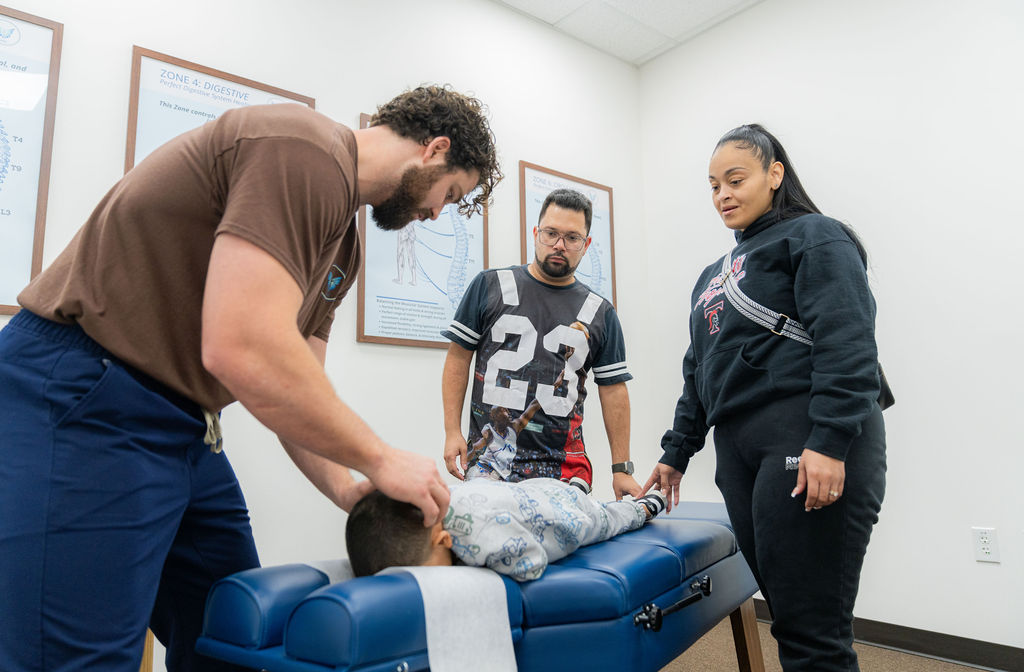
The results Dr. Korrin sees with pediatric constipation can be remarkable — but none quite as striking as the experience of Jose and his son Hunter.
Jose brought Hunter in after his son had been constipated for two full weeks. By that point the situation had become serious — Hunter’s abdomen was massively distended, he was clearly in significant discomfort, and the constipation had become so severe that he was vomiting. Jose had tried everything he could at home and was at a loss for what to do next.
Dr. Korrin evaluated Hunter, identified the nervous system dysfunction affecting his digestive function, and performed a gentle chiropractic adjustment targeted to the relevant spinal segments. The response was extraordinary. Over the course of that day and the following day, Hunter had twelve bowel movements — his body finally releasing what it had been unable to move for two weeks.
Hunter’s story is a dramatic example, but it illustrates something Dr. Korrin sees in a less acute form on a regular basis — children whose digestive systems had been struggling under the weight of nervous system interference, and who responded quickly and dramatically once that interference was removed. The gut knew what to do. It just needed the signal.
What Chiropractic Care for Pediatric Constipation Looks Like
When you bring your child to Vita Nova for constipation, Dr. Korrin begins with a thorough consultation — reviewing your child’s health history, birth story, diet, bowel patterns, and any other symptoms that might indicate the broader nervous system picture. This context is essential because it tells her not just what is happening, but why.
From there she performs a Zone Technique assessment using the Zone Technique — evaluating which of the six neurological systems are out of balance. For constipation, Zone 4 (the digestive zone) is almost always involved, but Zone 3 (the nervous zone) and Zone 1 (the glandular zone governing stress hormones) frequently contribute as well.
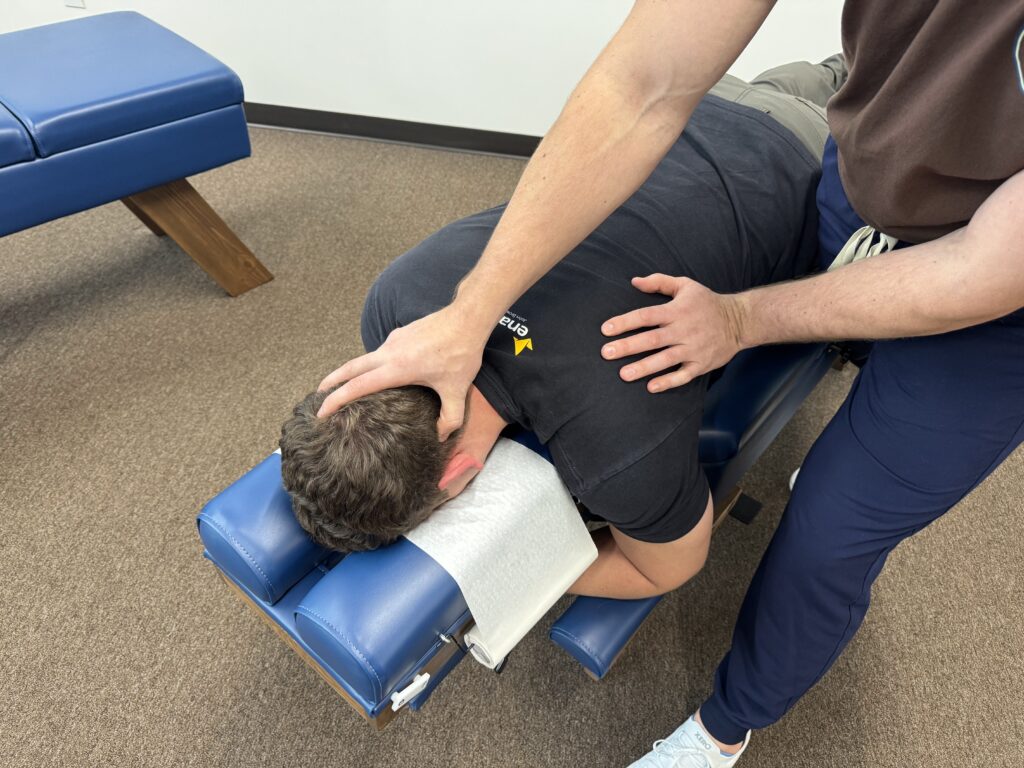
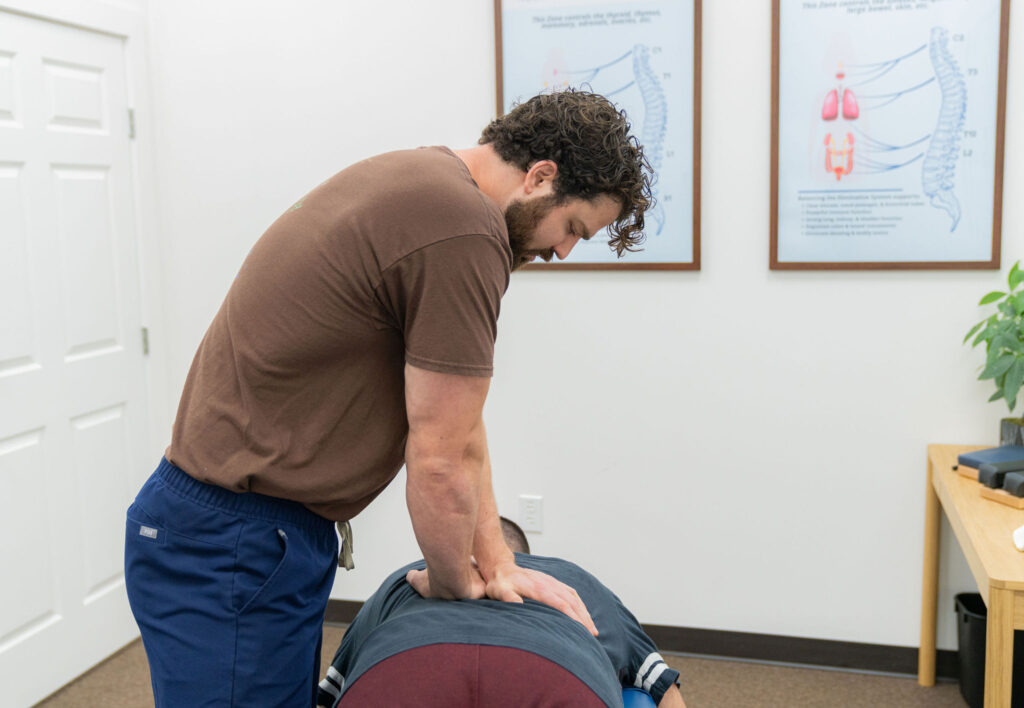
Adjustments for children are extremely gentle — using only light fingertip pressure targeted to the specific spinal segments corresponding to the disrupted zones. For infants and young children, the process is quick, comfortable, and often so gentle that the child barely notices it’s happening. Many children actually enjoy their adjustments and look forward to coming in.
Parents often notice changes within the first one to three visits — more regular bowel movements, less straining, a softer abdomen, and a child who seems more comfortable and at ease in their body overall. Learn more about our pediatric chiropractic care and what to expect when you visit Vita Nova for the first time.
We welcome children and families from Plano, Murphy, and Richardson, TX. If your child has been struggling with constipation and you’re ready to explore a different approach, schedule a consultation with Dr. Korrin today.
People Also Ask
How quickly can chiropractic care help a constipated child?
Results vary depending on the child and the underlying cause, but many parents notice meaningful improvement within the first one to three visits. In some cases — like Hunter’s story above — the response is immediate and dramatic. In others, particularly where constipation has been chronic and long-standing, improvement builds gradually over a series of visits as the nervous system recalibrates. Dr. Korrin will give you a realistic picture of what to expect at your first visit based on your child’s specific presentation. The key is not waiting — the longer nervous system dysfunction goes unaddressed, the more entrenched the patterns become. Book a visit and let’s find out what’s driving your child’s constipation.
Is chiropractic care safe for a constipated infant or toddler?
Yes — and it is one of the gentlest and most effective approaches available for digestive issues in very young children. Adjustments for infants use no more pressure than you’d use to check the ripeness of a piece of fruit. There is no cracking, no forceful manipulation, and no discomfort. Many infants relax visibly during their adjustment as the nervous system settles. Dr. Korrin has specific training in infant chiropractic care and adapts every aspect of her approach to the age and nervous system state of each child. Pediatric constipation — including in newborns — is one of the conditions that responds most reliably and quickly to gentle chiropractic care.
Should I still address my child’s diet if we’re doing chiropractic care?
Absolutely — diet and hydration are important contributors to healthy bowel function and should be addressed alongside chiropractic care, not instead of it. The two approaches complement each other well. What chiropractic care does is address the nervous system and structural component that diet alone cannot fix — which is why some children remain constipated despite an excellent diet. Think of it this way: if the plumbing is working properly, a good diet keeps things flowing smoothly. If the plumbing has a structural problem, no amount of dietary optimization will fully resolve it. Dr. Korrin can advise on dietary considerations as part of your child’s care at Vita Nova, ensuring that all the relevant factors are being addressed together.