
It’s almost always the same story. Your child is fine all day, then an hour or two after bedtime they’re crying and rubbing their shins or calves, sometimes both legs, sometimes just one. There’s no swelling, no fever, no limp the next morning. By breakfast it’s like it never happened. You’ve mentioned it to your pediatrician and heard the phrase every parent eventually hears: growing pains. It’s a real and common pattern in kids age four through twelve, and it deserves a real explanation, not just a shrug.
What Growing Pains Actually Are
Growing pains are one of the most common causes of recurring limb pain in children, affecting somewhere between 2.6% and just under half of school-age kids depending on which study you look at, with the peak typically between ages four and six. The pain is usually in the front of the thighs, behind the knees, or in the calves, almost always shows up in the evening or wakes a child from sleep, and is gone by morning. Despite the name, there’s no solid evidence that the pain actually comes from bones growing. Pediatric researchers still don’t have a single confirmed cause, though muscle fatigue from a day of activity and lowered pain threshold in the evening are the two most commonly discussed factors.
What’s often left out of the conversation is the nervous system’s role in how a child processes and expresses that discomfort. The nerves supplying the legs originate in the lumbar spine, and if there’s mechanical stress or restriction at those spinal levels, whether from a fall, a growth spurt outpacing postural control, or simply how a child has been sitting and moving through the day, the nervous system’s ability to regulate normal muscle tension in the legs can be affected.
Who This Affects
Growing pains most commonly show up in active kids between four and twelve, often coinciding with a growth spurt or a stretch of unusually high physical activity, a new sport season, a jump in soccer practices, more time on a bike. Some children also carry spinal stress from earlier in life, a fall during toddlerhood, a difficult delivery, or a stretch of favoring one side of the body, that hasn’t fully resolved and shows up later as recurring leg discomfort once the child is old enough to describe what they’re feeling.
A small case series published through the International Chiropractic Pediatric Association followed two young children with a documented pattern of nighttime leg pain consistent with growing pains, both of whom were found to have spinal segmental dysfunction at the lumbosacral level. It’s worth being direct about the size of that study: two patients is not a basis for broad claims, and the authors themselves called for further research rather than presenting it as settled. What it does support is that spinal assessment is a reasonable thing to check when a child has this pattern, not a guaranteed fix.
How Zone Technique Applies to Growing Pains
When Dr. Korrin sees a child for recurring leg pain, the assessment starts with the nervous zone(3), checking for restriction at the lumbar and sacral levels where the nerves supplying the legs originate. If a spinal segment isn’t moving the way it should, the nerve signal to the surrounding muscles can be affected, and that shows up as uneven muscle tension, tension that’s often more noticeable at night when a child’s body has finally slowed down enough to register it. The muscular zone(5) is checked alongside it, since ongoing muscular tension patterns in the legs are common in kids who are also dealing with the postural habits covered on our pediatric posture and spine page, from school, sports, or screen time.
The goal of an adjustment in this context isn’t to “fix growing” or promise the pain disappears, it’s to remove any mechanical restriction that may be adding to a child’s normal discomfort and making it worse or more frequent than it needs to be.
What to Expect at Your Child’s First Visit
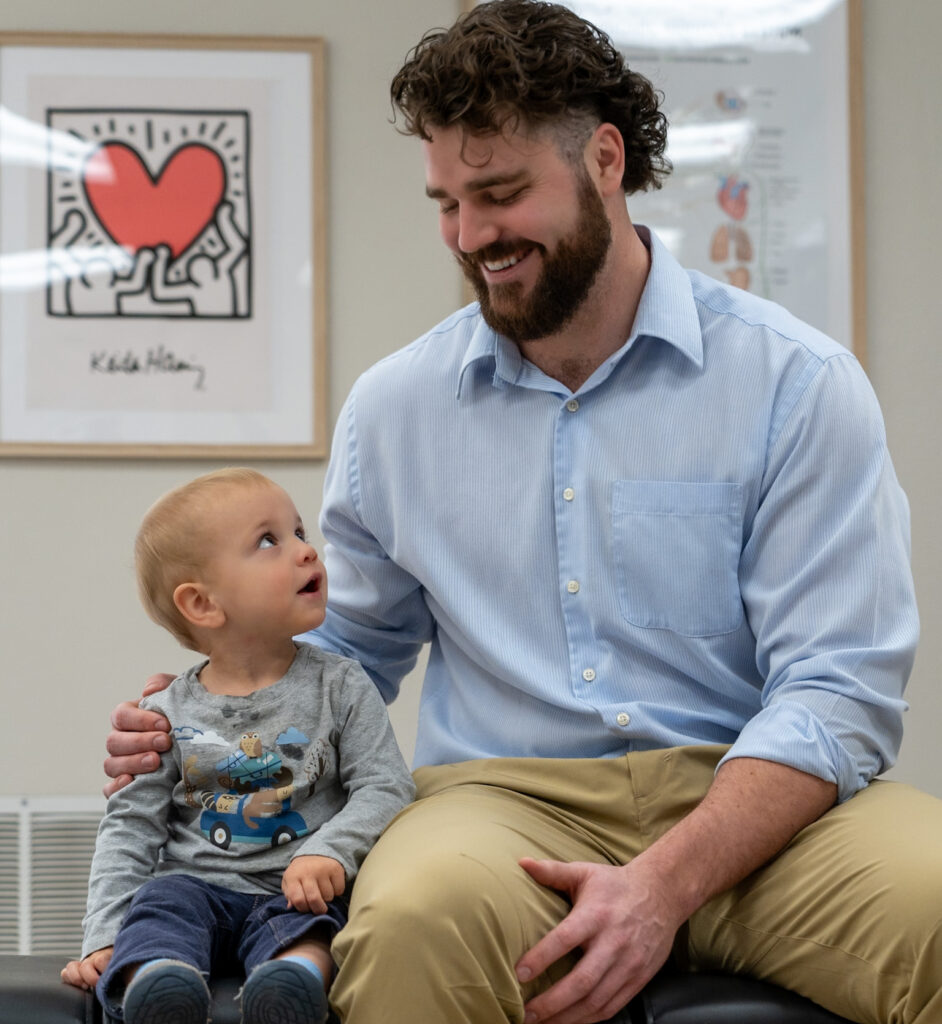
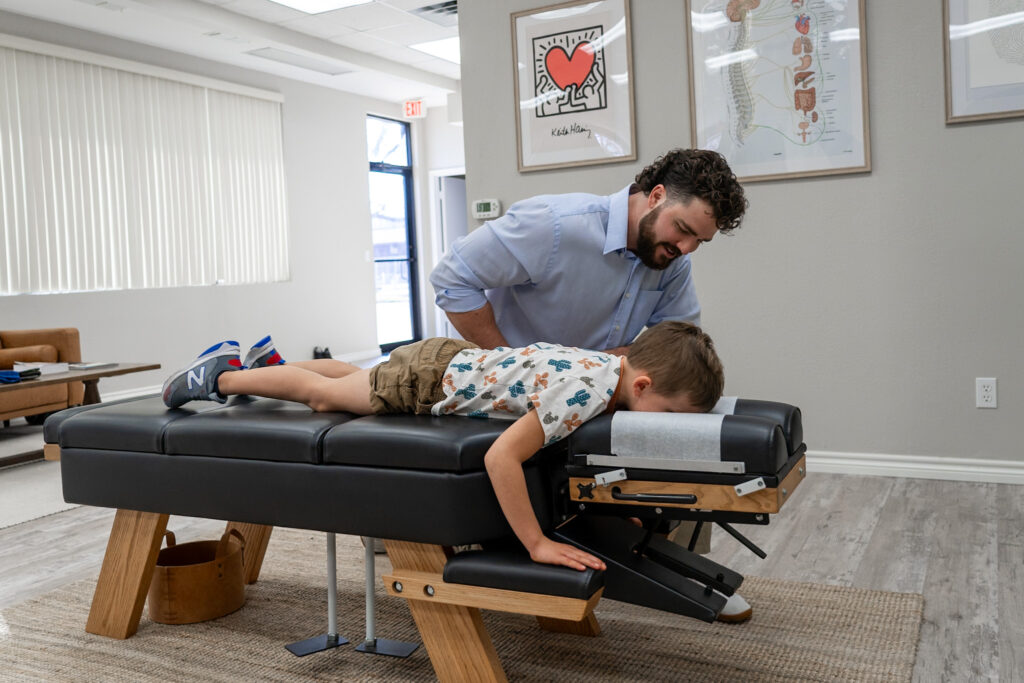
Dr. Korrin will ask about when the pain shows up, which part of the leg, whether it’s one side or both, and whether there’s been any recent fall, growth spurt, or change in activity level. He’ll do a hands-on assessment of your child’s spine, particularly the lower back, and check for any restriction affecting the nerve pathways to the legs. Adjustments for kids are gentle, nothing like what adults picture when they hear “chiropractic,” using only the pressure needed for a child’s smaller frame. Most parents are surprised at how calm the visit is.
If your child’s pain includes fever, swelling, redness, a limp that persists into the day, or pain in a single specific joint rather than a general ache, that’s outside what growing pains typically look like and warrants a pediatrician visit first.
Families across Plano, Murphy, and Richardson bring their kids in for this exact pattern, tired evenings, restless sleep, a child who can’t quite explain what hurts but clearly isn’t comfortable. It’s one of the more common reasons parents first walk through the door at our pediatric chiropractic care practice.
Dr. Korrin has helped families across Plano navigate their child’s growing pains with gentle, nervous-system-focused care. Schedule your child’s first visit today.