


Anxiety Is a Nervous System Problem, Not Just a Psychological One
Most people understand anxiety as a mental health condition. That is accurate. What is less widely understood is that anxiety also has a consistent and measurable physiology. The autonomic nervous system, specifically the balance between sympathetic activation and parasympathetic recovery, is the physiological substrate of anxiety. When sympathetic tone is chronically elevated and the parasympathetic system cannot fully counterbalance it, the nervous system stays in a low-level threat response state. That state produces the racing thoughts, the tight chest, the shallow breathing, the gut disruption, and the sleep difficulty that anxiety patients describe.
The vagus nerve is the primary driver of parasympathetic nervous system function. It governs the shift from the stress response into the rest-and-digest state that anxiety recovery requires. Research published in Frontiers in Psychiatry found that vagal tone is inversely related to anxiety severity, with lower vagal tone consistently associated with higher anxiety levels and reduced capacity for emotion regulation. Higher vagal tone means a more resilient, better-regulated nervous system. Lower vagal tone means an anxiety-prone nervous system that activates easily and recovers slowly.
The vagus nerve exits the brainstem and runs through the upper cervical spine at C1 and C2 before descending into the chest and abdomen. When those cervical levels are under mechanical interference, vagal tone is reduced. Not because of the anxiety itself, but because of a structural problem in the cervical spine that is compressing or irritating the vagal pathway proximally. That mechanical component does not show up in an anxiety assessment. It shows up in a Zone Technique assessment.
What the Research Shows
The evidence base for chiropractic and anxiety is limited relative to the established therapies for anxiety disorders. That is worth stating plainly. Cognitive behavioral therapy, medication, and evidence-based mindfulness approaches have significantly more research behind them than chiropractic does for anxiety specifically. That does not mean chiropractic has no role. It means it plays a different and more limited role than those primary interventions.
A 2025 case report published in the Journal of Contemporary Chiropractic by researchers at Parker University documented significant reduction in anxiety symptoms measured by PHQ-4 screening in a patient receiving chiropractic care, with the review of literature identifying the autonomic nervous system mechanism as the most plausible explanation for the improvement. A single case report does not establish efficacy. What it does, alongside the vagal tone research and the autonomic mechanism literature, is point toward a coherent physiological explanation for why some anxiety patients respond to upper cervical chiropractic care.
The most honest characterization of the evidence: chiropractic care, particularly upper cervical care addressing vagal tone, has a plausible and mechanistically supported role as a complement to evidence-based anxiety treatment. It is not a standalone treatment for anxiety disorders. It is a piece of the physiological picture that primary anxiety treatments do not address.
What Zone Technique Specifically Does for Anxiety
At Vita Nova, anxiety presentations are assessed through the Zone Technique evaluation of the full nervous system. The primary focus is the nervous zone(3), which governs the vagus nerve and the upper cervical pathways that regulate the parasympathetic system. When Zone 3 is under interference at C1 and C2, vagal tone is reduced and the nervous system cannot shift efficiently out of sympathetic activation. The glandular zone(1) governs the HPA axis and cortisol regulation, the hormonal component of the anxiety response that determines how quickly the stress response deactivates after a trigger.
The Zone Technique adjustment works at the specific spinal levels where this interference is found. The goal is not to eliminate anxiety. The goal is to restore the mechanical conditions that allow the nervous system’s own regulatory capacity to function properly. Most patients who come to Vita Nova specifically for anxiety notice the change in sleep quality first, then in the baseline tension they carry through the day, then in the activation threshold. The things that used to reliably trigger the anxiety response begin requiring a meaningfully larger trigger to produce the same response.
Who Is a Good Candidate for This Approach
Not every anxiety patient will benefit from Zone Technique care, and it is worth being direct about who is most likely to. The anxiety patients who tend to respond best are those whose anxiety has a strong somatic component, including physical tension, gut disruption, sleep difficulty, and shallow breathing alongside the cognitive symptoms. These presentations suggest that the nervous system physiology is a significant contributor, not just the psychological patterns. Patients who are already in therapy and are looking for something that addresses the physiological baseline that therapy alone is not shifting. Patients with a history of whiplash, cervical injury, or sustained postural loading that may have initiated or amplified the vagal dysregulation. Patients whose anxiety worsens predictably with physical stress or illness, suggesting the nervous system’s regulatory reserve is limited.
Patients whose anxiety is primarily cognitive and psychological in nature, without significant somatic or physiological expression, are less likely to see substantial change from Zone Technique care specifically. The approach is most valuable where the nervous system physiology is a meaningful driver of the anxiety presentation.
What This Looks Like at Vita Nova
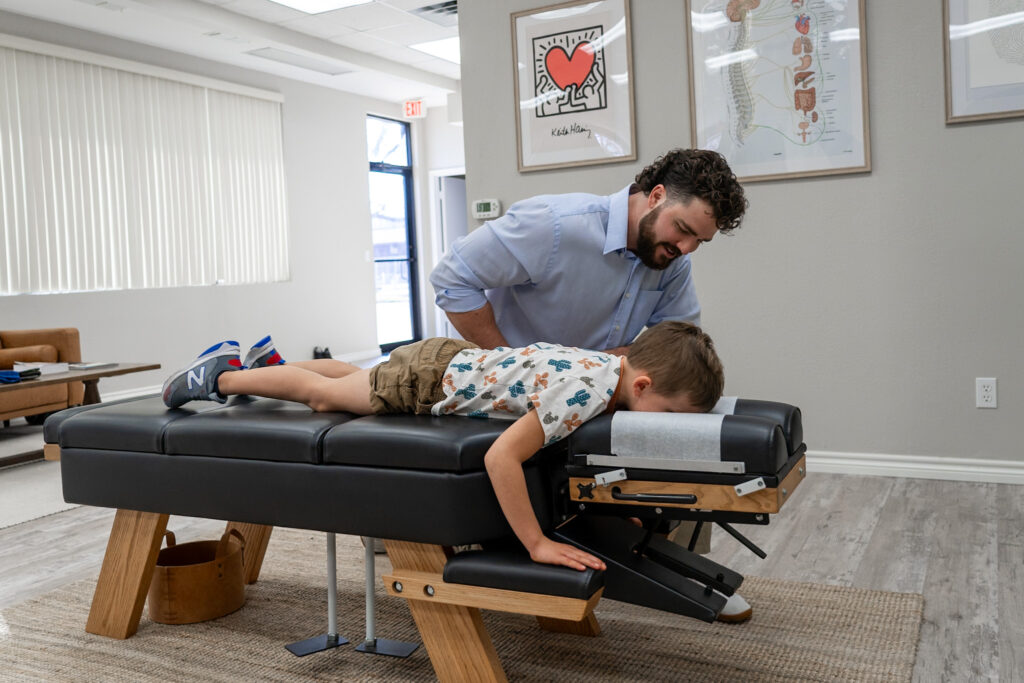
An anxiety patient’s first visit at Vita Nova begins with a Zone Technique assessment of the full nervous system, all six zones evaluated, with particular focus on Zone 3 and Zone 1. The assessment takes 15 to 20 minutes. Dr. Korrin identifies where nervous system interference is present and explains what he finds before making any adjustment. The first visit includes a clear conversation about what Zone Technique can and cannot contribute to the anxiety picture, what the care frequency looks like, and how to think about this alongside whatever other management is already in place.
Zone Technique care for anxiety works alongside therapy, medication, and other evidence-based approaches. It is not a replacement for any of them. For patients who want to address the nervous system physiology piece that those approaches do not reach, it is a meaningful addition to the picture.
For a detailed explanation of how Zone Technique approaches anxiety, the anxiety chiropractic care page covers the full clinical picture. For patients whose anxiety is connected to a broader pattern of vagus nerve dysfunction, that page covers the vagal tone component in detail. And for the stress physiology that often underlies the anxiety baseline, the stress chiropractic care page covers the HPA axis and autonomic regulation piece.
Dr. Korrin is accepting new patients at Vita Nova in Plano, TX. Schedule your first visit if the anxiety picture you are describing sounds like it has a nervous system physiology component that Zone Technique assessment is worth exploring.