

The Two Causes Everyone Talks About
The supraspinatus tendon is the most commonly injured part of the rotator cuff, largely because of where it sits. It runs through a narrow space under the acromion called the subacromial space, and repeated overhead motion gradually compresses and irritates it. This is the mechanism behind most rotator cuff problems in throwing athletes, swimmers, painters, and anyone whose work or sport involves sustained overhead reaching.
The second common cause is a discrete traumatic event: a fall onto an outstretched arm, a sudden heavy lift, a hard tackle. These produce an acute tear rather than the gradual wear pattern of overuse injuries, and they are more likely to require surgical repair depending on the size and location of the tear.
Age-related degeneration is the third well-known cause. Tendon tissue loses some of its blood supply and elasticity over time, and partial thickness tears become increasingly common after age 40 even without a specific injury event. Many of these are present on imaging without producing any symptoms at all.
The Cause Most Explanations Leave Out
The supraspinatus and infraspinatus, two of the four rotator cuff muscles, are innervated by the suprascapular nerve. The deltoid and teres minor are innervated by the axillary nerve. Both of these nerves originate from cervical nerve roots, primarily C5 and C6. A 2010 review published in the Journal of Shoulder and Elbow Surgery examined the overlap between cervical radiculopathy and rotator cuff tears and found that cervical radiculopathy can coexist with a rotator cuff tear and meaningfully influence the treatment process and outcome of the cuff injury. The review’s central finding was practical: when both conditions are present, the cervical component needs to be identified and addressed, because rotator cuff surgery performed without recognizing a coexisting nerve root problem tends to produce inferior outcomes.
A separate case report published in 2024 described a patient who developed dystonic tremors specifically in the rotator cuff muscles, traced back to C6 nerve root impingement from cervical disc degeneration, with imaging confirming disc space narrowing at the C5/6 level corresponding to the patient’s clinical presentation. The shoulder symptoms were real. The source was the neck.
This is the piece that gets missed most often. When a nerve root supplying the rotator cuff muscles is irritated or compressed in the cervical spine, those muscles receive a weaker or less coordinated signal even if the muscle and tendon tissue itself is completely healthy. The shoulder feels weak, fatigues quickly, and does not respond to strengthening exercises the way it should, not because the exercises are wrong but because the muscle being trained is not receiving full neural drive.
Why This Matters for Recovery
If you have had a rotator cuff injury, gone through an appropriate rehabilitation programme, and still have not fully recovered strength or function, the cervical nerve root question is worth asking. It is also worth asking if the shoulder pain never had a clear traumatic onset, if there is any numbness or tingling running down the arm, or if neck stiffness accompanies the shoulder symptoms. None of these definitively confirm a cervical component, but all of them are reasons to have the cervical spine assessed alongside the shoulder rather than treating the shoulder in isolation.
This does not mean every rotator cuff injury has a cervical cause. Most do not. It means that when recovery stalls past the expected timeline, the cervical spine is one of the places worth checking before assuming the shoulder itself simply needs more time or a different exercise.
How Zone Technique Fits Into This Picture
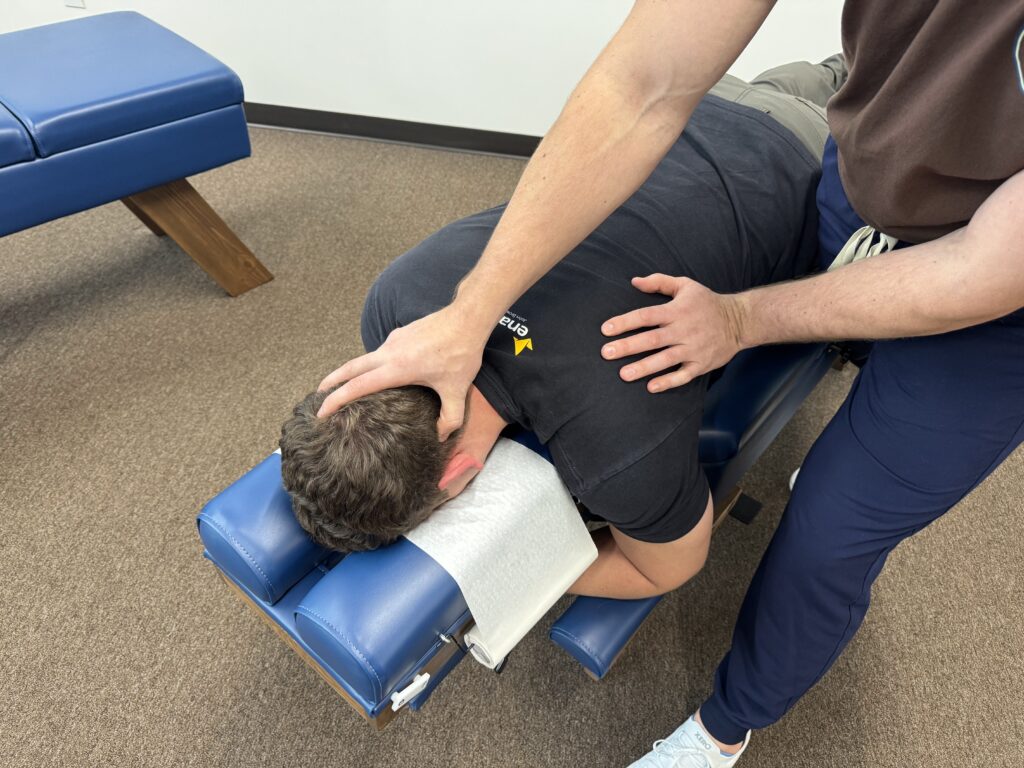
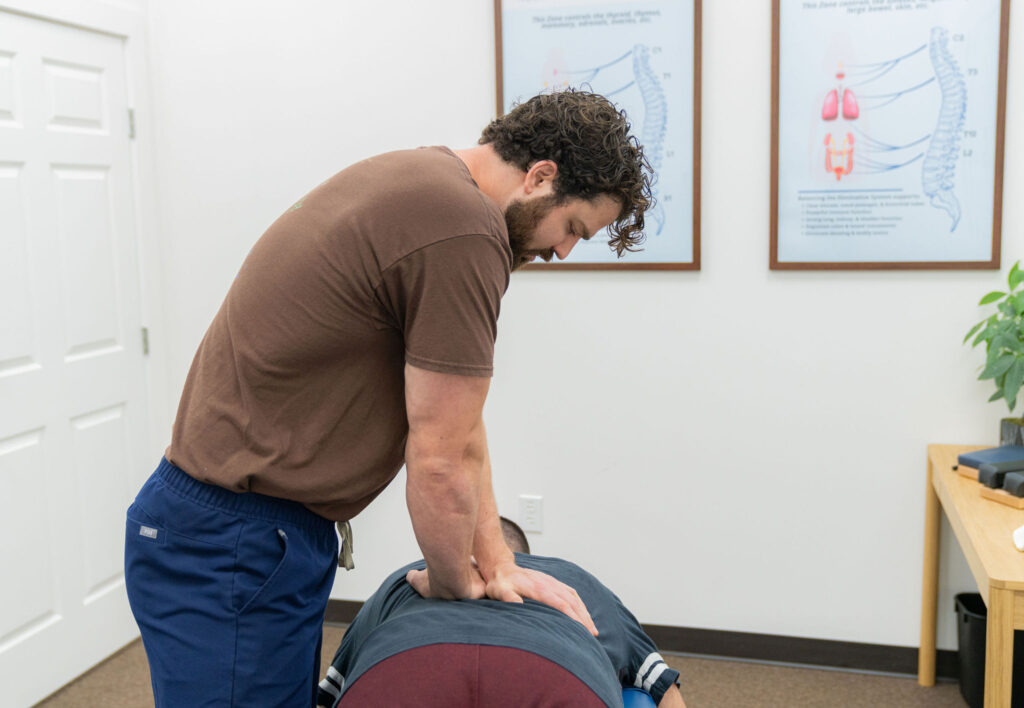
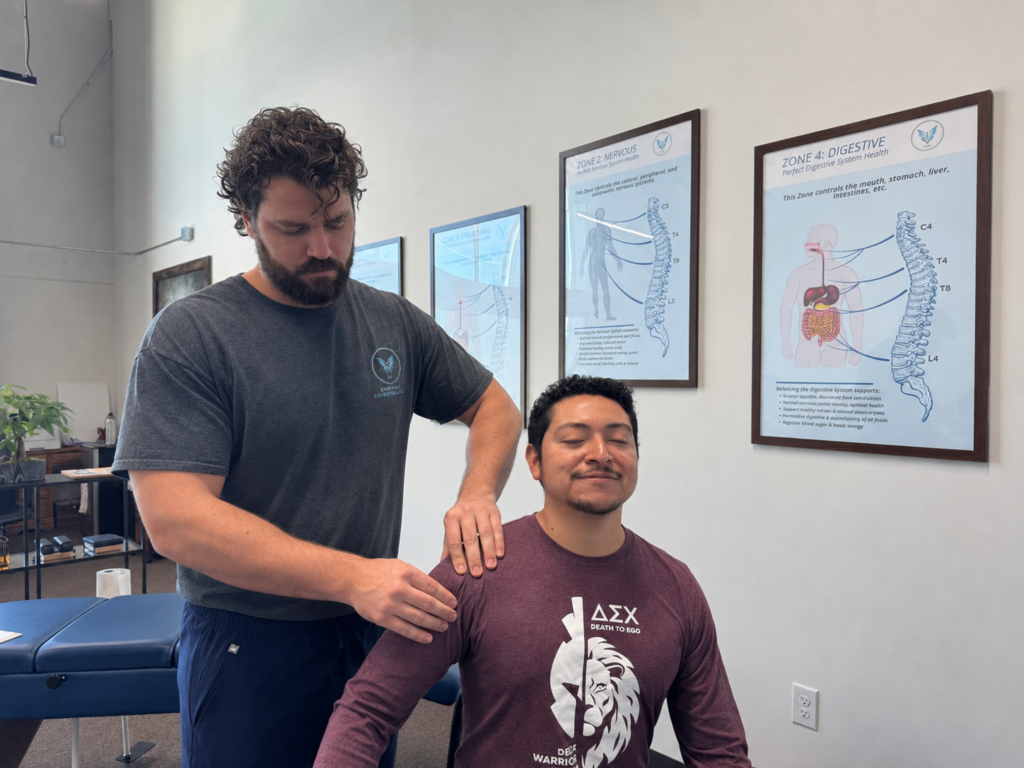
At Vita Nova, a rotator cuff presentation is assessed through the full Zone Technique evaluation, not just a shoulder exam. The nervous zone(3) assessment specifically checks the C5 and C6 cervical levels that supply the rotator cuff musculature. If interference is present at those levels, the adjustment is made there, working alongside whatever shoulder-specific rehabilitation is already in progress rather than replacing it. The goal is to give the muscles being rehabilitated the clearest possible neural signal so the strengthening work actually produces strength.
For an in-depth recovery and injury prevention guide, check out Dr. Korrin’s interactive stretch and exercise library, designed to support recovery and help prevent re-injury as you rebuild strength.
 Explore the Stretch & Exercise Library
For the full clinical picture of how Zone Technique approaches rotator cuff injuries, including who tends to respond best and what a first visit looks like, the rotator cuff condition page covers it in depth. For athletes whose shoulder injury is part of a broader training and recovery picture, the sports chiropractic approach covers how Zone Technique fits alongside performance and injury management.
Dr. Korrin is accepting new patients at Vita Nova in Plano, TX. Schedule your first visit if a rotator cuff injury is not progressing the way it should and you want the cervical spine checked as part of the picture.