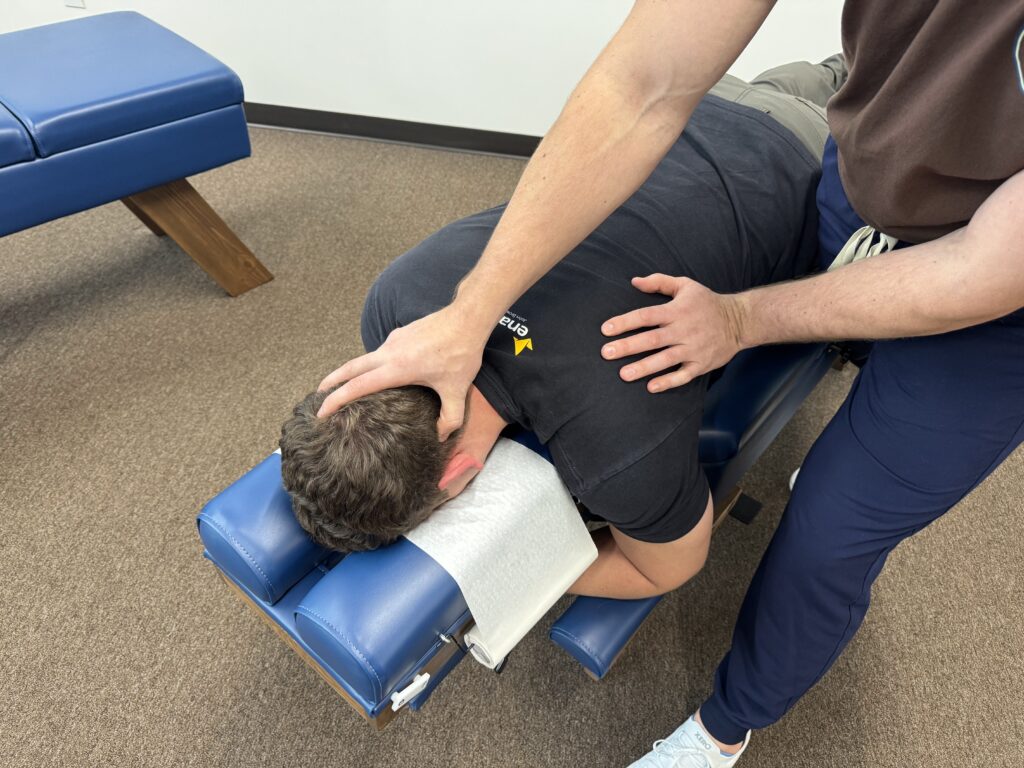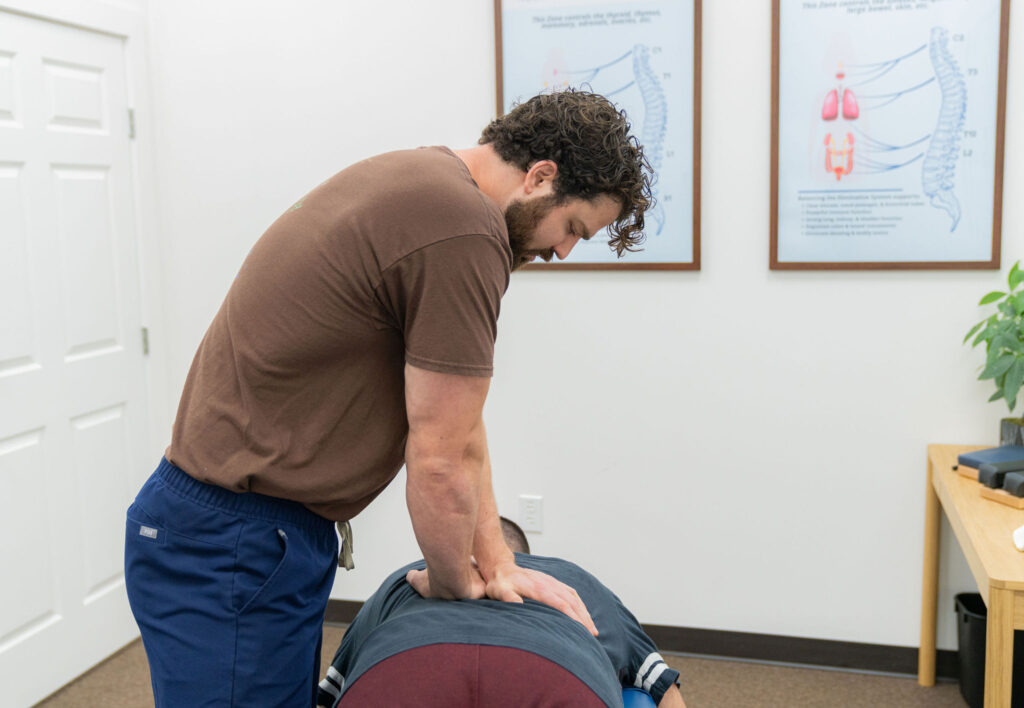

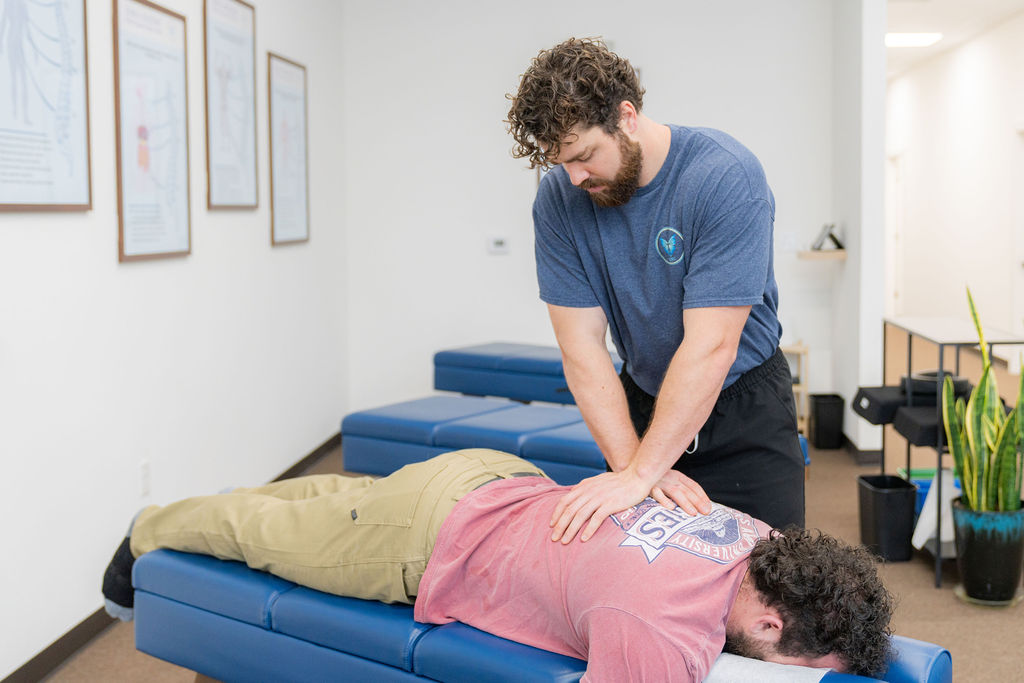

Why Back Injuries Happen — The Real Story
Most people think of back injuries as random — a freak accident, bad luck, or the inevitable result of getting older. But in the vast majority of cases, a back injury is not a sudden event. It is the final step in a process that has been building for months or years.
Here is what that process typically looks like:
- Spinal misalignments develop gradually through postural habits, repetitive movements, or old unresolved injuries
- The muscles surrounding the spine compensate for the instability — tightening, overworking, and eventually fatiguing
- The discs, joints, and ligaments are subjected to uneven load with every movement
- The nervous system adapts to the dysfunction, reducing its ability to accurately sense and respond to physical stress
- Then one day — picking up a grocery bag, sneezing, reaching for something on a shelf — the system runs out of compensation capacity and an injury occurs
The grocery bag didn’t cause the injury. It just happened to be present at the moment the body reached its limit. Understanding this is the foundation of back injury prevention — because it means that prevention starts long before the injury happens.
Build a Strong Foundation — Spinal Alignment and Nervous System Health
The single most effective thing you can do to reduce your risk of back injury is maintain good spinal alignment and nervous system function. A well-aligned spine distributes load evenly across the discs and joints, the muscles supporting it are balanced and responsive, and the nervous system has accurate feedback about how the body is positioned and moving.
This is why regular chiropractic care is one of the most powerful preventative tools available. It’s not just for pain — it’s for maintaining the kind of spinal integrity that makes the body resilient to the demands placed on it. Many of our patients at Vita Nova who have been under consistent wellness care find that the back injuries they used to experience regularly simply stop happening — not because they’ve changed what they do, but because their spine is better equipped to handle it.
If you haven’t had your spine evaluated recently, a consultation with Dr. Korrin is a good starting point. Explore our wellness and preventative care approach or learn about our back pain chiropractic service.
Lift Safely — Every Time
Lifting injuries are among the most common back injuries we see — and among the most preventable. The spine is well-designed for lifting when it is in proper alignment and when the load is managed correctly. Problems arise when the spine is asked to lift in a mechanically compromised position.
Here is how to protect your back every time you lift:
- Get close to the load — the further an object is from your body, the more lever force it creates on your lower back. Pull it close before you lift.
- Hinge at the hips, not the waist — bending forward from the waist with a rounded lower back is the single most common cause of lifting injuries. Instead, hinge at the hips and keep the lumbar curve intact.
- Bend your knees — use your legs to do the work of lifting, not your back. Squat down to the load rather than folding over it.
- Keep your spine neutral — avoid twisting while lifting. If you need to change direction, move your feet rather than rotating your spine under load.
- Breathe and brace — take a breath and lightly engage your core before you lift. This creates intra-abdominal pressure that supports the lumbar spine during the movement.
- Respect heavy loads — if something is genuinely too heavy to lift with good form, ask for help or use equipment. No object is worth a disc herniation.
- Don’t ignore fatigue — most lifting injuries happen when the body is tired. If your back is already fatigued from a long day, this is not the time to move furniture.
Fix Your Posture — Before It Fixes You
If you spend significant time sitting — at a desk, in a car, on a couch — your posture is one of the most important variables in your back health. Poor posture doesn’t cause pain immediately — it causes it gradually, by loading the spine unevenly for hours every day until the accumulated strain becomes impossible to ignore.
The most impactful postural changes you can make:
- Set up your workspace properly — your screen should be at eye level, your chair should support your lumbar curve, and your feet should be flat on the floor. Most people’s workstations are not set up this way.
- Stop crossing your legs — this rotates the pelvis asymmetrically and over time creates pelvic misalignment that loads the lower back unevenly
- Break up sitting time — stand, walk, or move for two to three minutes every 30–45 minutes. The spine needs movement to stay healthy — prolonged static loading accelerates disc degeneration and muscle fatigue
- Check your phone posture — looking down at a phone for extended periods creates enormous force on the cervical spine. Hold your phone at eye level or take regular breaks.
- Sleep position matters — sleeping on your stomach places the cervical spine in significant rotation for hours at a time. Side sleeping with a pillow between your knees or back sleeping with a pillow under your knees are far better for spinal alignment
Strengthen the Right Muscles
A strong back is a resilient back — but the muscles that protect the spine are not the ones most people focus on in the gym. The key to back injury prevention is building strength in the deep stabilizing muscles that support the spine from the inside — not just the superficial muscles visible in a mirror.
Focus on:
- Deep core stability — the transverse abdominis, multifidus, and pelvic floor muscles form an internal corset around the lumbar spine. Exercises like dead bugs, bird dogs, and pallof presses train these muscles more effectively than crunches or sit-ups.
- Glute strength — weak glutes force the lower back to compensate during movement. Single-leg exercises, glute bridges, and hip hinges build the posterior chain that takes load off the lumbar spine.
- Hip mobility — tight hips force the lumbar spine to compensate for the range of motion the hips can’t provide. Regular hip flexor stretching and hip mobility work protects the lower back during daily movement and exercise.
- Thoracic mobility — a stiff mid-back forces the lumbar spine to do more rotation than it’s designed for. Thoracic mobility exercises reduce this compensatory load significantly.
If you’re unsure where to start or your current exercise routine is aggravating your back, Dr. Korrin can advise on what movement patterns are appropriate for your current spinal condition as part of your personalized care plan.
Don’t Ignore Warning Signs
One of the most common factors in serious back injuries is ignoring the early warning signs that the spine is under too much stress. The body communicates before it breaks down — and learning to listen is one of the most important back injury prevention skills there is.
Warning signs that your spine needs attention:
- Stiffness in the morning that takes more than a few minutes to resolve
- Recurring tightness or aching in the lower back, mid-back, or neck
- One side of the back consistently tighter or more uncomfortable than the other
- Muscle spasms that come and go — even mild ones
- A sense that your back “goes out” easily with minor movements
- Fatigue in the back that comes on earlier in the day than it used to
None of these require you to be in significant pain to be worth addressing. In fact, addressing them before the pain becomes significant is exactly how you prevent the injury that’s otherwise coming. A chiropractic evaluation is the most direct way to understand what your spine is telling you. Schedule a visit at Vita Nova and let Dr. Korrin give you a clear picture of where things stand.
If You’ve Already Injured Your Back — What to Do Next
If you’re reading this because you’ve already hurt your back, the most important thing to know is this: don’t wait. Early intervention consistently produces better outcomes than waiting for the pain to pass on its own. A back injury that is addressed promptly heals faster, requires less care, and is far less likely to become a recurring problem.
At Vita Nova, Dr. Korrin will evaluate your injury thoroughly, identify the structural and neurological components driving your pain, and build a care plan that supports both acute recovery and long-term resilience. Whether you’re dealing with a sudden back pain episode, a disc herniation, a pinched nerve, or the kind of chronic lower back pain that has been building for years — we’re here to help.
We welcome patients from Plano, Murphy, and Richardson, TX. Learn more about what to expect at your first visit.
People Also Ask
What is the most common cause of back injuries?
The most common underlying cause is spinal misalignment that has been present for some time, creating uneven mechanical stress that eventually exceeds the body’s compensation capacity. The specific trigger — a lift, a twist, a sneeze — is rarely the real cause. It’s the final straw in a process that has been building quietly. This is why addressing spinal alignment proactively through regular chiropractic care is the most effective form of back injury prevention available. If you want to understand the state of your spine before an injury occurs, schedule an evaluation with Dr. Korrin at Vita Nova.
How long does it take to recover from a back injury with chiropractic care?
Recovery time depends on the nature and severity of the injury, how long it has been present, and how consistently care is maintained. Acute injuries — particularly those addressed promptly — often respond within a few weeks of consistent chiropractic care. More chronic injuries, or those involving significant disc pathology like a herniated disc, typically require a longer course of care to achieve lasting correction. Dr. Korrin will give you a realistic timeline at your first visit and build a personalized care plan that reflects your specific situation and goals.
Can I exercise with a back injury?
In most cases, yes — but the type and intensity of exercise matters significantly. Complete rest is rarely the best approach to back injury recovery and can actually slow healing by reducing circulation and allowing compensatory muscle patterns to set in. Gentle movement, walking, and specific rehabilitative exercises are usually appropriate and beneficial. However, loading the spine with heavy exercise before the underlying structural issue is addressed can worsen the injury. Dr. Korrin can guide you on what movement is appropriate at each stage of your recovery as part of your care at Vita Nova — protecting your progress while keeping you as active as possible throughout the healing process.