

1. Spinal Misalignment
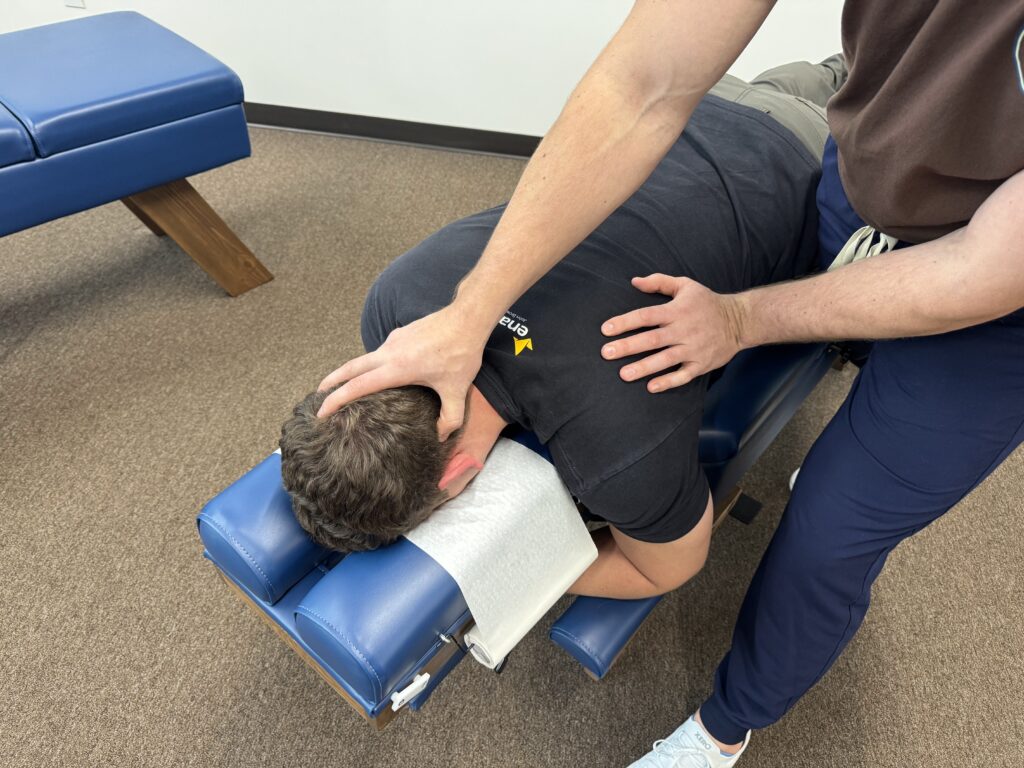
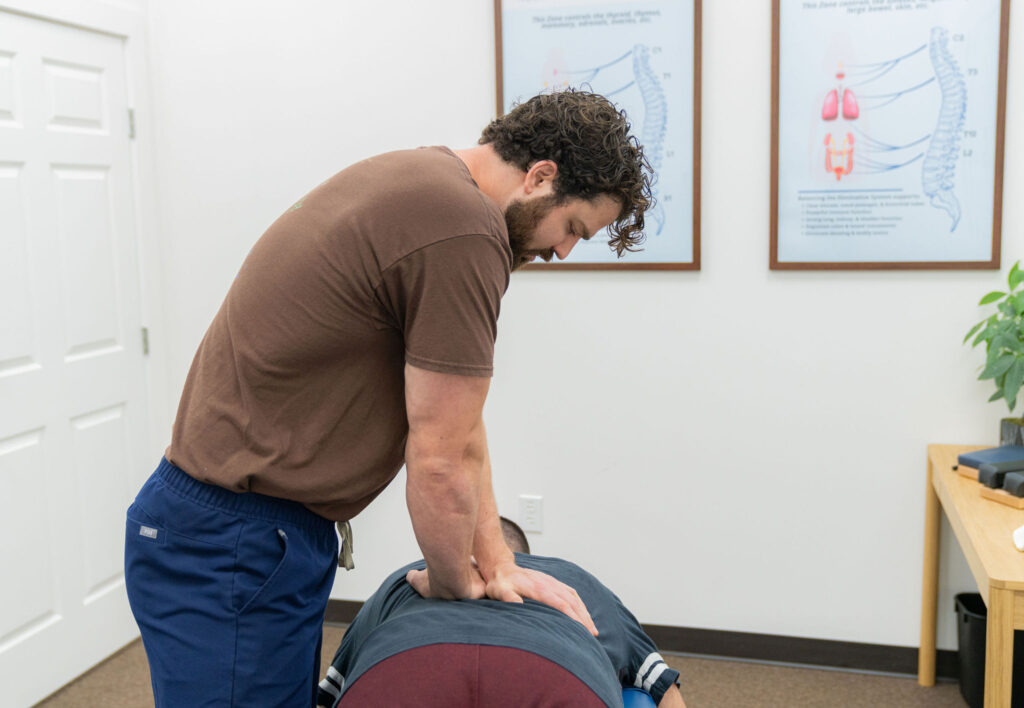
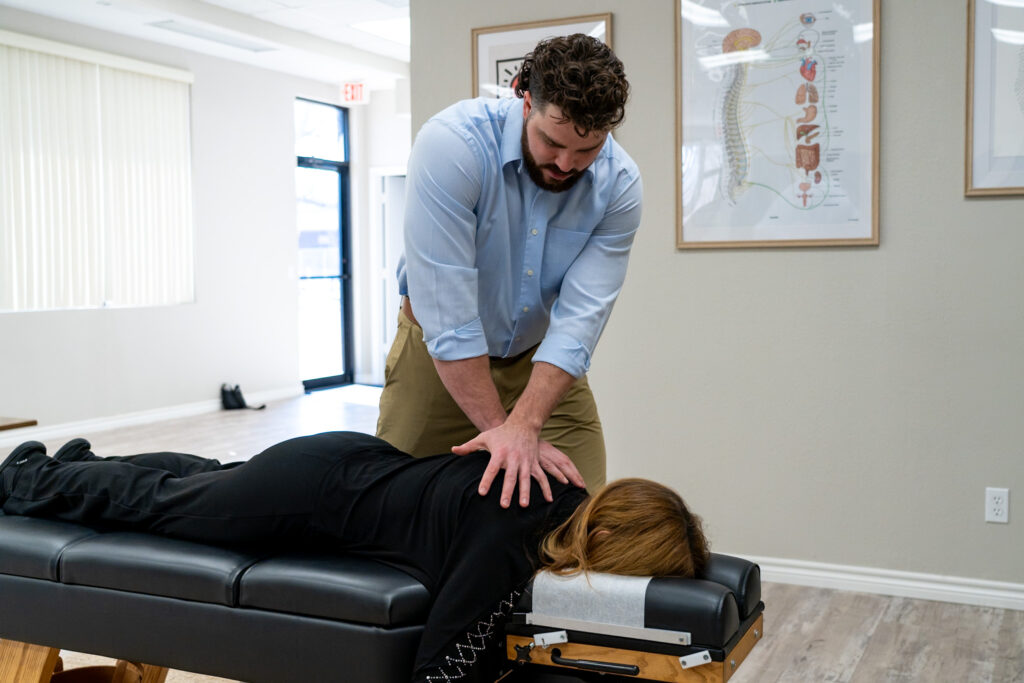
The most fundamental cause of back pain — and the one most directly addressed by chiropractic care — is spinal misalignment. When the vertebrae of the spine shift out of their proper position, they create uneven pressure on the surrounding discs, joints, muscles, and nerves. This pressure generates pain, restricts movement, and over time can accelerate degenerative changes in the spinal structures.
Spinal misalignments can develop gradually through postural habits, or suddenly through an injury or awkward movement. Many people carry them for years without realizing it, because the body compensates — until the compensation runs out and pain appears seemingly out of nowhere.
What to do: Have your spine evaluated by a chiropractor. Chiropractic adjustments are the most direct and effective way to correct spinal misalignment and restore proper mechanics. A thorough assessment will identify not just where the misalignment is, but what’s driving it. Learn more about our back pain chiropractic care at Vita Nova.
2. Poor Posture
Prolonged sitting, forward head posture, rounded shoulders, and slouching at a desk are among the most pervasive drivers of back pain in modern life. The spine is designed to move — not to hold a static position for six, eight, or ten hours a day. When it does, the muscles that support it fatigue, the discs compress unevenly, and the natural curves of the spine begin to flatten or reverse.
Poor posture doesn’t just cause discomfort in the moment — it creates lasting structural changes that become harder to reverse the longer they persist. The neck and upper back are typically the first areas affected, but the strain ripples down into the mid and lower back over time.
What to do: Address both the postural habits and the structural damage they’ve caused. Ergonomic adjustments to your workspace help reduce ongoing load, but they won’t undo existing misalignments. Chiropractic care corrects the structural component while you work on changing the habits that created it. Movement breaks every 30–45 minutes are one of the simplest and most effective changes you can make.
3. Muscle Tension and Spasm
Tight, overworked muscles are a constant companion of back pain. Muscle spasms — involuntary contractions that can be acutely painful and severely limiting — are often the body’s protective response to an underlying spinal problem. The muscle seizes up to prevent further movement around an unstable or irritated joint.
Treating the muscle in isolation — through massage, heat, or muscle relaxants — may provide temporary relief, but without addressing the underlying spinal issue driving the spasm, the tension will return. The muscle is reacting to a problem, not causing one.
What to do: Chiropractic adjustments address the root spinal dysfunction that triggers muscle spasm. Many patients find that chronic muscle tension they’ve been managing for years resolves relatively quickly once the underlying misalignment is corrected. Complementary approaches like targeted stretching and heat therapy can support recovery between adjustments.
4. Herniated or Bulging Disc
The intervertebral discs that sit between your vertebrae act as shock absorbers — but they can only do that job when the spine around them is properly aligned and moving well. When a disc is subjected to uneven pressure over time, it can bulge or herniate — meaning the soft inner material pushes through the outer wall and presses against nearby nerve roots.
The result is often intense, radiating pain that travels well beyond the site of the disc itself. A herniated disc in the lower back is the most common driver of sciatica — the shooting leg pain that can make walking, sitting, and sleeping miserable. A bulging disc in the neck can send pain and numbness down the arm.
What to do: Chiropractic care is one of the most effective conservative treatments for disc-related back pain. Restoring spinal alignment reduces the uneven pressure on the disc, creating the conditions the body needs to heal. Surgery is rarely necessary as a first response — a structured course of chiropractic care should always be explored first.
5. Sciatica
Sciatica is not a diagnosis in itself — it’s a symptom of nerve compression. The sciatic nerve is the longest in the body, running from the lower back through the buttock and down each leg. When it becomes compressed — most commonly by a disc herniation, spinal misalignment, or tight piriformis muscle — the result is a sharp, burning, or electric pain that follows the path of the nerve.
Sciatica can range from mildly uncomfortable to completely debilitating. It often worsens with sitting, bending, or coughing, and may be accompanied by numbness, tingling, or weakness in the leg or foot.
What to do: Identify and address the source of the compression. Chiropractic adjustments are highly effective for sciatica because they directly address the spinal mechanics driving the nerve irritation. Most patients experience meaningful improvement within a few weeks of consistent care.
6. Degenerative Disc Disease
Degenerative disc disease is one of the most common age-related spinal conditions — and one of the most misunderstood. Despite its alarming name, it is not a disease in the traditional sense but a description of the gradual breakdown of the intervertebral discs over time. Discs naturally lose hydration and height as we age, becoming less effective at cushioning the vertebrae and more susceptible to injury.
The pain associated with degenerative disc disease comes from the reduced disc space creating friction between vertebrae, from the instability that results, and from the compensatory muscle tension the body produces in response. It is frequently aggravated by prolonged sitting and relieved by movement.
What to do: While degenerative changes cannot be reversed, their progression can be significantly slowed and their symptoms meaningfully reduced through consistent chiropractic care. Restoring proper spinal alignment reduces uneven loading on the affected segments and supports better long-term spinal mechanics. Regular movement and avoiding prolonged static postures are equally important.
7. Spinal Stenosis
Spinal stenosis occurs when the spinal canal narrows, placing pressure on the spinal cord and nerve roots. It most commonly develops in the lumbar spine as a result of age-related changes — bone spurs, thickened ligaments, and disc degeneration all contribute to narrowing the space available for the nervous system structures passing through the spine.
Symptoms typically include aching back and leg pain that worsens with standing and walking and improves with sitting or bending forward. In more severe cases, patients may experience significant leg weakness and difficulty walking distances.
What to do: Chiropractic care can be highly effective for managing spinal stenosis — particularly in improving mobility, reducing pain, and slowing the progression of symptoms. While the structural narrowing cannot be fully reversed without surgery in severe cases, many patients avoid or significantly delay surgical intervention through consistent conservative care.
8. Workplace and Lifestyle Injuries
Work injuries — whether from repetitive strain, awkward lifting, prolonged sitting, or a single acute incident — are among the most common causes of back pain we see at Vita Nova. The lower back is particularly vulnerable to the cumulative strain of poor workplace ergonomics and repetitive movement patterns that load the spine unevenly over time.
What many people don’t realize is that work-related back pain rarely appears suddenly without prior buildup. The body compensates for months or years of accumulated strain before the pain finally surfaces — which is why the incident that “caused” the pain is often not the real starting point of the problem.
What to do: Address the injury promptly rather than waiting for it to resolve on its own — early intervention consistently produces better outcomes. A thorough chiropractic evaluation will identify both the acute injury and the underlying vulnerabilities that contributed to it, so that care addresses the full picture rather than just the presenting pain.
9. Stress and Nervous System Tension
The connection between stress and back pain is real, well-researched, and chronically underappreciated. When the nervous system is under chronic stress, it maintains a state of elevated muscle tension throughout the body — particularly in the neck, shoulders, and lower back. Over time, this sustained tension creates the same structural strain as any physical injury.
Stress also amplifies pain perception — the same spinal issue that might be manageable under normal circumstances can become significantly more painful during a stressful period. This is why many people notice their back pain flares up during difficult seasons of life, even without any obvious physical trigger.
What to do: Address both the physical and neurological components. Chiropractic adjustments calm the nervous system and release the physical tension it generates, while lifestyle strategies — regular movement, adequate sleep, and stress management practices — reduce the ongoing load. The two approaches work together more effectively than either does alone.
10. Pregnancy-Related Back Pain
Back pain during pregnancy is extremely common — and extremely underserved. As the body changes to accommodate a growing baby, the pelvis shifts, the center of gravity moves forward, and the lower back takes on significantly increased load. Back pain, pelvic pain, round ligament pain, and sciatica during pregnancy are all expressions of a spine and pelvis that are being asked to do more than their current alignment supports.
Many women are told simply to manage and wait it out. But pregnancy-related back pain responds very well to chiropractic care — and addressing it during pregnancy, rather than after, supports better comfort, better sleep, and potentially better birth outcomes through improved pelvic alignment.
What to do: Seek out a chiropractor with specific prenatal training and experience. At Vita Nova, Dr. Korrin provides prenatal chiropractic care that is specifically adapted for every stage of pregnancy — safe, gentle, and focused on both the mother’s comfort and the baby’s optimal positioning.
People Also Ask
How do I know if my back pain needs chiropractic care or something else?
Chiropractic care is appropriate for the vast majority of back pain causes — including all ten listed in this post. If your pain is mechanical in nature — meaning it is affected by position, movement, or activity — chiropractic care is almost certainly a good fit. Red flags that warrant immediate medical attention include back pain accompanied by loss of bowel or bladder control, progressive neurological weakness, or pain following significant trauma. For everything else, a chiropractic evaluation is a sensible and evidence-supported first step. At Vita Nova, Dr. Korrin will be transparent with you if your presentation suggests you need a different kind of care. Schedule a consultation and let’s find out what’s driving your pain.
Can chiropractic care help if I’ve had back pain for years?
Yes — chronic back pain often responds very well to chiropractic care, though it typically requires a longer and more consistent course of treatment than acute pain. The longer a spinal dysfunction has been present, the more deeply it becomes established in the body’s postural patterns and compensation strategies. That doesn’t mean it can’t be addressed — it means it takes time and consistency. Many patients who have lived with back pain for years and written it off as permanent find significant and lasting relief through a structured course of chiropractic care. Dr. Korrin will give you an honest assessment of what is realistic for your specific situation and build a personalized care plan around your goals.
Should I see a chiropractor before trying other treatments for back pain?
In most cases, yes — chiropractic care should be among the first conservative approaches you explore for back pain, not a last resort after everything else has failed. Research consistently supports chiropractic care as an effective first-line treatment for mechanical back pain, with outcomes comparable or superior to other conservative approaches and a significantly better safety profile than long-term medication use. Starting with chiropractic care means addressing the structural cause of pain early — before compensatory patterns become entrenched and before unnecessary reliance on pain management develops. Explore our back pain chiropractic service or learn more about what to expect at your first visit at Vita Nova.