

Most articles about this technique lead with one headline claim. This one won’t, because the full picture is more useful to you than a single number.
Where It Came From
Dr. Larry Webster developed the technique in the 1980s after noticing that specific sacral and pelvic adjustments during pregnancy seemed to improve both maternal comfort and labor outcomes in his patients. He later founded the ICPA to advance the research and training around chiropractic care for pregnant women and children. Webster Technique certification, which requires training beyond a standard chiropractic degree, has been part of the ICPA’s formal curriculum since 2000. It’s one of the reasons Dr. Korrin’s credentials list it specifically rather than treating it as interchangeable with general adjusting.
What It Actually Does
The technique focuses on two things at once. The first is the sacrum and sacroiliac joints. Pregnancy shifts your center of gravity, changes how weight is distributed through the pelvis, and increases the load on the SI joints in ways they weren’t designed for before relaxin starts loosening ligamentous support. When the sacrum sits out of alignment, it affects how the entire pelvic structure bears load and moves, which is a common source of the pelvic girdle pain and sciatica during pregnancy that brings many expecting mothers into the practice.
The second focus is the round ligaments, the cord-like structures that support the uterus from the front and connect to the groin. As the uterus grows, the round ligaments are progressively stretched. When the pelvis sits asymmetrically, one round ligament ends up carrying more tension than the other. This is what produces the sharp, shooting round ligament pain that typically hits when you change position quickly, stand up fast, or sneeze. The Webster assessment identifies which side is carrying more tension and addresses both the structural asymmetry and the soft tissue tension directly.
The ICPA’s own definition describes the technique as “a specific chiropractic analysis and diversified adjustment” whose goal is to “reduce the effects of sacroiliac dysfunction” and improve “neurobiomechanical function in the sacral and pelvic region.” That’s the accurate framing, and it’s what the ICPA has taught its certified practitioners since the formal curriculum launched.
What to Expect in a Webster Technique Visit
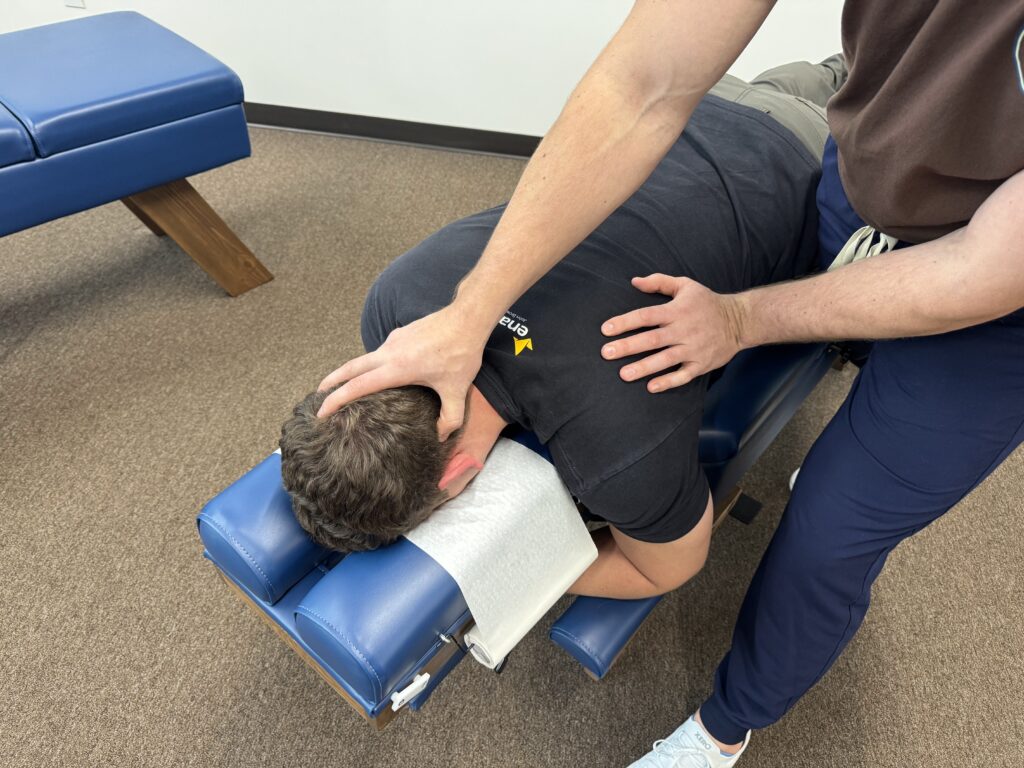
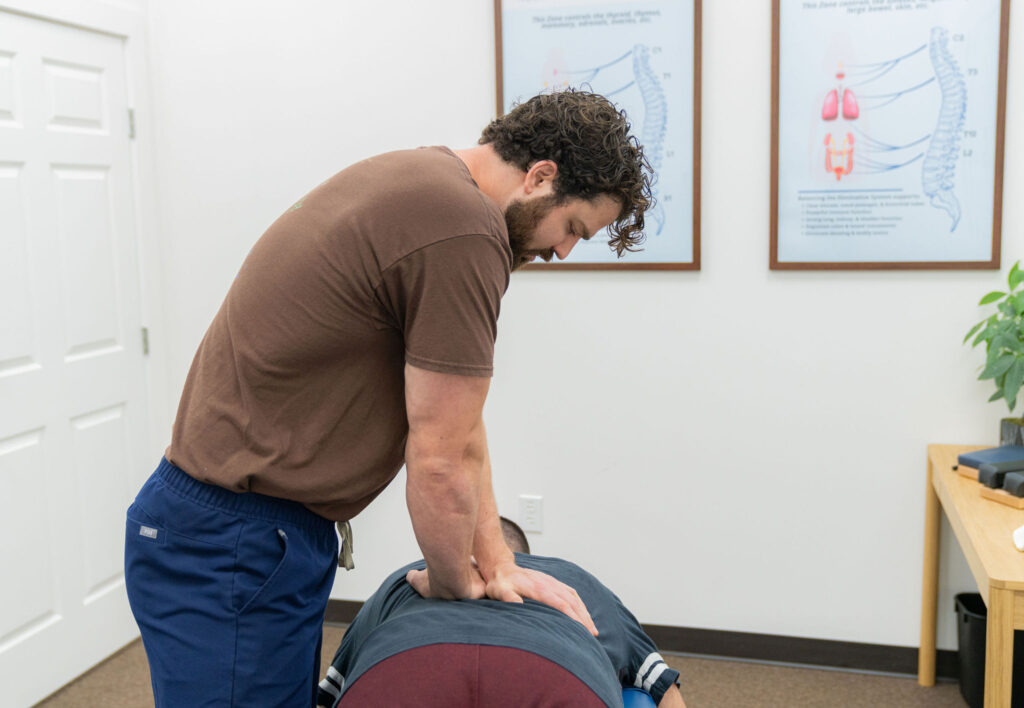
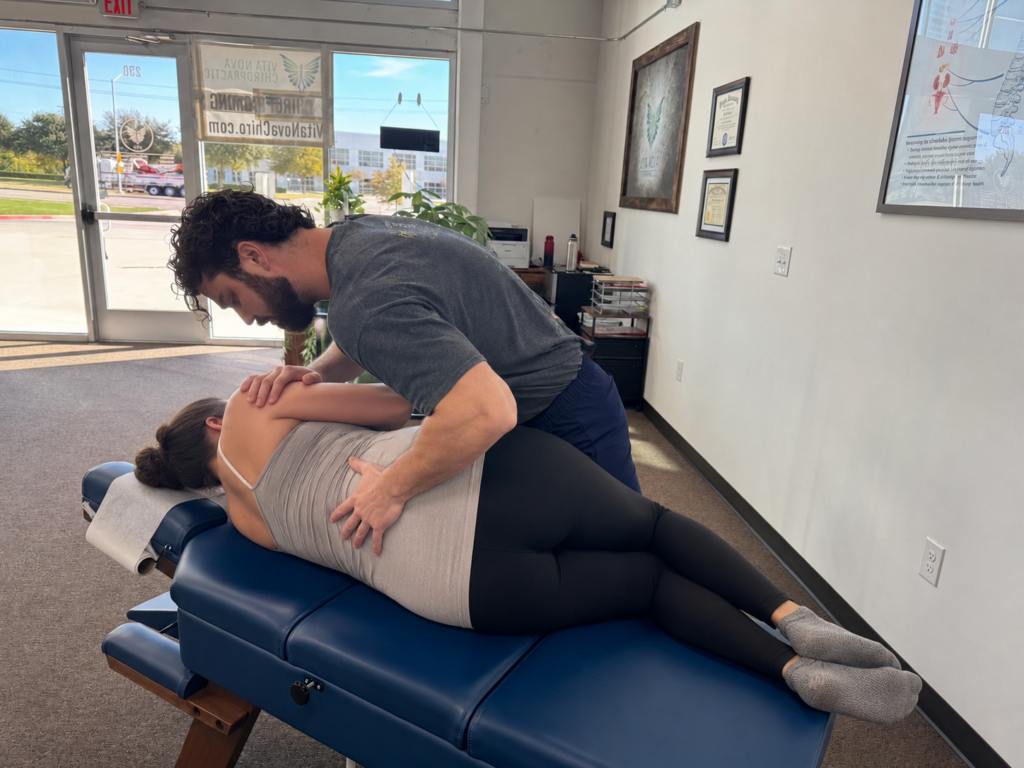
At Vita Nova, the Webster assessment runs alongside Zone Technique at every prenatal visit. Dr. Korrin checks sacral alignment and SI joint symmetry, evaluates round ligament tension on both sides, and adjusts at the specific levels where restriction is found. The adjustment itself is gentle and specific, nothing forceful, and it is combined with soft tissue work on the round ligament attachment points in the lower abdomen when needed. The contact there is not at the uterus itself, it is at the ligament origin, and most patients describe it as a comfortable, targeted pressure rather than anything uncomfortable.
For patients dealing with prenatal stress, the Zone Technique component addresses the hormonal and nervous system regulation picture alongside the structural work. Most patients who come in for Webster care are not coming for a single issue in isolation. They are coming in because pregnancy is a whole-body load, and addressing the pelvic mechanics alongside the nervous system regulation at the same visit is how Vita Nova approaches that load.
Who Webster Technique Is For
If you are pregnant and dealing with pelvic discomfort, low back pain, SI joint pain, or round ligament pain at any trimester, the Webster assessment is relevant to your care. It is not a third-trimester-only technique. Many patients start care in the first or second trimester simply because maintaining good pelvic alignment from early on is easier than correcting a well-established pattern later. Research from the Journal of Manipulative and Physiological Therapeutics has found that pregnant women who received chiropractic care throughout pregnancy experienced reduced labor time compared to those who did not, though it is worth noting that more large-scale controlled research is still needed before this can be stated as a reliable expected outcome. The ICPA’s own research database, now spanning decades of practitioner-reported outcomes, continues to inform how the technique is taught and applied. You can explore the full body of ICPA research at icpa4kids.com.
Webster Technique and Zone Technique Together
The combination that makes prenatal care at Vita Nova different from a standard chiropractic adjustment is that neither technique is used in isolation. Webster addresses the structural and ligamentous picture of the pelvis. Zone Technique, specifically the prenatal chiropractic service framework Dr. Korrin uses at every visit, addresses the nervous system and hormonal regulation picture alongside it. The two approaches are not competing, they are working on different layers of the same pregnancy physiology, and addressing both in the same visit is what the care model at Vita Nova is built around.
If you want to support your body’s movement and comfort at home between visits, our interactive stretch and exercise library includes a pregnancy-specific playlist built around positions that support pelvic alignment and comfort at each trimester.
Dr. Korrin is accepting new prenatal patients at Vita Nova in Plano, TX. Schedule your first visit to find out what the Webster and Zone Technique assessment finds in your specific presentation.