

What a Bulging Disc Actually Does
The discs between your lumbar vertebrae function as shock absorbers. Each one has a tough outer ring, the annulus fibrosus, and a gel-like center, the nucleus pulposus. A bulging disc happens when the outer ring weakens and the disc pushes outward beyond its normal boundary without fully rupturing. It stays contained. That is what separates a bulging disc from a herniated one, where the inner material breaks through the outer wall entirely.
Both can cause sciatica. The mechanism is the same: disc material encroaches on the space where a nerve root exits the spinal column. In the lumbar spine, the sciatic nerve is formed by nerve roots from L4, L5, and S1. These are the most common levels where disc bulges occur, which is why sciatica is so often disc-related. When a bulging disc at one of those levels puts pressure on the exiting nerve root, the signal disruption travels the entire length of that nerve pathway, which is why you feel it in your hip, glute, or leg rather than just your back.
Why the Pain Goes to Your Leg
This is the part that confuses most patients. The disc is in your lower back. The pain is in your leg. It does not seem to add up until you understand how nerve pathways work.
A nerve root compressed at L5, for example, governs sensation and motor function in a specific region of the lower leg and foot. When that root is irritated, every point along the nerve it supplies can register the disruption. The burning, electric, or shooting quality of sciatic pain is the nervous system signaling that the pathway itself is compromised. The location of the pain in your leg is actually a map. It tells a provider which spinal level is involved before imaging confirms it.
This is also why the pain changes with position. Sitting increases intradiscal pressure and can worsen compression. Standing and walking decompress the disc slightly. Coughing or sneezing can spike it suddenly. These positional patterns are diagnostic information. They help distinguish disc-driven sciatica from piriformis-driven sciatica, where the nerve is compressed by a muscle rather than a disc, a distinction that changes how the condition is approached.
How Zone Technique Addresses the Disc-Sciatica Connection
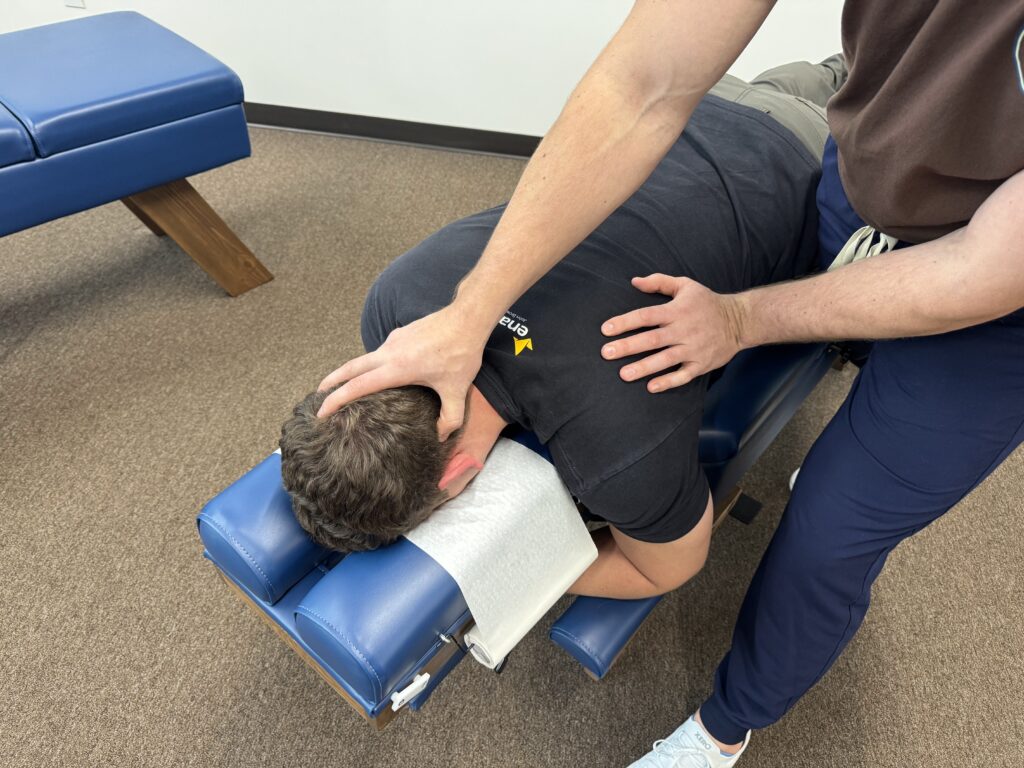
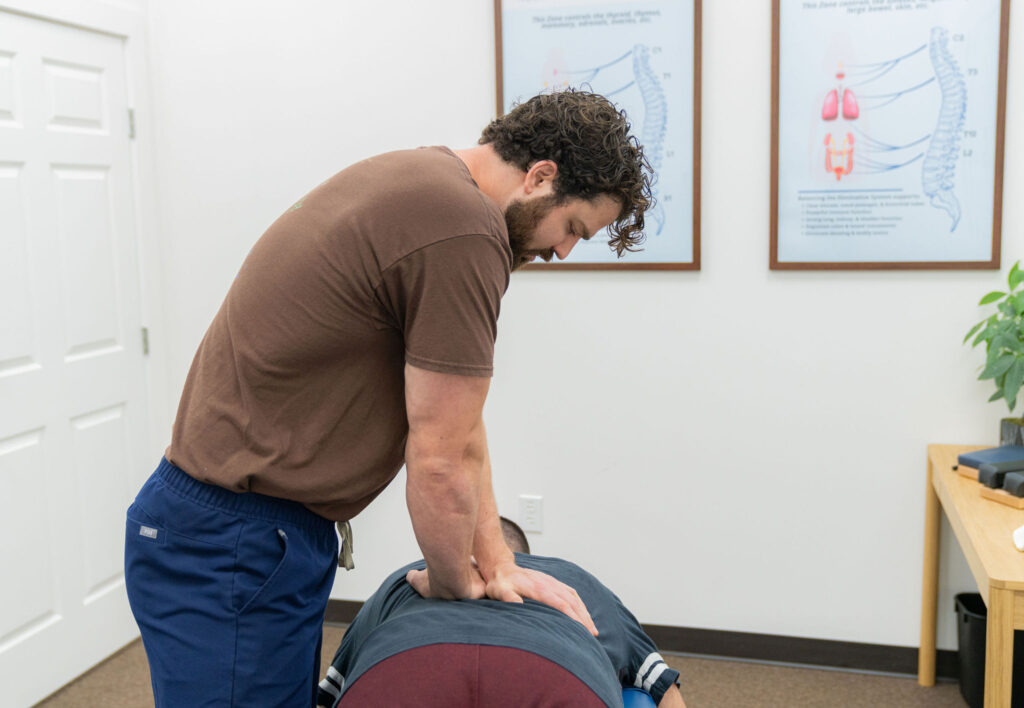
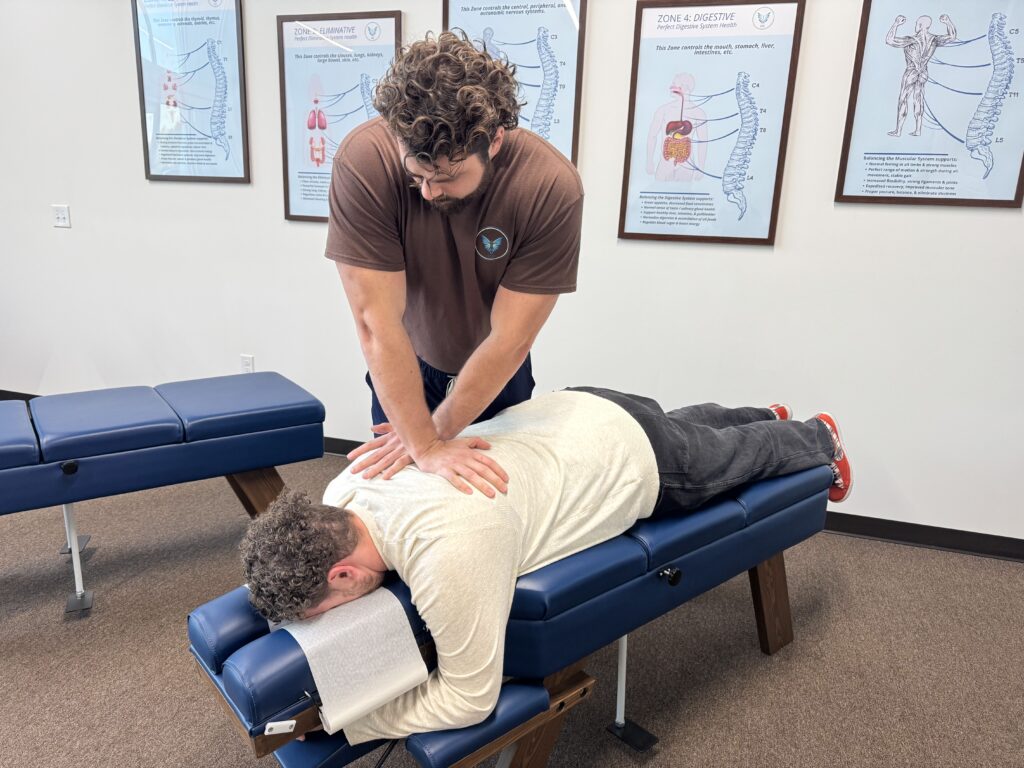
At Vita Nova, Dr. Korrin approaches bulging disc sciatica through the nervous system first. Zone Technique identifies which zones are under interference and where in the spine that interference is originating. For disc-related sciatica, the nervous zone(3) is the primary focus. Zone 3 governs the peripheral nerve network, including the sciatic nerve pathway from the lumbar spine into the lower extremities. When Zone 3 is under interference at the L4, L5, or S1 level, the nerve signal disruption that produces sciatic pain is visible in the assessment before the adjustment is made.
The muscular zone(5) is almost always involved alongside Zone 3 in disc-related sciatica. The surrounding musculature responds to disc instability by guarding, creating a protective tension pattern that compresses the spinal segment further. Zone 5 interference tracks that muscle guarding pattern. Adjusting at both zones addresses the nerve compression and the muscular pattern sustaining it simultaneously.
The adjustment is made at the specific spinal level where interference is found, not at the location where the patient feels pain. For a patient with sciatic pain running into the left calf, that means adjusting at the lumbar level driving the L5 or S1 nerve root irritation, not at the calf. That precision is the difference between addressing a symptom and addressing the source.
What to Watch For
Not all low back pain with leg involvement is disc-driven sciatica. Piriformis syndrome produces similar radiating patterns but originates in the hip musculature, not a disc. Spinal stenosis narrows the canal space rather than causing focal disc protrusion. Neuropathy produces burning and tingling that can mimic sciatic radiation but involves different nerve pathway mechanisms.
The signals that suggest disc involvement specifically: pain that is noticeably worse with sitting and coughing or sneezing, radiation that follows a clear line from the low back through the glute and into a specific part of the leg or foot, and pain that is present even at rest rather than only with movement. These patterns point toward a disc driving the nerve root irritation rather than a muscular source.
If you have had imaging that shows a bulging disc at a specific lumbar level, bring it to your first visit. The structural picture from an MRI maps directly onto what the Zone Technique assessment identifies and helps Dr. Korrin build a more precise adjustment from the first session.
For a deeper explanation of how Zone Technique approaches sciatica across all causes, visit the sciatica chiropractic care page. The bulging disc chiropractic care page covers what care looks like specifically for disc presentations without sciatic involvement. And if the radiating component is your primary complaint, the radiating pain symptom page explains how Zone Technique maps nerve pathway disruption back to its spinal origin.
Dr. Korrin is accepting new patients at Vita Nova in Plano, TX. Schedule your first visit if the pain you are describing sounds like what this post covers.