


What Is a Herniated Disc and What Causes It?
Between each vertebra in your spine sits an intervertebral disc — a tough, fibrous ring filled with a soft, gel-like interior. These discs act as shock absorbers, allowing the spine to move, bend, and carry load without the vertebrae grinding against each other. A herniated disc occurs when the soft inner material pushes through a crack or tear in the outer ring, protruding into the spinal canal where it can press directly on the nearby nerve roots.
The result is often intense, radiating pain — but also numbness, tingling, and weakness that can travel far from the disc itself, depending on which nerve is being compressed. A herniation in the neck can send symptoms down the arm; a herniation in the lower back can produce the shooting leg pain most people know as sciatica.
Common causes and contributing factors include:
- Spinal misalignments that create uneven pressure distribution across the disc
- Age-related disc degeneration — discs naturally lose hydration and flexibility over time, as seen in degenerative disc disease
- Sudden injury or trauma such as a fall, car accident, or heavy lift
- Poor posture sustained over years — particularly prolonged sitting and forward head posture
- Repetitive strain from occupational demands or movement patterns that overload specific spinal segments
- Underlying conditions such as spinal stenosis that create additional vulnerability in the spinal structures
It’s worth noting that herniated discs exist on a spectrum. A mild protrusion — sometimes called a bulging disc — may cause minimal or intermittent symptoms, while a significant herniation with nerve compression can be severely debilitating. The appropriate care depends on the degree of herniation, its location, and how the nervous system is responding.
Can Chiropractic Care Help a Herniated Disc?
Yes — and for many patients, it is the most effective conservative treatment available. Chiropractic care addresses herniated discs by restoring proper spinal alignment, reducing pressure on the affected disc and nerve, and supporting the body’s natural healing process. This is important because most herniated discs, given the right environment, are capable of reabsorbing over time — but that healing is significantly impaired when the spine remains misaligned and the nerve continues to be compressed.
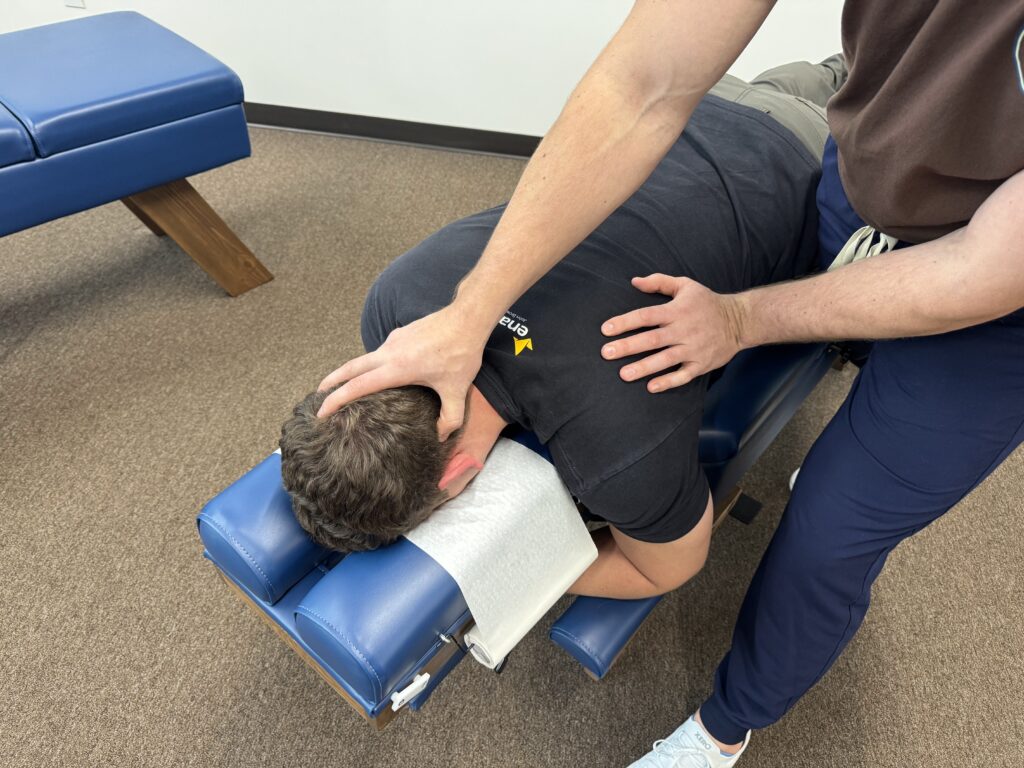
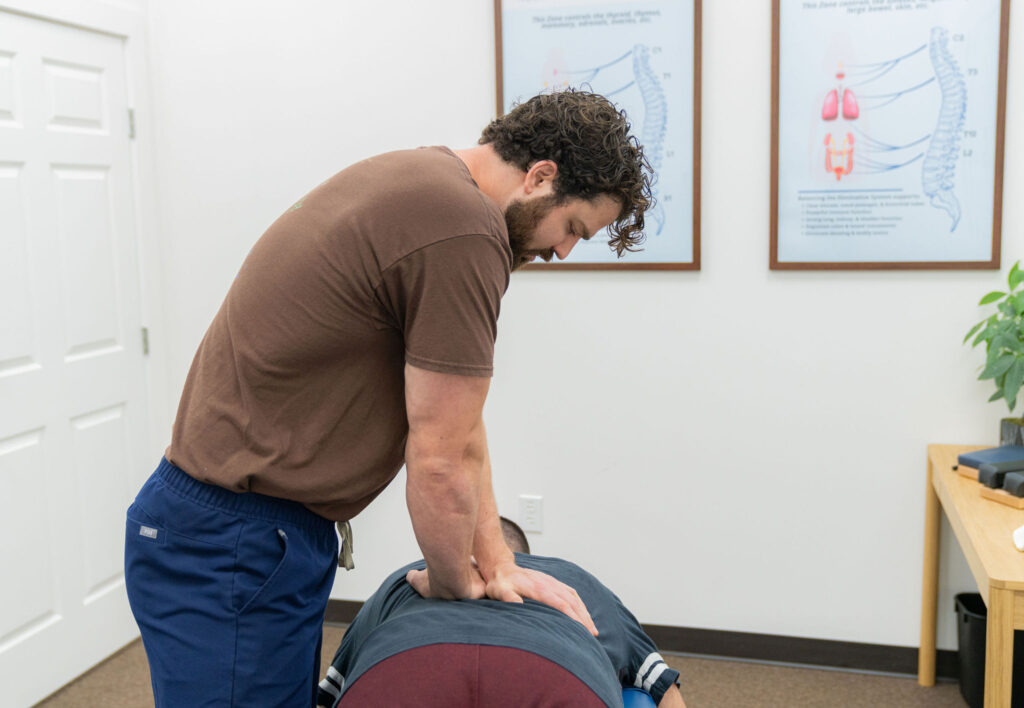
At Vita Nova, Dr. Korrin uses the Zone Technique to evaluate the nervous system as a whole and identify where communication is being disrupted. Rather than applying a forceful adjustment directly to the herniated segment, her approach is precise and gentle — working to restore the alignment and mechanics of the surrounding spinal segments in a way that takes pressure off the disc and creates the conditions the body needs to heal.
Here is what chiropractic care can specifically do for a herniated disc:
- Restore vertebral alignment — reducing the uneven mechanical load on the disc that allowed the herniation to develop or worsen
- Reduce nerve compression — improving the spacing around the affected nerve root and allowing nerve signals to travel more freely
- Release surrounding muscle tension — the muscles around a herniated disc often go into protective spasm, which increases pressure and pain. Adjustments help break that cycle.
- Support disc reabsorption — improved spinal mechanics create a better environment for the body’s natural healing process to take place
- Reduce inflammation — by calming the nervous system and improving local circulation, chiropractic care helps reduce the inflammatory response around the herniated tissue
- Prevent further deterioration — addressing the underlying alignment issues reduces the risk of the herniation worsening or additional discs becoming affected
What About Surgery — Do I Really Need It?
This is one of the most important questions patients with herniated discs face, and the answer in the majority of cases is: not yet, and possibly not at all. Research consistently shows that the vast majority of herniated disc cases — even those involving significant nerve compression — resolve or substantially improve with conservative care over time. Surgery is generally considered only when conservative approaches have been exhausted, or when there is rapid neurological deterioration such as loss of bowel or bladder control.
Chiropractic care is one of the most evidence-supported conservative options available. Many patients who have been told surgery is their only option find meaningful, lasting relief through a structured course of chiropractic care. If you have been given a surgical recommendation, it is always worth exploring conservative care first — a consultation with Dr. Korrin can help you understand what chiropractic care might realistically offer in your specific situation.
That said, there are cases where surgery is genuinely necessary, and Dr. Korrin will always be transparent with you if your presentation suggests that chiropractic care alone may not be sufficient. The goal is always what is best for your health — not fitting every patient into the same approach.
Herniated Disc Symptoms Chiropractic Care Commonly Addresses
Because a herniated disc compresses specific nerve roots, the symptoms it produces are highly dependent on where in the spine the herniation occurs. Chiropractic care at Vita Nova regularly helps patients experiencing:
- Back pain and neck pain localized around the affected disc
- Sciatica — shooting pain from the lower back through the buttock and down the leg
- Radiating pain into the arms or legs depending on the level of herniation
- Pinched nerve symptoms including numbness, tingling, and weakness
- Lower back pain that worsens with sitting, bending, or coughing
- Leg pain or muscle spasms in the lower extremities
- Shoulder pain and arm pain from cervical disc herniations
- Fatigue and difficulty sleeping driven by persistent pain and nervous system stress
What to Expect When You Visit Vita Nova for a Herniated Disc
Your first visit at Vita Nova Chiropractic begins with a thorough consultation. Dr. Korrin will review your health history, the onset and character of your symptoms, and any existing imaging — MRI or X-ray findings are always helpful context, though not required to begin care. From there she will evaluate your spinal and nervous system function to understand exactly what is happening and where.
Care for herniated discs at Vita Nova is always graduated and responsive. In the early stages, when inflammation and pain may be significant, adjustments are conservative and gentle — focused on creating the right conditions for the disc to begin settling. As your condition improves, care progresses accordingly. Dr. Korrin will track your progress carefully and build a personalized care plan that reflects where you are and where you need to go.
We welcome patients from Plano, Murphy, and Richardson, TX. Learn more about what to expect at your first visit or explore our back pain chiropractic service.
People Also Ask
Is it safe to get a chiropractic adjustment with a herniated disc?
Yes — when performed by a qualified chiropractor who has properly evaluated your condition, chiropractic care is safe and appropriate for the vast majority of herniated disc cases. The key is a thorough assessment before any adjustment is applied, and a technique that is adapted to the specific nature and severity of your herniation. At Vita Nova, Dr. Korrin uses the gentle, neurologically-precise Zone Technique and always tailors her approach to each patient’s individual presentation. If you have existing imaging, bringing it to your first appointment gives Dr. Korrin the clearest possible picture of what she’s working with.
How long will it take to feel better with chiropractic care for a herniated disc?
Many patients notice meaningful improvement within the first few weeks of consistent care — reduced pain, improved mobility, and less radiating discomfort. Full resolution, particularly for more significant herniations, typically takes longer and requires a committed course of care. The timeline depends on the size and location of the herniation, how long it has been present, and how your body responds. Dr. Korrin will give you an honest picture of what to expect at your first visit and will adjust your care plan as your condition evolves. Stopping care as soon as symptoms ease is one of the most common reasons patients experience a relapse.
What is the difference between a herniated disc and a bulging disc?
A bulging disc occurs when the disc extends beyond its normal boundary but the outer ring remains intact — think of it like a burger patty extending beyond the bun. A herniated disc involves an actual rupture or tear in the outer ring, allowing the inner gel material to push through. Herniations tend to cause more acute and severe symptoms because the extruded material is more likely to make direct contact with a nerve root. Both conditions respond well to chiropractic care, though herniations typically require a more careful and graduated approach. If you’re unsure which you’re dealing with, a consultation at Vita Nova is a good starting point — Dr. Korrin can help clarify your diagnosis and explain what it means for your care.