

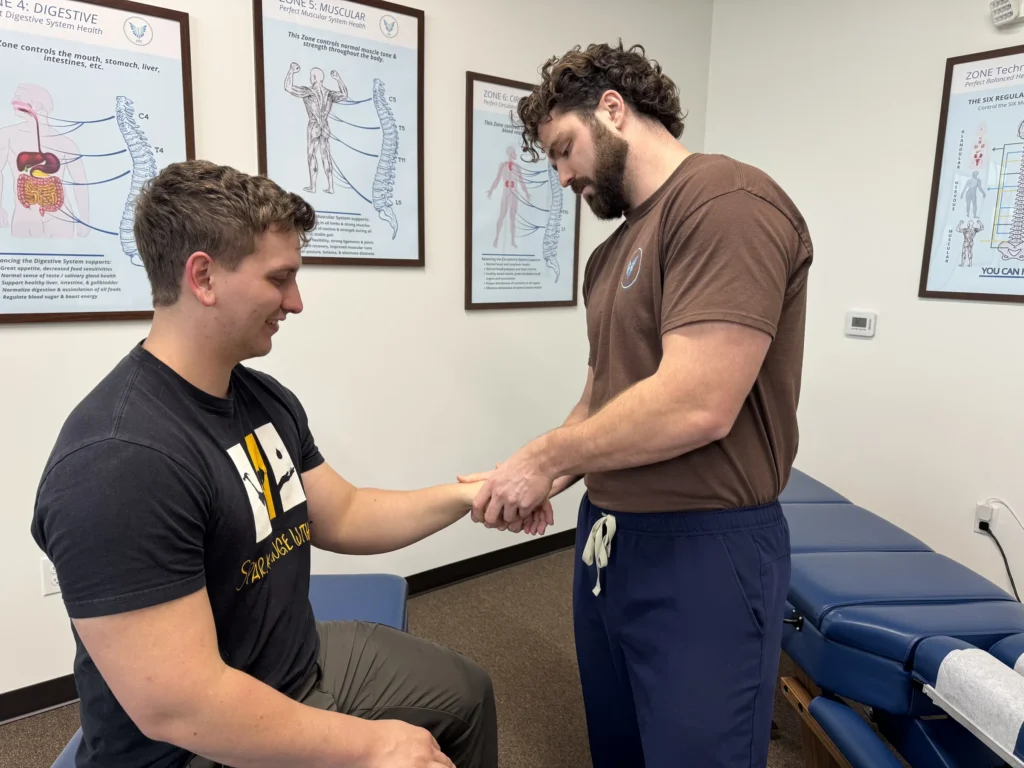
1. Forward Head Posture From Screen Time
I see this in almost every teenager who walks in. Head forward, shoulders rounded, that whole posture that comes from hours on a phone or hunched over a laptop for school. A 2025 study out of Guangzhou looked at over a thousand adolescents and found that forward-leaning posture was associated with a dramatically higher risk of spinal issues, and that kids who got outside and moved on the weekends had lower risk than those who didn’t. That tells me posture habits aren’t just a cosmetic thing, there’s a real structural cost to it over time, and it’s exactly the kind of thing I want to catch early rather than wait on.
2. Recurring Sports Injuries
Teen athletes get hurt a lot, that’s just the nature of a growing body under real athletic load. When I see the same teen come back with the same nagging issue, a hamstring that won’t fully heal, a shoulder that’s always a little off, I’m looking at whether their whole movement pattern is compensating for something, not just treating whatever’s sore that week. That’s the whole idea behind how I approach sports care, I’m looking at the athlete, not just the injury.
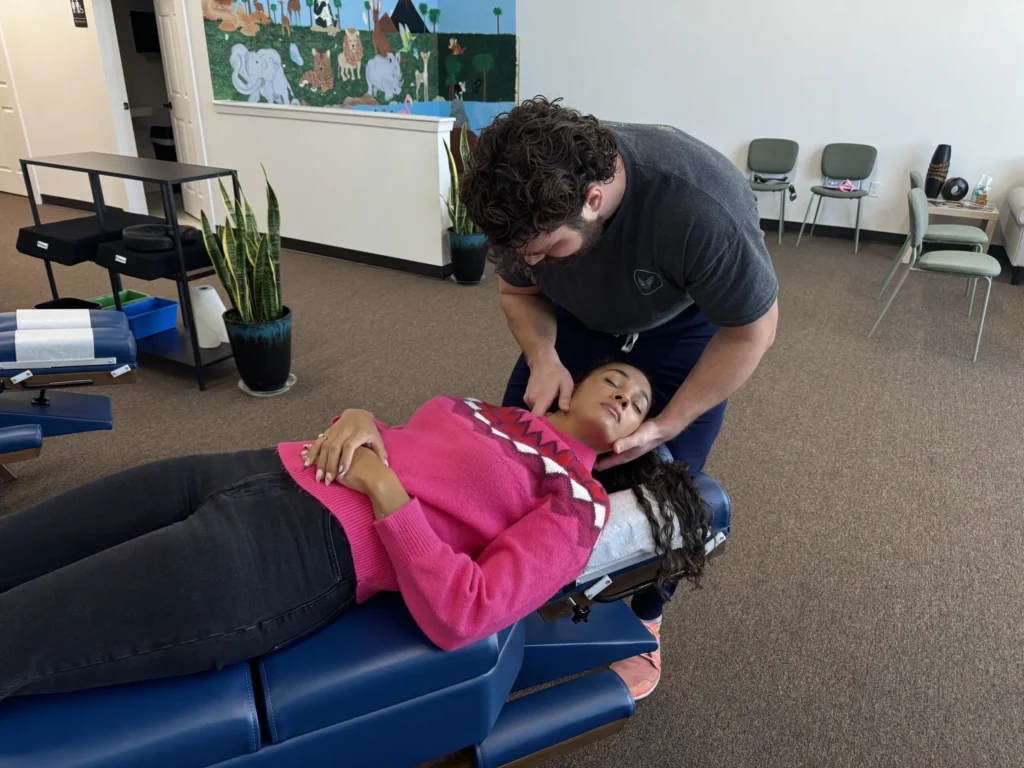
3. Headaches That Show Up With Neck and Shoulder Tension
I ask about this a lot, because it’s so common in this age group. A teen who gets headaches along with a tight upper back and neck, especially after a long day of school and screens, that combination points me toward that forward head posture again, and toward the C1 and C2 segments right at the base of the skull. When those aren’t moving the way they should, that tension has to go somewhere, and it usually ends up as a headache.
4. Trouble Sleeping or Managing Stress
High school is genuinely stressful, and I don’t think that gets said enough. A teenager who’s wound tight, sleeping poorly, or just seems like they can’t downshift, I want to look at how their nervous system is handling all of that load. It’s not a replacement for whatever mental health support they might need, but it’s a piece I think is worth checking.
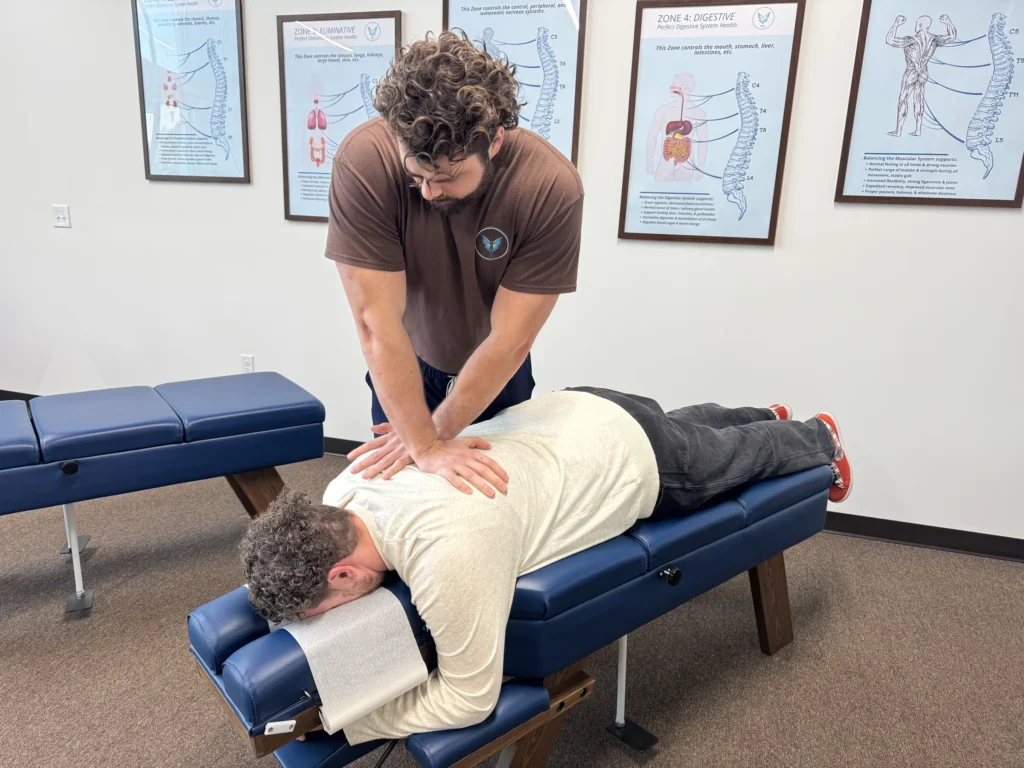
What the Research Actually Shows
Sports injuries in this age group are genuinely common, a systematic review of adolescent athletes found injury rates ranging from 34% to 65% depending on the sport and population studied, with body composition, training load, and previous injury history all playing a role. I want to be honest about what that does and doesn’t tell us. It tells me why so many teen athletes and their parents are looking for something to help. It doesn’t prove that chiropractic care prevents those injuries, that’s a different question and the research specific to that is still thin. What I can tell you is what I actually do: look at the whole picture of how a teen’s spine and nervous system are functioning, not just chase the injury of the week.
What a Visit Looks Like
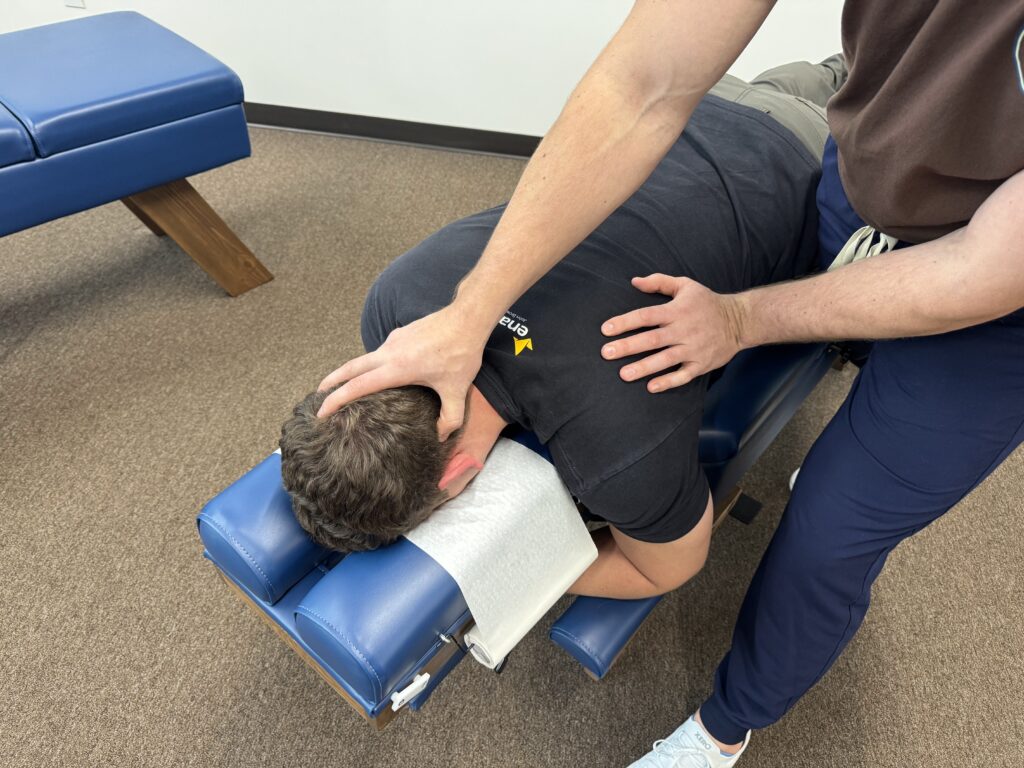
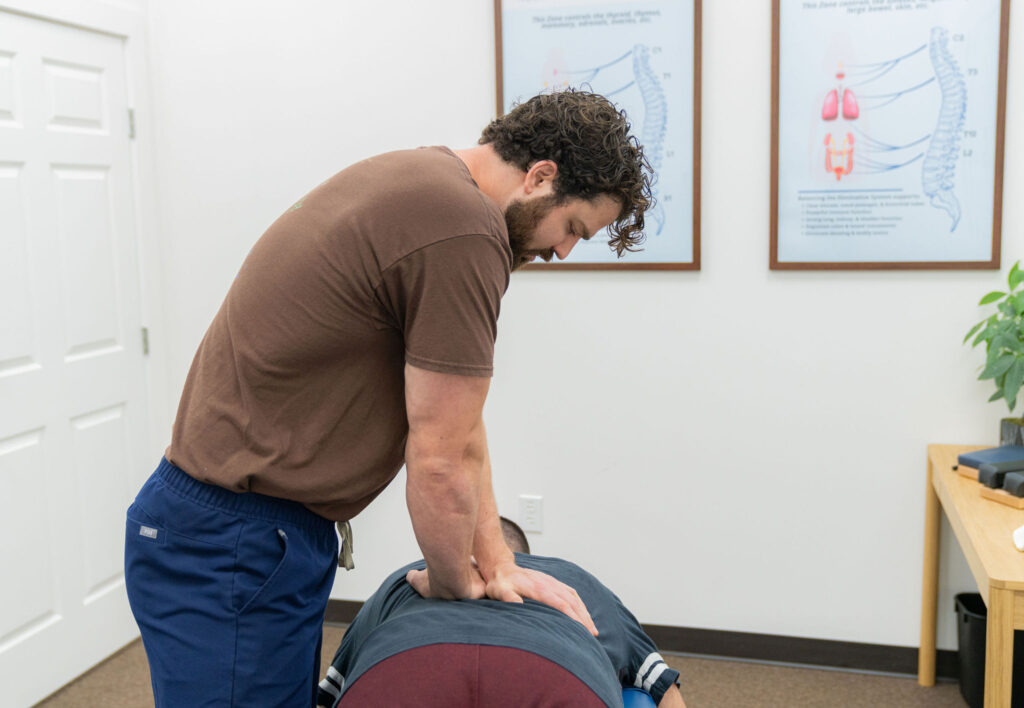
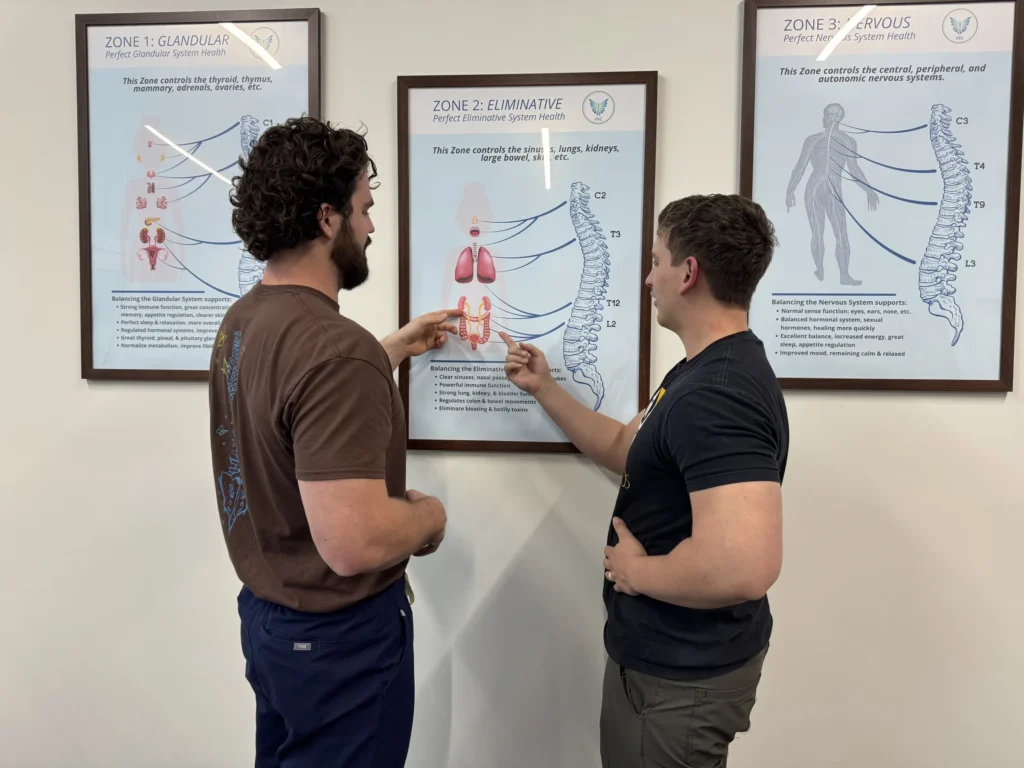
With teenagers I talk to them directly, not just the parent in the room. I want to know what’s actually going on in their words. Then I do a hands-on assessment, looking at their spine and nervous system function, and I’ll tell both of you honestly what I find and what I think it means.
If any of this sounds like your teen, I’m happy to take a look. Schedule a visit and let’s figure out what’s going on.