



Is the First Trimester Too Early?
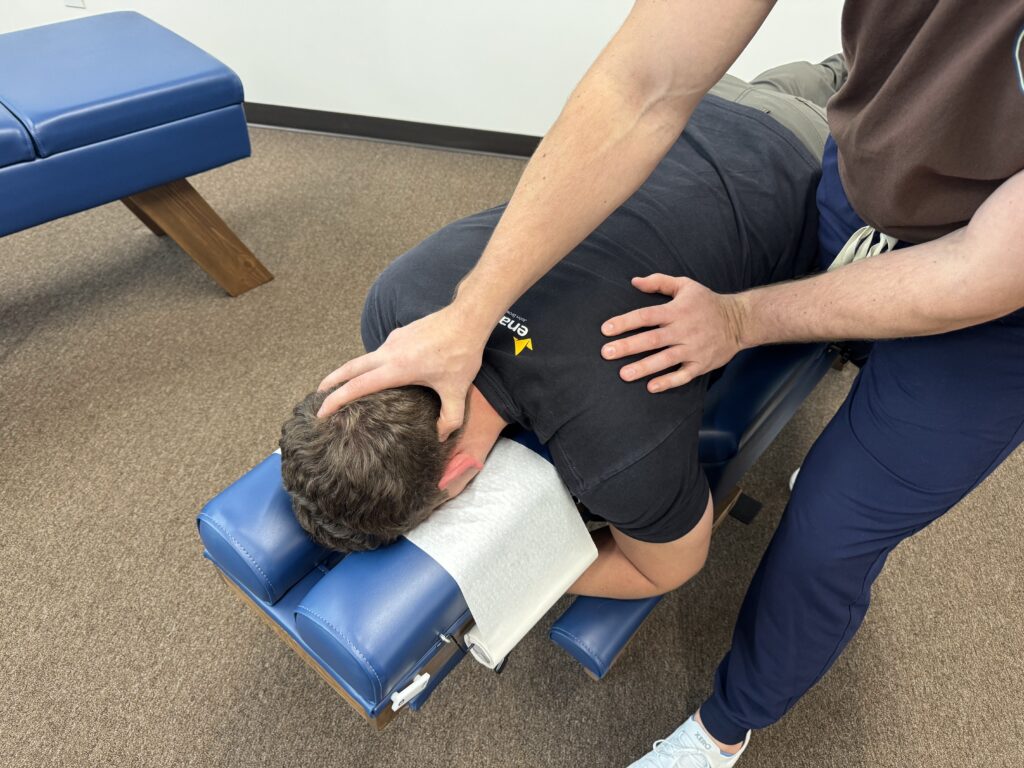
No. There’s no week you have to wait for. The adjustments I use in pregnancy are gentle, and nothing presses on your belly, so early pregnancy isn’t off-limits the way a lot of people assume. What I do want is for your OB or midwife to have seen you first. If anything has been flagged, like bleeding, placenta previa or a high-risk pregnancy, that conversation with them comes before any visit with me.
Your body starts changing earlier than you can see. The hormone relaxin rises in the first trimester and stays up, and its job is to let your pelvis give a little for delivery. That’s good for birth, but it means the joints in your low back and pelvis have less built-in stability, and the muscles around them pick up the slack. Plenty of moms feel fine at this stage, nausea aside. If that’s you, waiting a few weeks is completely reasonable.
Why I Like Seeing Moms Before the Pain Starts
Back and pelvic pain in pregnancy is common, and it doesn’t mean something is wrong. In a Swedish study of almost 900 pregnant women, about 7 in 10 reported low back or pelvic pain. Six months after delivery, 43% of the women who’d had pain still had it, and the ones whose pain started earlier in pregnancy were more likely to be in that group.
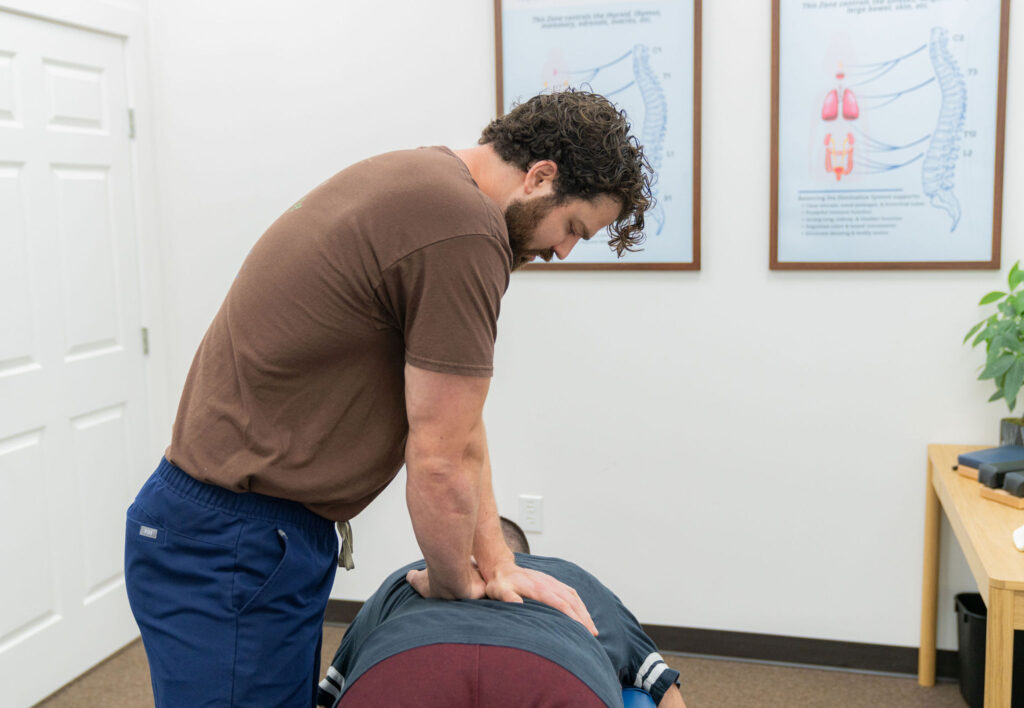
That’s a big part of why I’d rather meet you at 16 weeks with a little stiffness than at 34 weeks when rolling over in bed hurts. Early on, my job is mostly using Zone Technique to check how your pelvis and low back are moving, and keeping things balanced as your belly grows. Later, I’m usually working on pain that has already settled in. Coming in late still helps, but the early visits tend to be the easier ones.
What Care Looks Like in Each Trimester
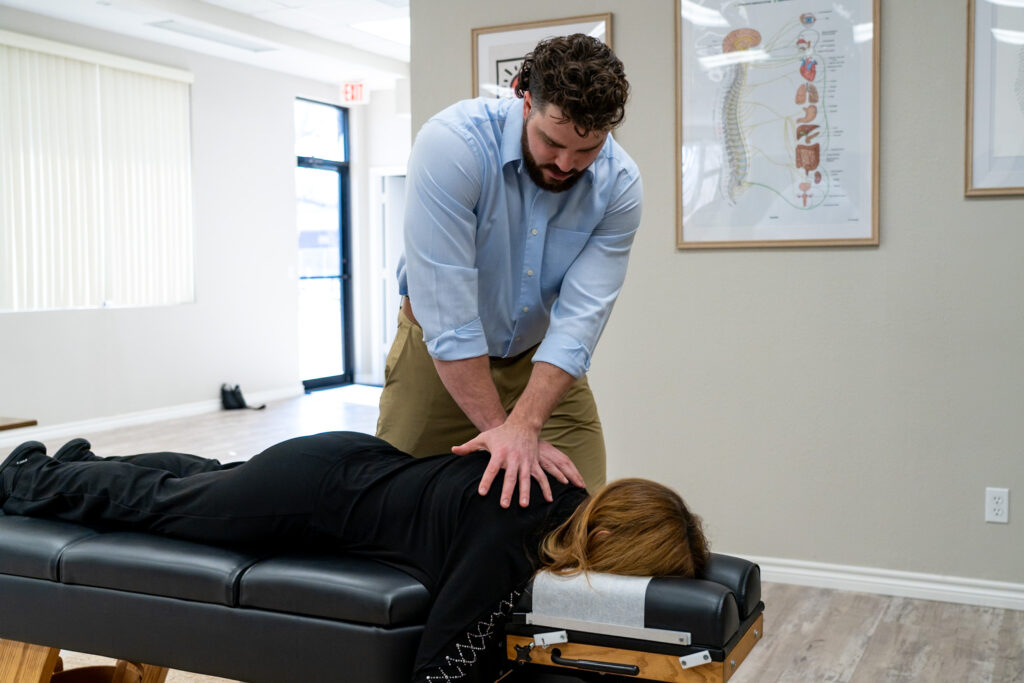
First trimester: a full intake, including what your OB has told you, then a gentle Zone Technique check of your spine and pelvis. Visits are usually spread out unless something hurts.
Second trimester: this is when most moms find me. Your center of gravity moves forward, the curve in your low back deepens, and round ligament pain and pain in the hips and pelvis start showing up. I work with you lying on your side or supported by a pregnancy pillow, so there’s no pressure on your belly.
Third trimester: the focus shifts to comfort and pelvic balance heading into delivery, and sciatica that shoots down one leg often peaks here. Every prenatal visit includes a Webster Technique check of the sacrum and the ligaments around the uterus. If your baby is breech, keep your OB in the loop. Webster addresses tension in the pelvis, and I won’t promise it turns a baby.

Is It Safe, and When Should You Call Your OB First?
For an uncomplicated pregnancy, the research is reassuring but thin. A critical review in Chiropractic & Manual Therapies found only a handful of reported problems after spinal manipulation in pregnant or postpartum women. The serious ones followed neck manipulation, and the authors recommended extra care with this group. That’s part of why my prenatal adjustments stay gentle and specific. The largest Cochrane review on pregnancy back and pelvic pain pooled 34 trials and found the best evidence for exercise, so you’ll usually leave with a couple of stretches, too.
Some things aren’t a chiropractor’s call. Per Kaiser Permanente, call your doctor right away for regular contractions lasting an hour, new numbness in your legs, groin or buttocks, new trouble controlling your bladder or bowels, or back pain with burning when you pee, flank pain or blood in your urine. The same goes for any bleeding or leaking fluid. If something like that comes up at a visit, I’ll send you back to your OB before I adjust anything.
That kind of chiropractic support through every trimester runs from your first visit to delivery, and the plan changes as your body does.
Wherever you are in your pregnancy, early or late, I’m glad to take a look at our Plano office. Schedule a visit and we’ll find the right starting point together.