

Why This Comes Up So Often in Plano
I see this every basketball season. A middle schooler starts limping after practice, a parent assumes it’s plantar fasciitis because that’s the heel pain everyone has heard of, and the kid gets told to stretch the bottom of their foot. The trouble is that a growing athlete’s heel works differently from an adult’s. Between club ball, school ball, and pickup games at courts like Oak Point Recreation Center, a lot of Plano kids are jumping and sprinting on hard floors five or six days a week, right in the middle of a growth spurt.
What Is Sever’s Disease?
Sever’s disease is irritation of the growth plate at the back of the heel bone, where the Achilles tendon pulls. Per StatPearls, it affects active kids roughly 8 to 15 years old and comes from repeated pulling on that growth plate, often during a growth spurt when the bone grows faster than the calf muscles can keep up. A 2025 review in American Family Physician calls it the most common cause of heel pain in active children and adolescents.
It isn’t a disease in the scary sense, and it isn’t permanent. It settles down with rest and goes away for good once the growth plate closes.
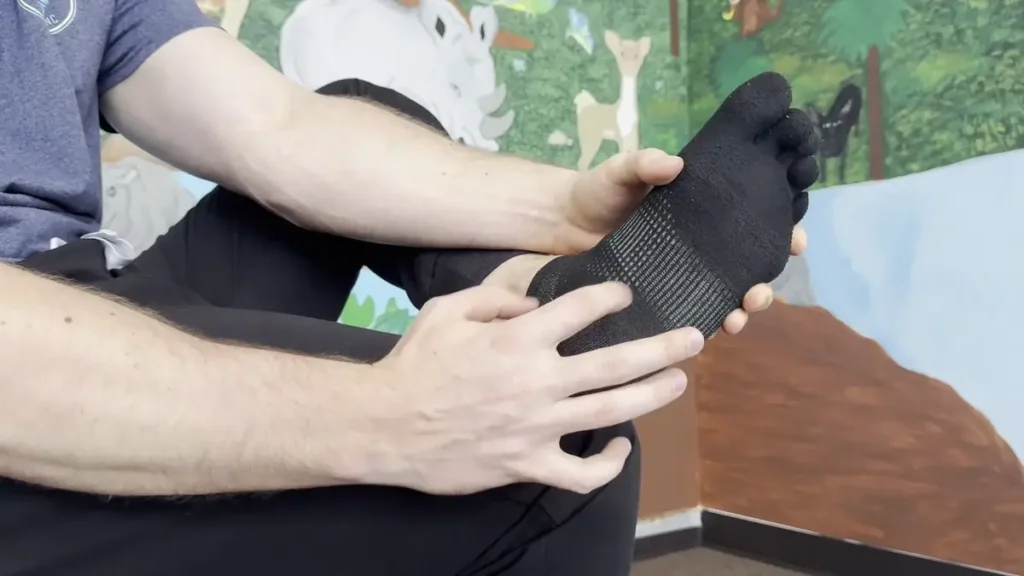
How to Tell Sever’s From Plantar Fasciitis
Sever’s shows up in growing kids, roughly 8 to 15, while plantar fasciitis mostly affects older teens and adults. Location and timing are the giveaways:
- Where it hurts: Sever’s is at the back and sides of the heel. Plantar fasciitis is on the bottom of the heel, toward the front.
- When it hurts: Sever’s hurts during and after running and jumping and eases with rest. Plantar fasciitis is classically worst with the first steps out of bed.
- The squeeze test: Gently squeezing both sides of the back of the heel usually hurts with Sever’s. With plantar fasciitis, pressing under the heel is what hurts.
If your athlete is past their growth spurt and the pain is under the heel in the morning, the routine in my plantar fasciitis stretches post is the place to start.
What Helps Sever’s Disease
Sever’s gets better with a smart cut in jumping and running load, not complete rest. StatPearls lists activity modification, heel cups or heel lifts, and calf stretching and strengthening as the core of care. In practice that means:
- Back off, don’t shut down. Fewer minutes and fewer jumping drills for a couple of weeks usually calms it down. Pain during play is the signal to scale back.
- Stretch the calf. A tight calf pulls harder on the heel. Do a wall calf stretch with the knee straight and again with the knee bent, 30 seconds each.
- Cushion the heel. A gel heel cup in the basketball shoe takes some pull off the growth plate.
- Ice after games if it’s sore.
I’d hold off on heavy heel raises, including the towel version from my plantar fasciitis routine, until the heel has calmed down, since they pull hard on the same spot.
When to Get It Checked
Get it checked if your child is limping, if the pain is there at rest or at night, if only one heel hurts after a fall or a hard landing, or if a couple of weeks of backing off hasn’t helped. Those can point to a fracture or something other than Sever’s, and your pediatrician may want an X-ray.
In my office I check the calf, ankle, and hips that change how a growing athlete lands, and use Zone Technique with adjustments scaled for a growing body. It’s the same approach I take across all of my chiropractic care for young athletes, and it works alongside your pediatrician and coach, not instead of them.
Training Smart Off the Court
Most of what keeps heels and ankles healthy happens in training: how many jumps a kid takes in a week, how they land, and whether their feet and ankles are strong enough for the load. Coach Luke Harper at Lighthouse Basketball runs game-based training for middle and high school players around Plano, and I wrote a post for his site on the five ankle exercises every basketball player should be doing. Those exercises are a good fit for kids with Sever’s too, once the heel has settled down.
If your young athlete’s heel still hurts after a couple of weeks of backing off, I’m glad to take a look at our Plano office near Willow Creek Park. Schedule a visit.