

Infants
For a baby, there’s no popping, no thrust, nothing forceful at all. The pressure I use is about what you’d use pressing on your own closed eyelid and still being completely comfortable. I’m using my fingertips to feel for where a joint isn’t moving the way it should, and I hold gentle pressure there until I feel it release. Most infants stay completely calm through it. A lot of them fall asleep halfway through.
Toddlers and Young Children
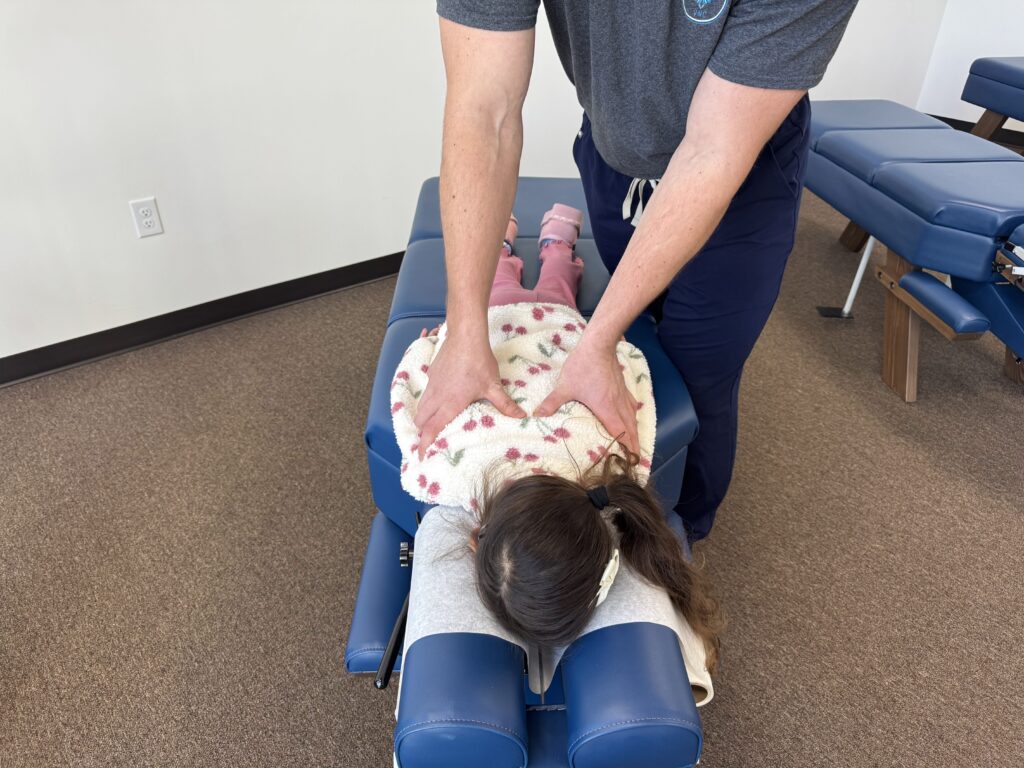
The approach for a toddler is really similar to what I do with an infant, just scaled slightly for a bigger body. Still fingertip pressure, still no thrust. A lot of toddlers are more interested in the toys in my office than in what I’m doing on the table, which tells you something about how unremarkable it actually feels to them.
Older Kids and Teens
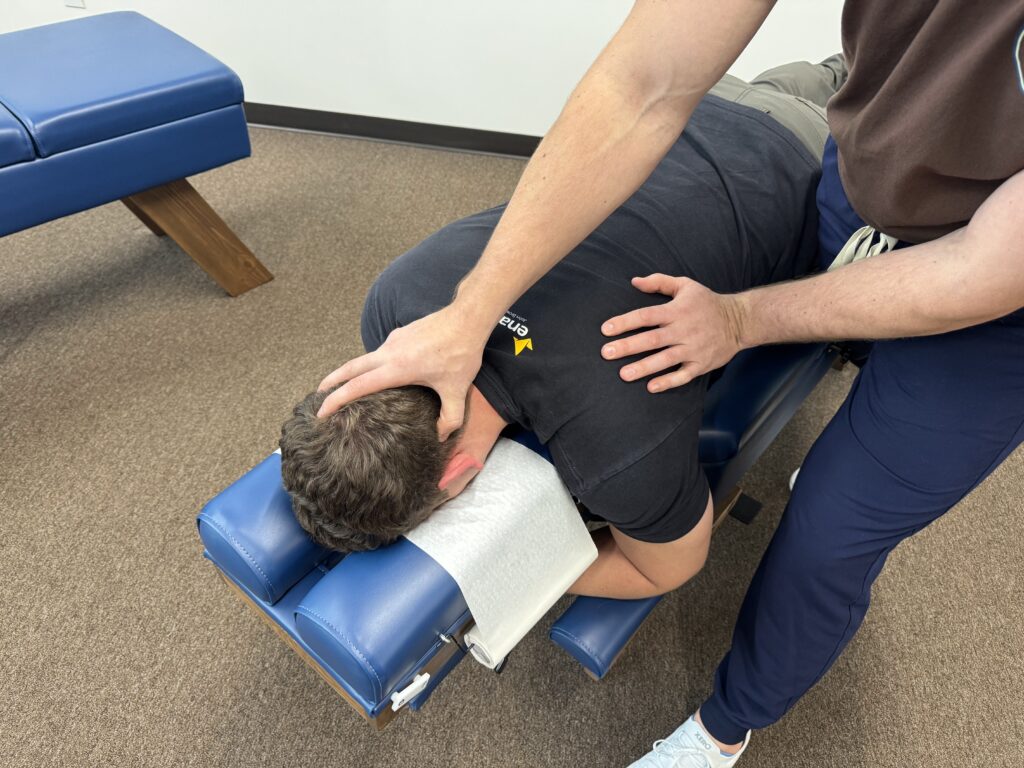
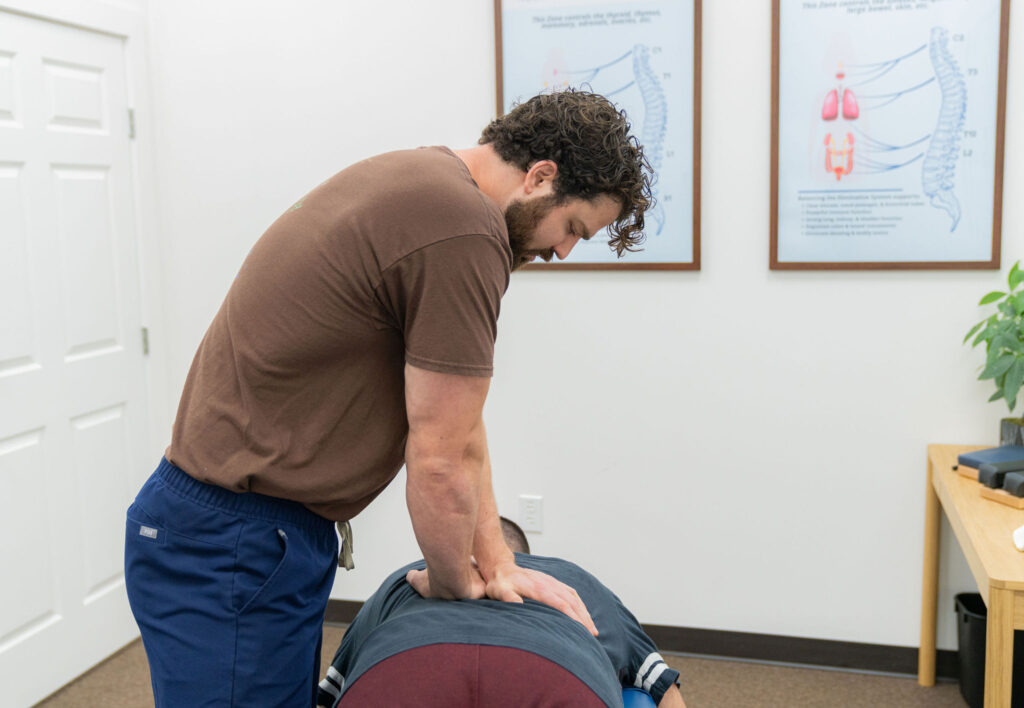
By the time a kid is a bit older, sometimes their spine is developed enough that an adjustment might involve an actual gentle movement that produces that popping sound, what’s called cavitation. I want to explain what that sound actually is, because I think it scares people more than it should. Research on spinal manipulation has found that the sound comes from a rapid pressure change in the joint that releases gas that was already dissolved in the joint fluid, the same basic idea as opening a can of soda. It’s not a bone cracking, it’s not damage happening, it’s just gas releasing from a joint capsule. Even at this age, the amount of force I use with a kid is nowhere close to what I’d use on an adult. This tends to come up most with older kids dealing with headaches or posture-related tension, where a slightly more involved adjustment might be part of the plan.
What Every Age Has in Common
Regardless of age, I’m never moving fast, never forcing a joint past where it wants to go, and never doing anything without explaining it first, to the parent and, when they’re old enough to understand, to the kid too. Research comparing techniques by age backs this up, gentle, low-velocity approaches are what’s actually used and studied in pediatric care, not the higher-force techniques associated with adult adjustments. If your child ever seems uncomfortable or resistant, I stop. That’s not a hard rule I have to remind myself of, it’s just how I actually approach a kid on my table.
What Parents Usually Notice Afterward
With babies, I usually hear about better sleep or less fussiness in the days after. With older kids, sometimes it’s less headaches, sometimes it’s just a parent noticing their kid seems a little more settled. I’m not going to promise you a specific result, every kid responds differently, but I want you to know what to actually watch for.
If you’re still picturing something scarier than what I just described, I get it, and I’d rather you ask me directly. I’ve written more about the safety side of infant adjustments specifically if that’s still on your mind, and about the signs that bring most babies into my office in the first place. My approach to pediatric chiropractic care is built around exactly what I described here, gentle, explained, and never rushed.
Schedule a visit and see it for yourself.