



How Early Is Too Early?
There’s no minimum age where a baby suddenly becomes eligible for chiropractic care. I’ve checked babies in their first week or two of life. What matters a lot more than age is whether your pediatrician has already seen your baby and cleared them, and whether there’s something specific you’ve noticed. If your newborn is feeding well, sleeping like a newborn sleeps, and moving both sides of their body evenly, there may not be anything for me to find, and I’ll tell you that. A newborn visit isn’t something every baby needs. It’s something worth doing when you’ve got a question that a careful, hands-on look can help answer.
Why Birth Itself Is Worth Paying Attention To
Birth is a lot of physical work for a tiny body, even when everything goes perfectly. A baby who was breech or tucked tight in one position for weeks, a long stretch of pushing, a vacuum or forceps assist, an emergency C-section, all of those put real forces on the head and neck. That doesn’t mean something is wrong. Most babies handle it just fine. But it’s part of why I always ask about the birth before anything else. A 2026 look at more than 1,200 infants with torticollis from Cleveland Clinic found breech positioning was the one womb-position factor tied to more severe cases. That lines up with what I see. The way a baby spent those last weeks before birth often shows up in how they hold their head after.
What a Newborn Visit Looks Like With Me
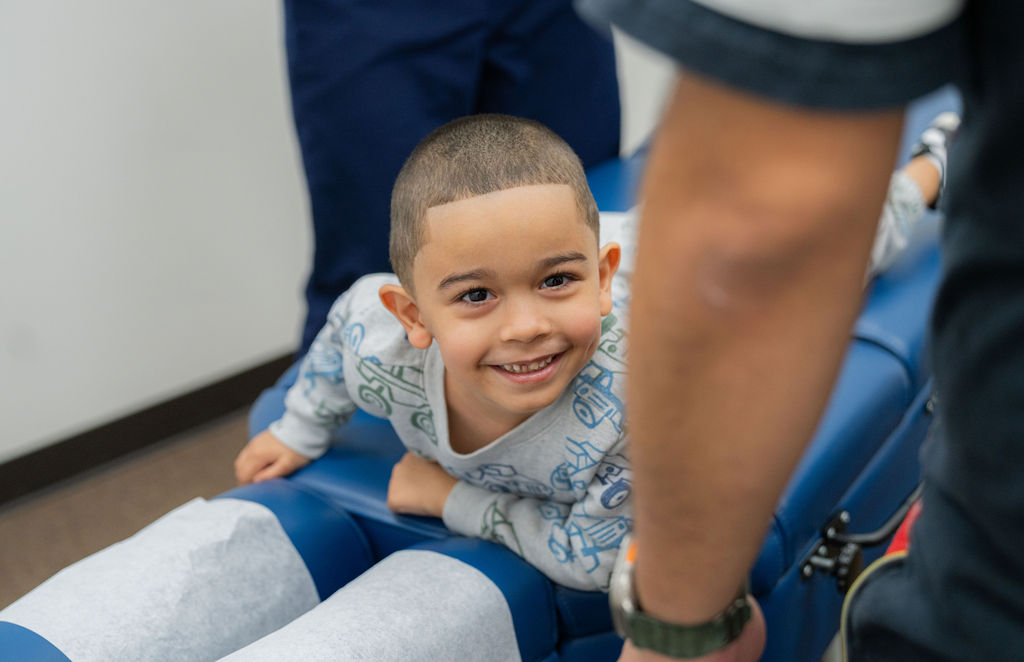
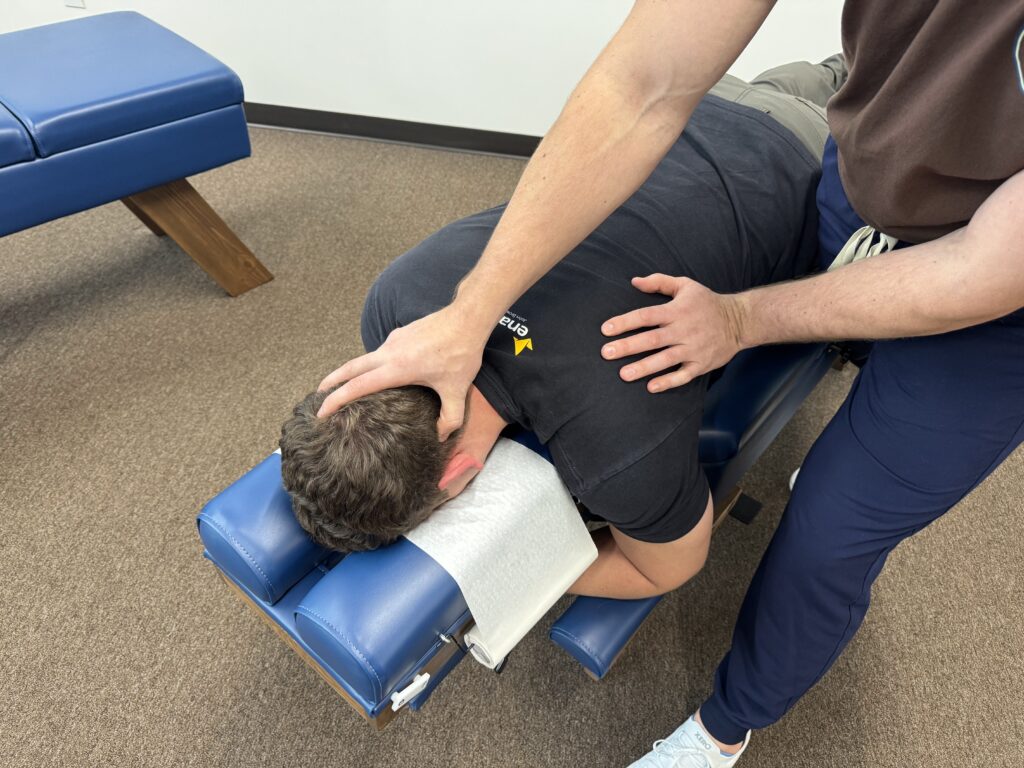
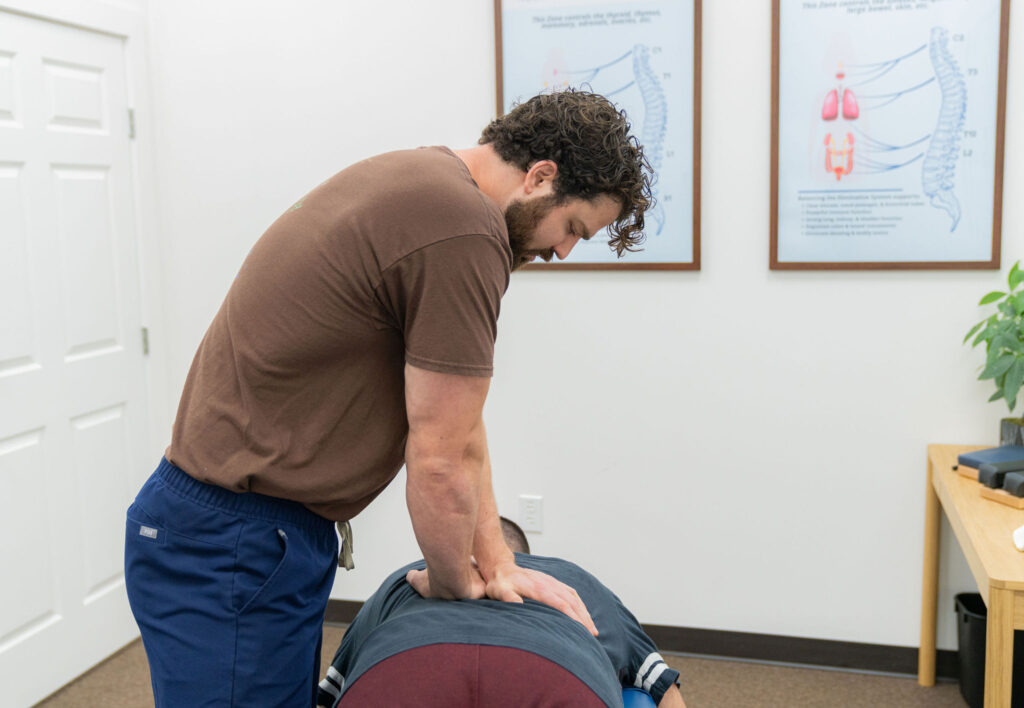
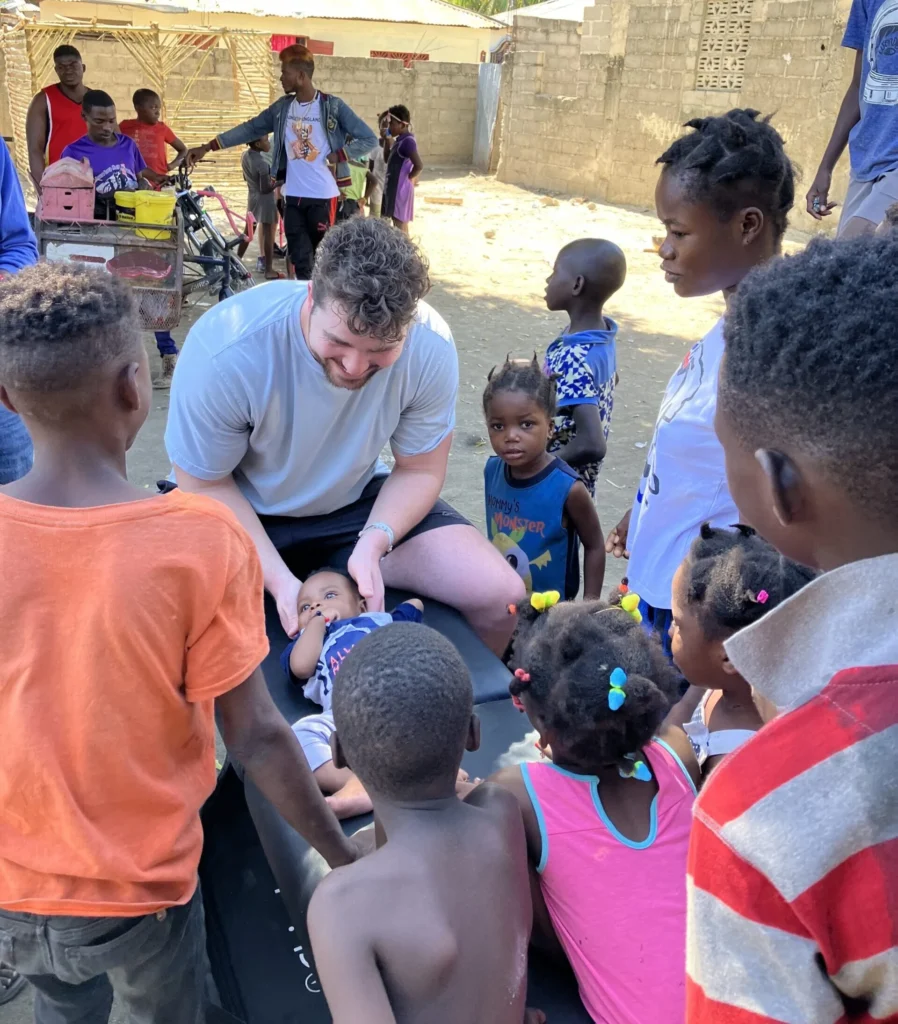
A newborn visit is quiet and short. I start by talking with you, birth history, how feeding is going, how your baby sleeps, anything your pediatrician has mentioned. Then I do a hands-on Zone Technique assessment, usually with your baby lying on your lap or on a soft surface right next to you. I’m checking how freely the neck turns each way, how the spine and pelvis move, and whether there’s tension anywhere that doesn’t belong.
If I do find something, the pressure I use is about what you’d use to check a ripe peach. There’s no twisting and no popping. I hold gentle contact until I feel the area let go, and that’s it. Plenty of newborns sleep straight through it. If you want more detail on that part, I wrote a whole post on what a pediatric adjustment actually feels like. You can also read more about how I approach infant chiropractic care here in Plano.

What I Want You Watching for at Home
You’re with your baby around the clock, so you’re going to notice things long before I would. The big one is a head-turn preference, a baby who always looks the same direction or fights you when you try to turn them the other way. That’s often the early version of torticollis, and it tends to travel with a flat spot on that same side of the head. Other things worth mentioning to me: nursing well on one side and fussing on the other, arching back during feeds, or a baby who just seems stiff and uncomfortable no matter how you hold them.
There’s a lot you can do at home, too. The American Academy of Pediatrics put out a clinical report on positional skull flattening that still holds up. Back to sleep, every time, because that’s what keeps babies safe at night. Then give them supervised tummy time while they’re awake, switch which end of the crib their head goes, and alternate the arm you hold them in for feeds. Those small habits do a lot of the heavy lifting, and I’ll always reinforce whatever your pediatrician has already told you.
When to Call Your Pediatrician First, Not Me
I want to be really clear about this part. Some things in a newborn are a medical question, and a chiropractor is not the right first call. A fever of 100.4 or higher in a baby under three months old. Fewer wet diapers than normal, or a baby who won’t eat. Forceful vomiting after feeds, trouble breathing, unusual sleepiness, or yellow skin that’s getting worse instead of better. Any of those, call your pediatrician or go in. If something in your baby’s history raises a flag when you come see me, I’m going to send you back to your pediatrician before I do anything. That’s not me being cautious for the sake of it. That’s just the right order of things.
What the Research Can and Can’t Tell Us
I’m not going to oversell this. A 2022 scoping review in BMC Pediatrics looked broadly at spinal manipulation and mobilization in infants, kids, and teens, and concluded the overall quality of evidence for specific outcomes is still limited. There just aren’t enough strong studies yet. What I can offer is an honest look at how your newborn’s body is moving, a gentle approach built for a body that size, and a straight answer about whether I think I can help. Sometimes the answer is no, and I’ll say so.
If you’re a new parent in Plano with a question about your little one, bring them in and I’ll take a look. Schedule a visit and we’ll figure out what’s going on together.